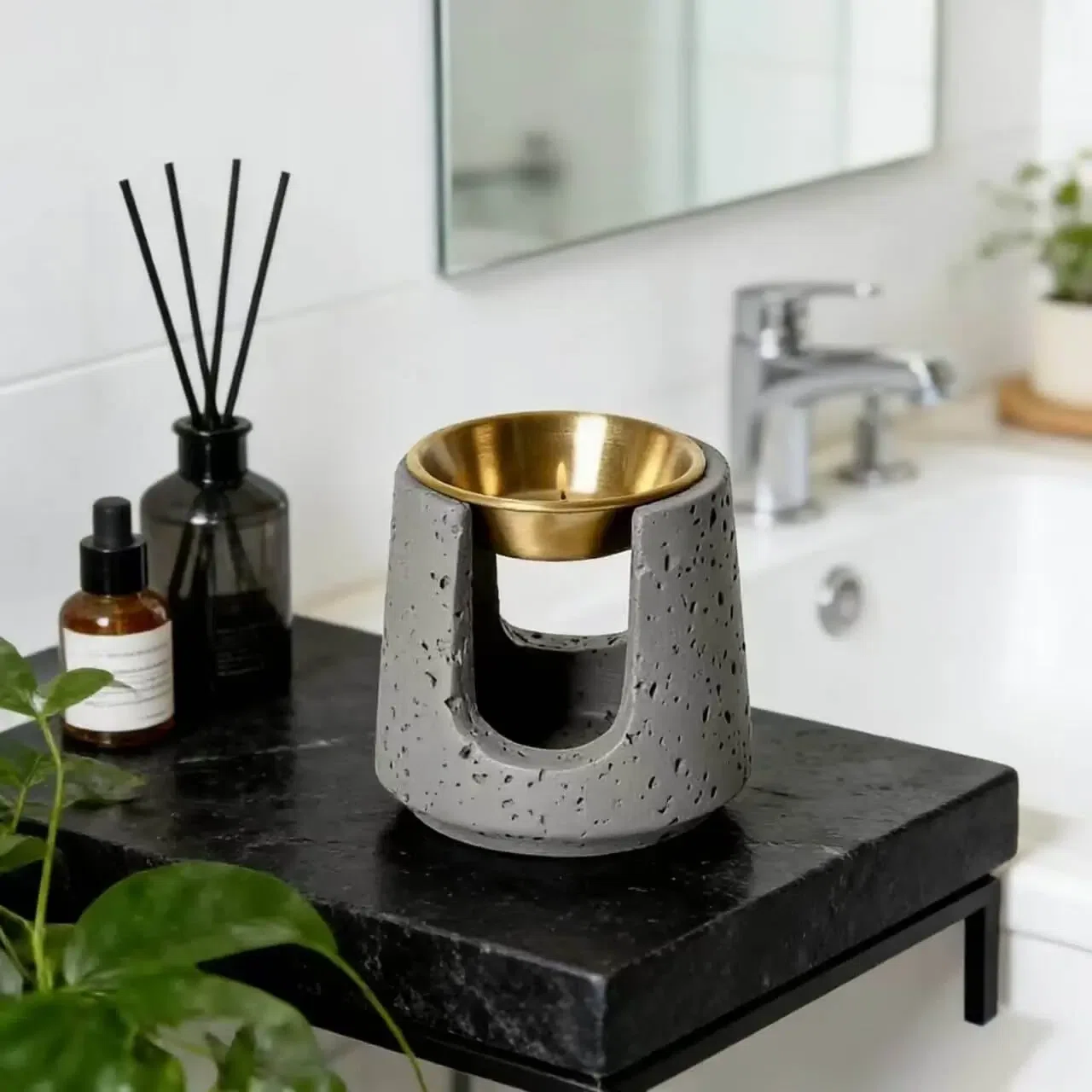

In the luxury fragrance and home scent markets, “natural aesthetics,” “eco-philosophy,” and “tactile texture” have become central to establishing brand differentiation. To express unique artistic visions, an increasing number of fragrance brands are turning to stone and stone-textured materials for product packaging—from weightier perfume caps and sculpted outer sleeves to incense burners and diffuser bases.To Bespoke Artificial Stone Effect Fragrance Packaging is popular.
However, transforming a creative concept into mass-produced fragrance packaging relies heavily on material selection and manufacturing execution.
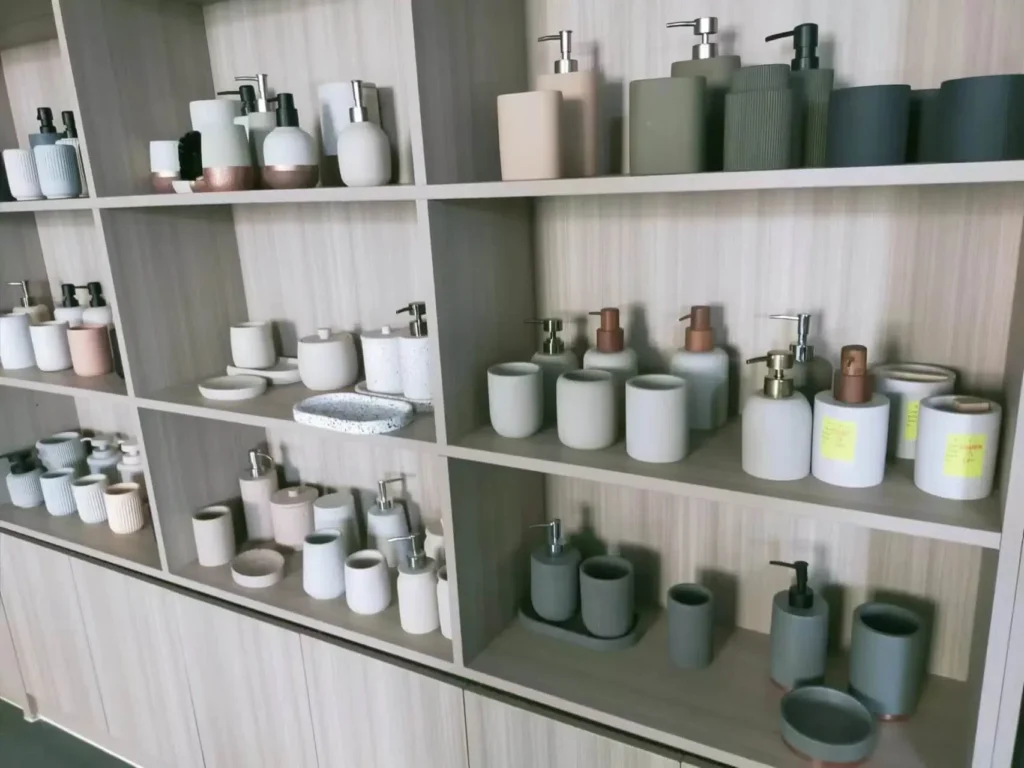
Why Artificial Stone and Composites Are Revolutionizing Fragrance Packaging
During product development, designers often start with a preference for the natural luxury of natural marble or jade. Yet once in the engineering phase, the physical limitations of natural stone quickly emerge:
- Machining and Shaping Constraints: Natural stone is exceptionally hard and brittle, making complex 3D sculptural designs nearly impossible. Attempting to wrap natural stone tightly around a glass bottle or engineer micro-threaded inner snaps for a cap yields extremely high defect rates.
- Inconsistent Quality and Fragility: Natural veining is unpredictable, and internal micro-fractures make the material prone to cracking during transit or drop testing.
- High Costs and Rigid Order Volumes: Relying on quarrying and manual or CNC carving makes production slow and costly, driving up minimum order quantities (MOQ).
To overcome these technical bottlenecks, composite cement (concrete) and artificial stone (resin-stone composites) have emerged as ideal alternatives. Artificial stone, in particular, leverages 3D modeling and precision molding to address these pain points:
- High Design Flexibility: Mold-making based on 3D CAD files allows complex geometric wrapping, intricate structural components, and sharp faceted cuts to be produced with high accuracy.
- Superior Physical Performance: Enhanced toughness and impact resistance compared to marble or jade drastically reduce shipping damage.
- Batch Consistency and Flexible
- Flexible MOQs: Mold-based production guarantees dimensional accuracy and color consistency across thousands of units while enabling lower minimum order thresholds.
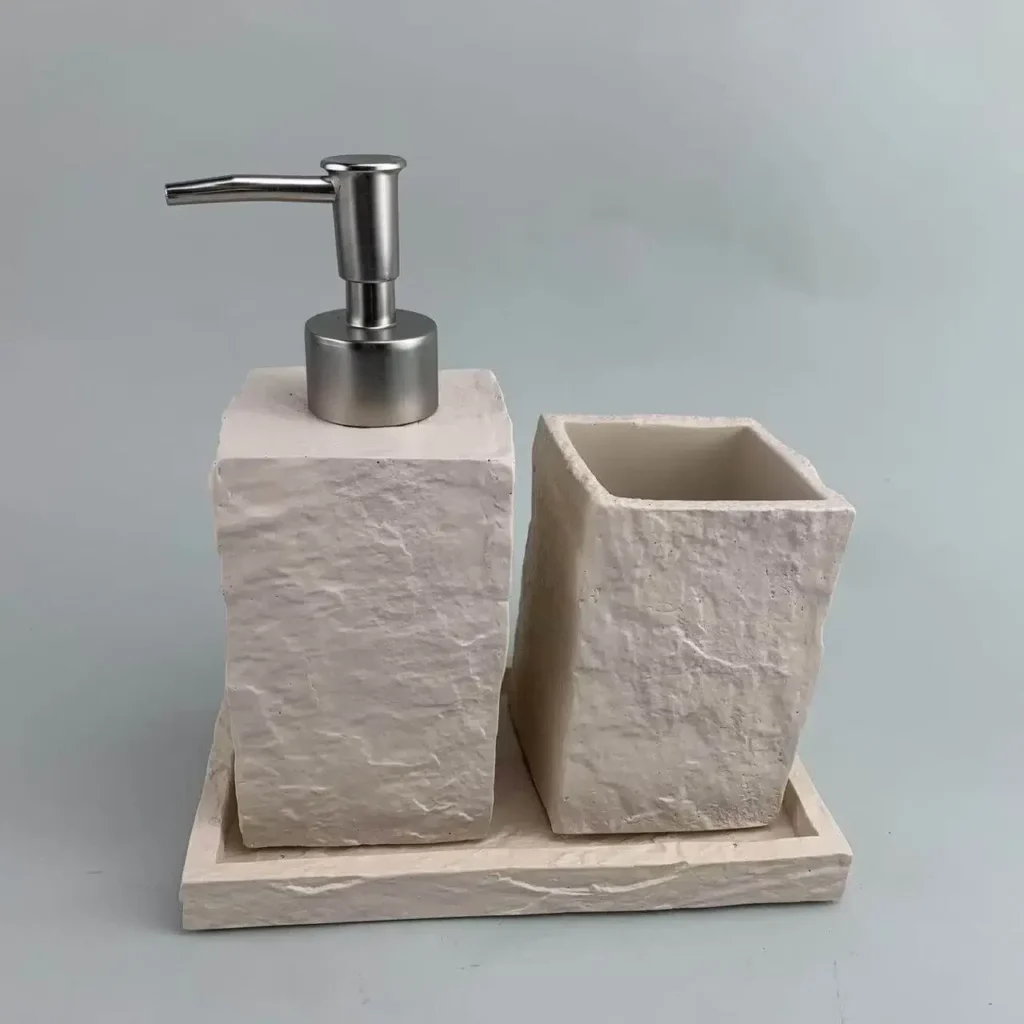
Material Comparison: Production Differences and Technical Challenges
Different materials present distinct advantages and technical challenges in terms of feasibility, processing complexity, and cost-efficiency:
1. Natural Marble
- Product Realization: Offers natural, unrepeatable veining and a cool, substantial hand-feel, but cannot accommodate intricate internal cavity machining.
- Production Challenges: High brittleness leads to frequent cracking during cutting and hollowing. Color and pattern variations make quality control difficult to standardize. High processing costs prevent its use for precision-fit components (e.g., pump inner caps).
2. Natural Jade / Semi-Precious Stone
- Product Realization: Translucent, warm, and luxurious, making it suitable for ultra-premium, limited-edition fragrance packaging.
- Production Challenges: Raw materials are exceptionally expensive. High hardness causes long processing times and rapid tool wear. Hidden internal flaws increase the risk of fracturing during polishing and tight-tolerance machining.
3. Composite Cement / Ultra-High-Performance Concrete (UHPC)
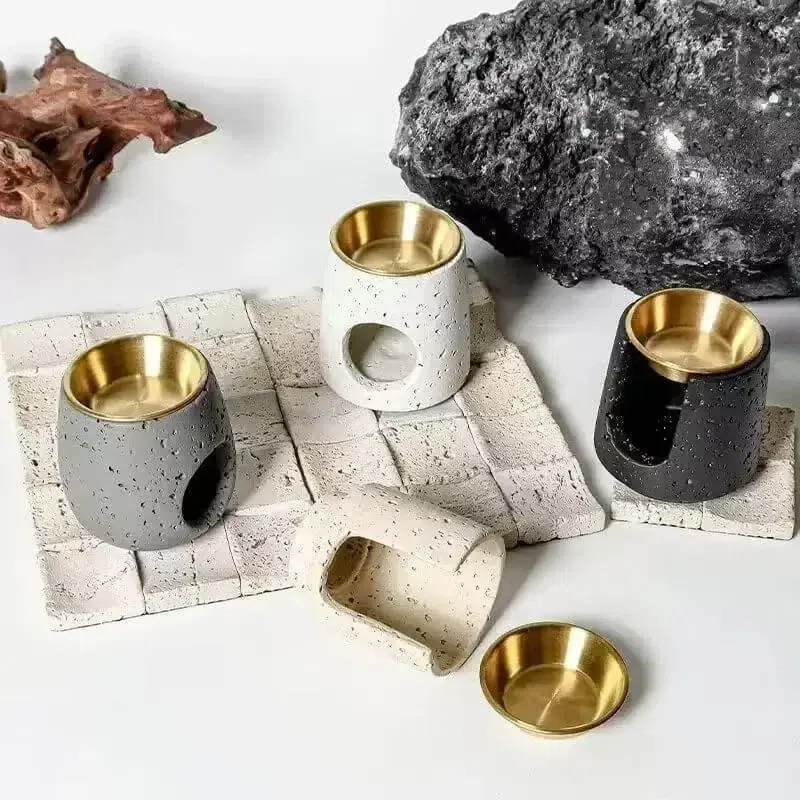
- Product Realization: Strong industrial aesthetic with a raw, tactile surface that fits sustainable design trends. Well-suited for incense burners, diffuser bases, and bold outer sleeves.
- Production Challenges: Air bubbles can form during liquid pouring, requiring precise defoamer formulation and vibration processing. Requires specialized surface coatings to pass alcohol and fragrance oil corrosion tests. Curing time is relatively long.
4. Artificial Stone / Resin-Bound Composite Stone
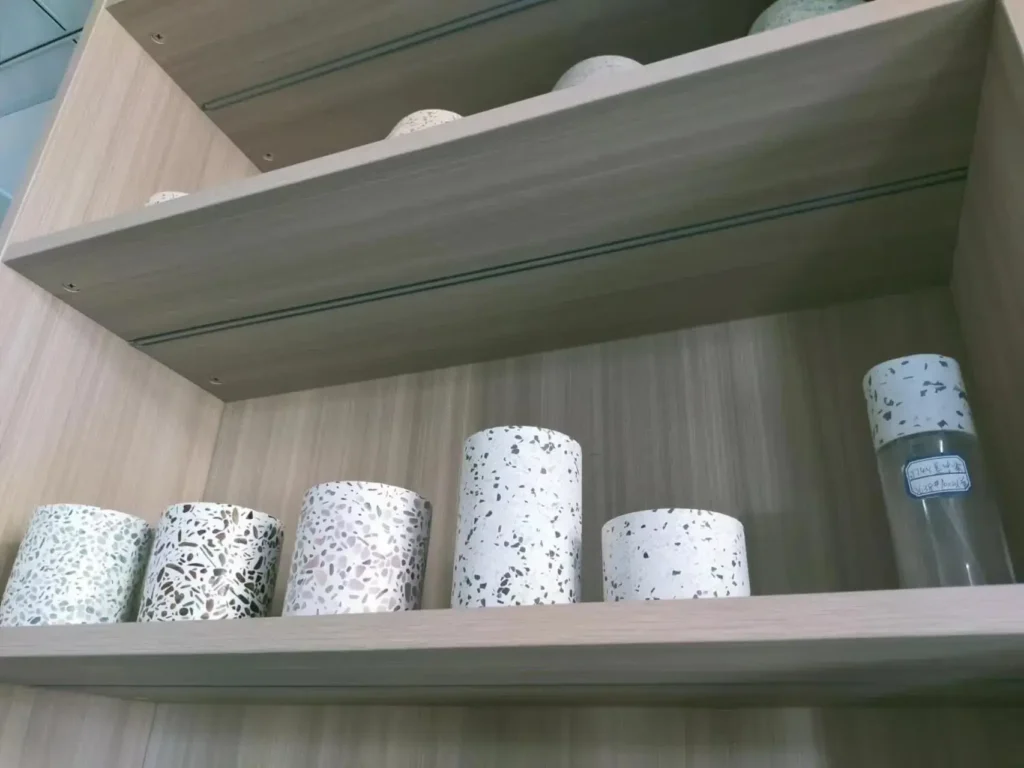
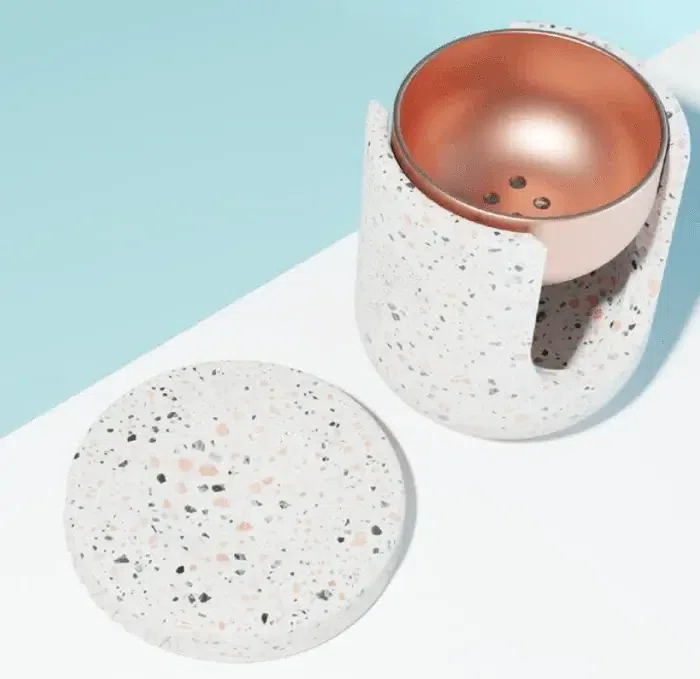
- Product Realization: Combines the substantial weight of natural stone with the moldability of composite polymers. It can mimic marble, terrazzo, or volcanic rock finishes, making it the preferred choice for perfume caps and contoured outer sleeves.
- Production Challenges: Requires high-precision 3D modeling and tooling (accounting for material shrinkage). Formulating uniform color and aggregate distribution demands extensive technical expertise. Parting lines require precise manual post-polishing.
Material Comparison & Minimum Order Quantity (MOQ) Summary
| Feature / Metric | Natural Marble | Natural Jade | Composite Cement / Concrete | Artificial Stone (Recommended) |
| Visual & Tactile Quality | Naturally luxurious, unique veining | Translucent, warm, ultra-luxurious | Raw industrial finish, micro-porous | Realistic texture, customizable color/veining |
| Design Flexibility | Extremely Low (Simple geometries only) | Extremely Low (Hand carving only) | Moderate (Medium to large sculptural shapes) | Extremely High (Complex 3D geometries/nested fits) |
| Impact Resistance | Brittle, poor drop-test performance | Highly brittle, very poor drop resistance | Moderate, edges prone to chipping | High, resilient, resistant to cracking |
| Dimensional Tolerance | Larger (±0.5mm) | Larger (±0.5mm) | Moderate (±0.2mm) | Very Tight (±0.1mm, precision fitting) |
| Key Production Challenges | Cracking risks, high machining costs, variable veining | Extremely high cost, slow machining, fracturing risk | Air bubble control, anti-corrosion coating | 3D tooling development, particle distribution uniformity |
| Recommended Applications | Luxury limited-edition flat caps / bases | High-end fragrance accents / luxury stoppers | Diffuser bases, incense burners, raw-style sleeves | Perfume caps, bottle outer sleeves, custom vessels |
| Reference MOQ | 1,000 – 3,000 pcs | 1000 – 3,000 pcs | 1,000 – 2,000 pcs | 500 – 1,000 pcs (Flexible tooling) |
Our Expertise: End-to-End Manufacturing from Concept to Production
As a specialized manufacturer of custom stone-shaped packaging and high-end fragrance components based in China, we turn design concepts into scalable products. Whether you require distinct artificial stone perfume caps, sculptural outer sleeves, or concrete diffuser vessels, we offer a turnkey manufacturing solution:
- 3D Engineering & Structural Evaluation: Optimizing your concept sketches for 3D modeling, glass bottle fitment, and pump mechanism tolerances.
- Custom Material Formulation: Tailoring color, texture density, transparency, or specific gravity to achieve the desired tactile weight.
- Rapid Prototyping (3 to 5 Days): Utilizing 3D printing and flexible silicone molds for quick visual and tactile verification.
- Precision Tooling & Molding: Building high-precision molds to keep tolerances within required engineering specs.
- Surface Post-Processing & Testing: Applying protective anti-corrosion coatings, manual polishing, matte/gloss finishes, and performing rigorous drop and alcohol-resistance testing.
Frequently Asked Questions (FAQ) about Bespoking Artificial Stone Effect Fragrance Packaging
Yes. We offer end-to-end support, including 3D modeling, structural breakdown, tolerance design, and mold development, turning initial concepts into production-ready physical components.
Yes. Artificial stone allows for tight manufacturing tolerances. We can integrate an injection-molded plastic inner cap or precision-cast internal structures to ensure a smooth, secure snap fit with standard pump collars (such as FEA 15).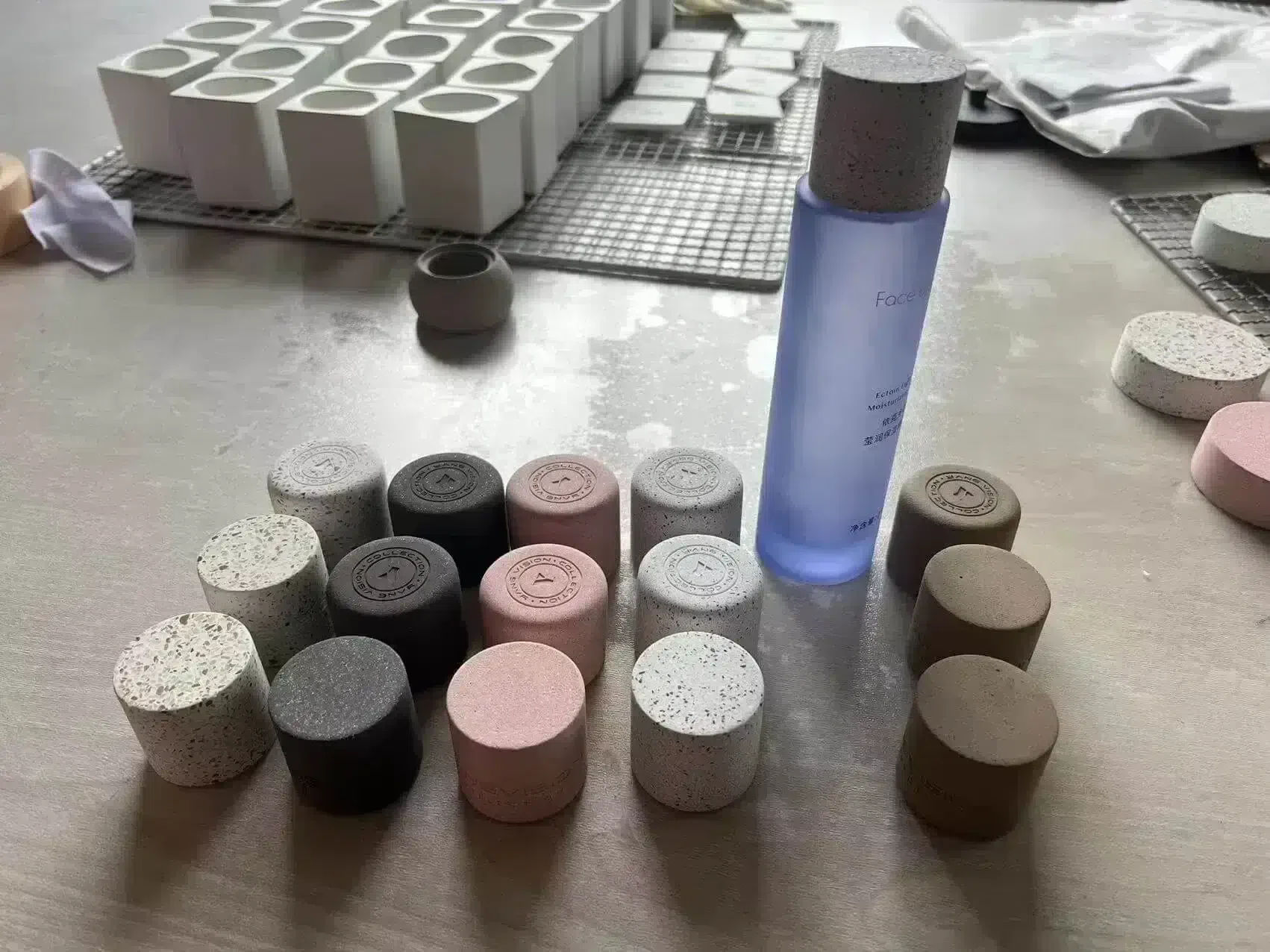 https://fragrancepackage.com/custom-irregular-shaped-stone-perfume-caps-engineering-challenges-factory-solutions/
Uncoated natural stone and concrete are porous and susceptible to staining or chemical damage. We apply a protective nano-coating to the surface and conduct 48-hour fragrance oil immersion and alcohol rub tests to prevent discoloration or coating failure.
Unlike natural marble or jade, artificial stone includes polymer resin additives that improve toughness and impact resistance. Paired with suitable protective packaging, products reliably pass standard international drop tests.
Yes. By using multi-color resin pouring and blending techniques, we can replicate the flowing veining of natural marble, terrazzo aggregate patterns, or volcanic rock textures while maintaining consistency across production runs.
Once the 3D drawing is finalized, rapid prototyping takes 5 to 7 days. Production tooling (metal or silicone molds) takes 15 to 20 days, followed by a mass production cycle of roughly 25 to 30 days.
Our standard MOQ for concrete items is 1,000 pieces. For artificial stone custom components, we offer flexible MOQ at 500 pieces for new product launches or market testing.
Molded or blown glass bottles inherently carry small dimensional tolerances. Natural stone lacks flexibility, so forcing a rigid stone sleeve over a glass bottle can cause cracking or uneven gaps. Additionally, carving natural stone into thin-walled shells makes it prone to fracturing. Artificial stone allows for controlled clearances and inner cushioning to wrap glass bottles safely.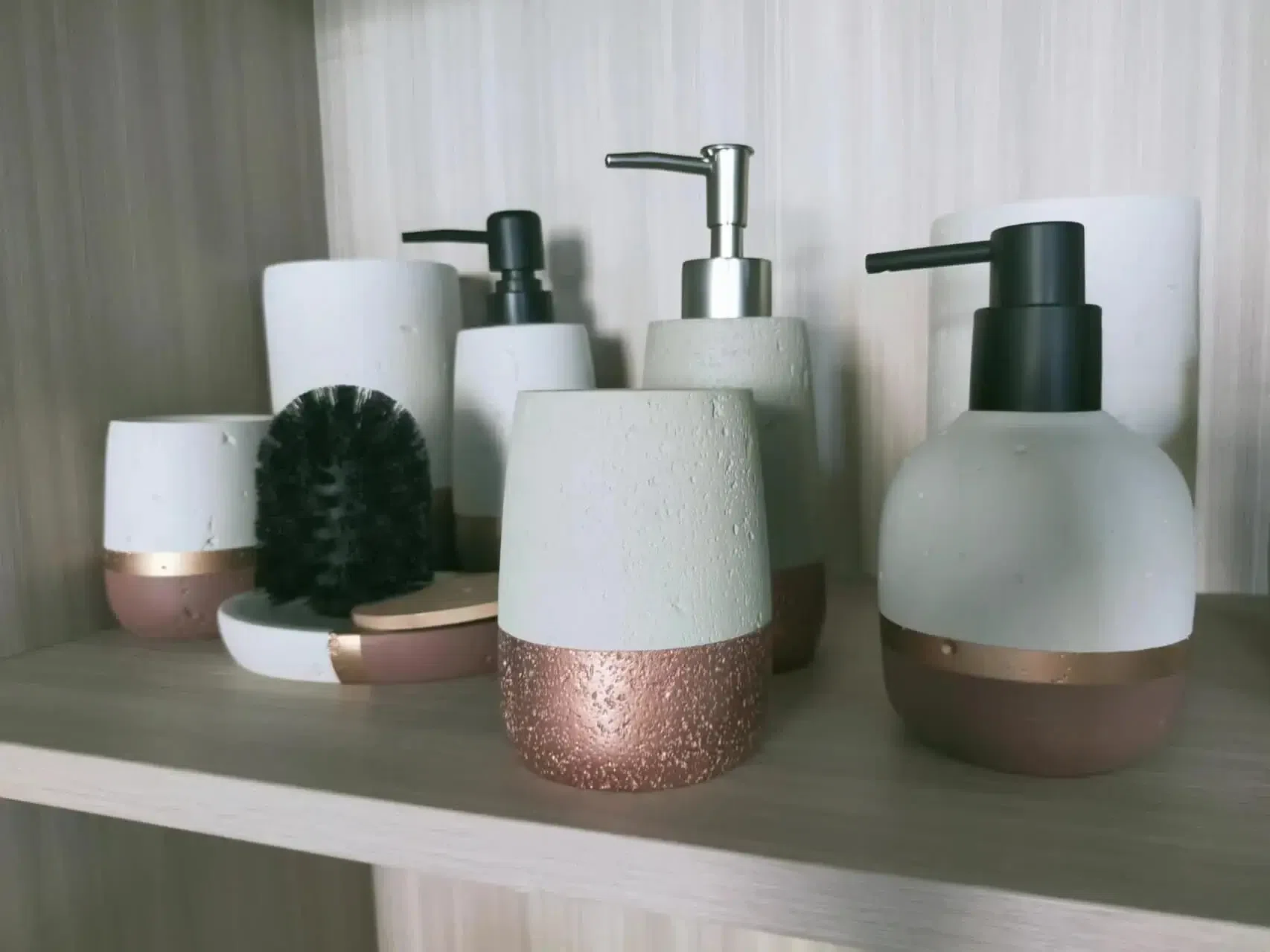
Yes. We provide finished samples for client testing, including cross-hatch adhesion testing, alcohol rub resistance, thermal shock/environmental cycling, and drop testing to align with international luxury packaging standards.
Send your design concepts, reference images, or 3D files to our team. Our engineers will evaluate technical feasibility, recommend optimal material formulations, and provide a detailed quotation and timeline within 24 hours.