
In the global fragrance landscape, high-end sensory experiences are driving a surge in the “home fragrance” sector. For B2B buyers and brand owners, a Customized Incense Burner is no longer just a functional tool for burning aromatics—it is a centerpiece of interior decor and a vital expression of brand identity. To fully grasp the technical terminology used in this industry, we recommend consulting our Complete Guide to Perfume Packaging Terms & Glossary for foundational knowledge.
The Value and Role of Professional Incense Burners
A well-crafted incense burner serves multiple strategic purposes for a fragrance brand:
- Elevating Brand Premium: A unique, heavy-duty burner allows a brand to move beyond consumable incense sticks into the luxury home decor market, justifying a higher price point.
- Safety and Heat Management: Professional manufacturing ensures that the burner can withstand high temperatures without cracking or damaging furniture surfaces, which is critical for product liability and user safety.
- Optimizing the Scent Ritual: The airflow design of a custom burner directly impacts how the incense burns, ensuring a steady, long-lasting fragrance release.
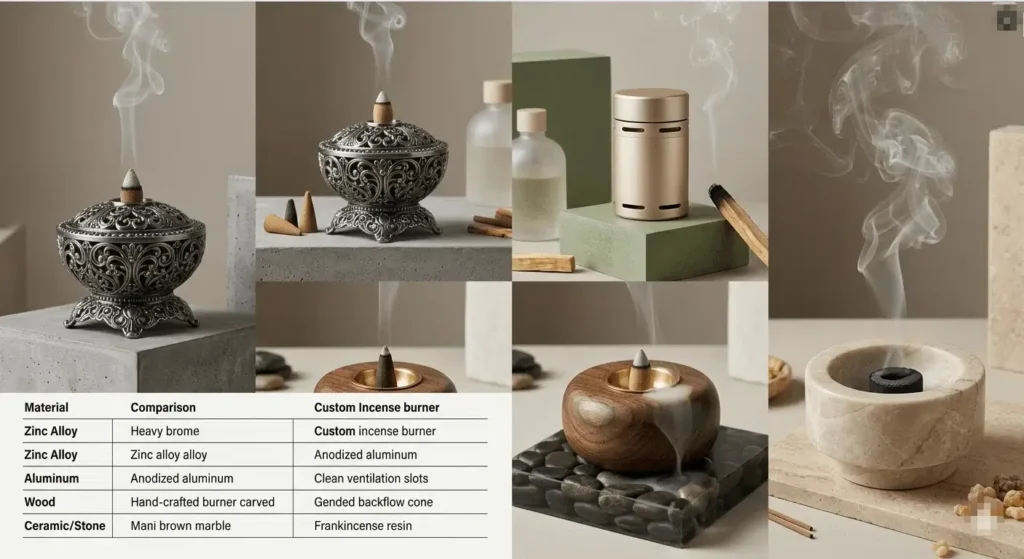
Zinc Alloy Incense Burner Customization (Custom Zinc Alloy Incense Burners)
Zinc alloy is widely favored in the luxury segment for its ability to hold intricate, 3D details and its substantial weight.
Production Challenges
- Heat Dissipation and Tolerance: Continuous heat from charcoal or cones can cause lower-grade alloys to warp over time.
- Surface Finish Durability: In high-end B2B orders, the electroplated finish must resist tarnishing from heat and smoke.
Solutions
- Precision Die-Casting: Use high-pressure die-casting to ensure consistent wall thickness, preventing heat spots.
- High-Temperature Electroplating: Apply a specialized heat-resistant lacquer over the electroplating to prevent discoloration from smoke residue.
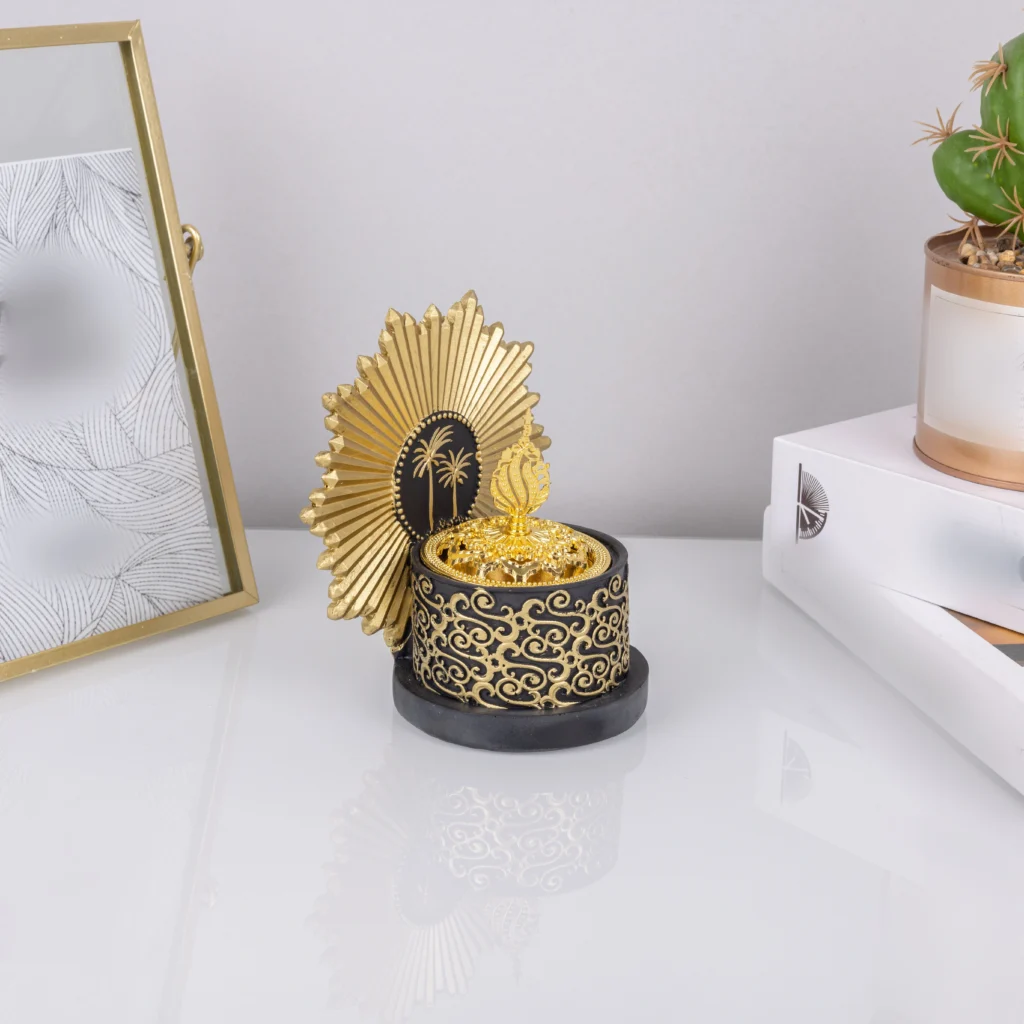
Aluminum Incense Burner Manufacturing (Wholesale Aluminum Fragrance Burners)
Aluminum is the ideal choice for modern, minimalist designs that prioritize lightweight portability and rapid heat dissipation.
Production Challenges
- Oxidation and Staining: Unfinished aluminum can react with certain oils or smoke, leading to permanent staining.
- Structural Rigidity: Because aluminum is soft, thin-walled designs can dent easily during shipping.
Solutions
- Anodizing Treatment: Use anodized finishes to create a hard, non-reactive surface that is easy to wipe clean.
- Reinforced Wall Design: Increase the gauge of the aluminum in high-stress areas to ensure durability for wholesale distribution.
Wooden Incense Burner Customization (Custom Wood Incense Holders)
Wooden burners offer a timeless, organic aesthetic that aligns perfectly with eco-conscious brands and traditional scent rituals.
Production Challenges
- Flammability Risks: Wood is naturally combustible, posing a significant safety hazard if not properly engineered for heat.
- Environmental Sensitivity: Natural wood can warp, crack, or develop mold if the moisture content is not strictly controlled during manufacturing.
Solutions
- Metal Inlay Integration: Incorporate a fireproof metal liner (typically aluminum or brass) to isolate the heat source from the wooden body.
- Kiln-Drying & Fire-Retardant Coating: Ensure wood is kiln-dried to an 8%–12% moisture level and treated with specialized fire-retardant clear coats.
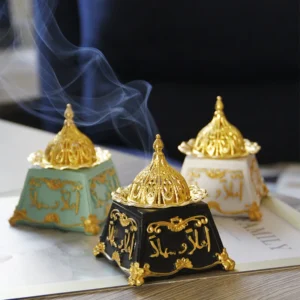
Ceramic and Stone Incense Casing (Custom Stone & Ceramic Burner OEM)
Natural materials like marble, jade, or ceramic appeal to the “organic luxury” and “Zen” market segments.
Production Challenges
- Thermal Shock: Natural stone or low-fire ceramics can crack if the temperature changes too rapidly.
- Fragility in Logistics: These materials are highly susceptible to breakage during international B2B transit.
Solutions
- Material Selection: Use high-borosilicate ceramics or specifically treated natural stones that have been tested for thermal expansion.
- Custom Protective Packaging: Design specialized EPE foam inserts to ensure zero-damage delivery for high-value custom orders.
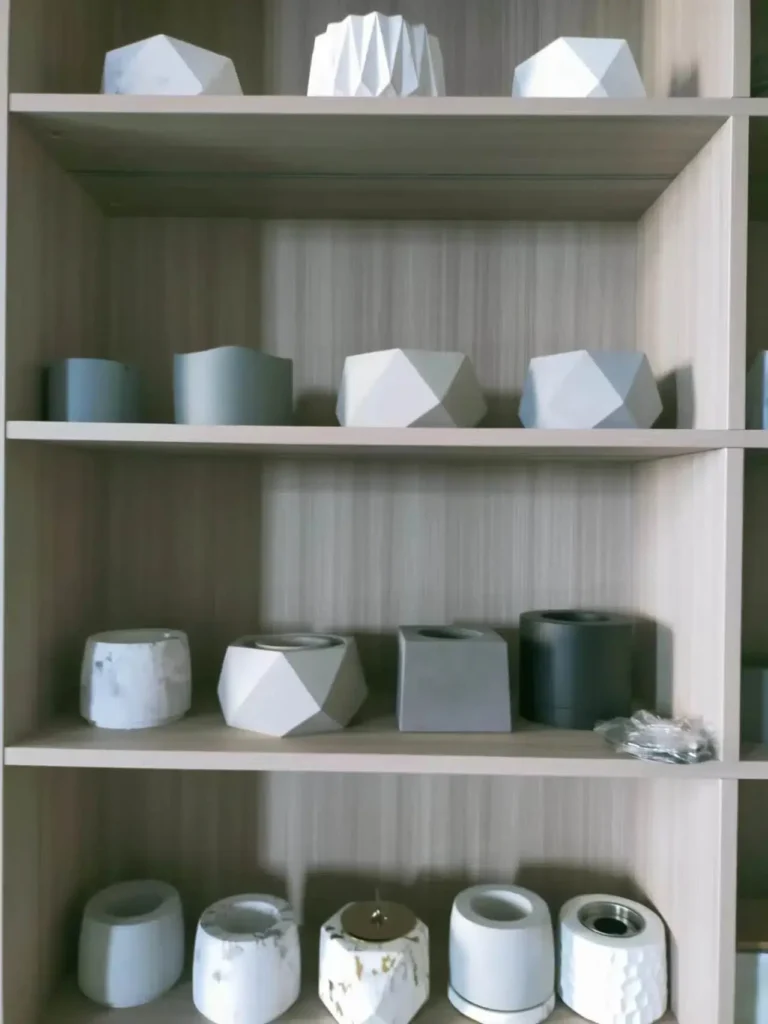
Comparison Table of Incense Burner Materials
| Material Type | Core Advantages | Main Disadvantages | Target Market | Market Position | Suggested MOQ |
| Zinc Alloy | Intricate details, heavy feel, luxury aesthetic | High tooling costs | Luxury gifting, interior designers | High-End / Premium | 2,000 PCS |
| Aluminum | Lightweight, cost-effective, fast cooling | Less “premium” feel than stone | Modern home decor, mass market | Mid-Range / FMCG | 5,000 PCS |
| Wood | Eco-friendly, organic feel, unique grain | Fire safety risks without liners | Sustainable brands, traditionalists | Eco-Luxury / Craft | 1,500 PCS |
| Ceramic/Stone | Natural aesthetic, heat resistant | Heavy, fragile in transit | Wellness, Spa, Eco-conscious | Organic Luxury | 1,000 PCS |
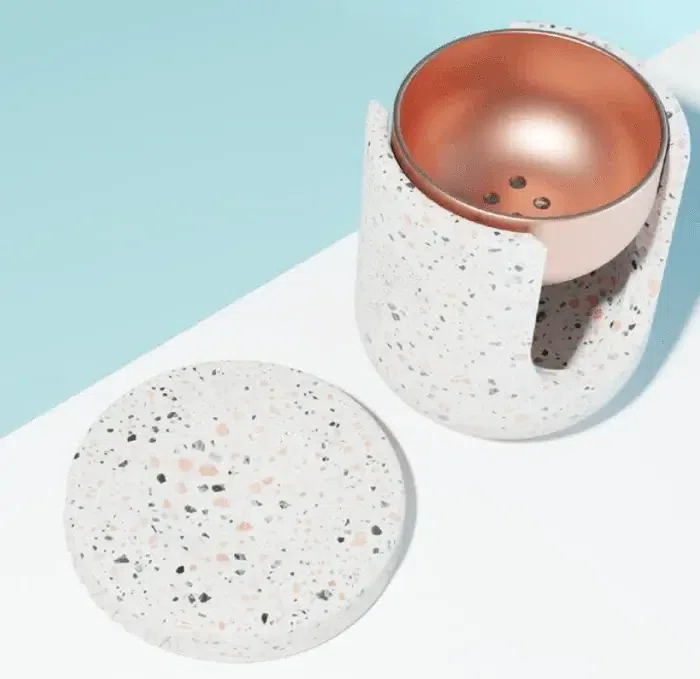
Terrazzo & Engineered Stone Incense Burners: Value, Durability, and Production Insights
Why Terrazzo & Engineered Stone?
- Cost-Effective & Aesthetic: Offers a high-end, custom look with minimal material costs.
- Thermal Resistance: Highly durable, heat-resistant, and maintains color stability without yellowing or cracking when exposed to hot ash and burning incense.
Key Manufacturing Challenges & Solutions
- Thermal Shock & Heat Cracking
- Challenge: Concentrated heat from incense can cause resin expansion and cracking.
- Solution: Use high-performance inorganic (cementitious) binders instead of organic resins, or incorporate thermal-resistant micro-additives.
- Porosity & Staining
- Challenge: Smoke, ash, and oil residue can penetrate untreated stone surfaces, causing permanent discoloration.
- Solution: Apply a high-temp nano-penetrating sealer to create an oil- and stain-repellent surface barrier.
- Complex Molding & Air Bubbles
- Challenge: Deep bowl shapes lead to trapped air pockets and uneven aggregate distribution during casting.
- Solution: Utilize high-frequency vibration tables during slurry pouring and apply precise demolding techniques.
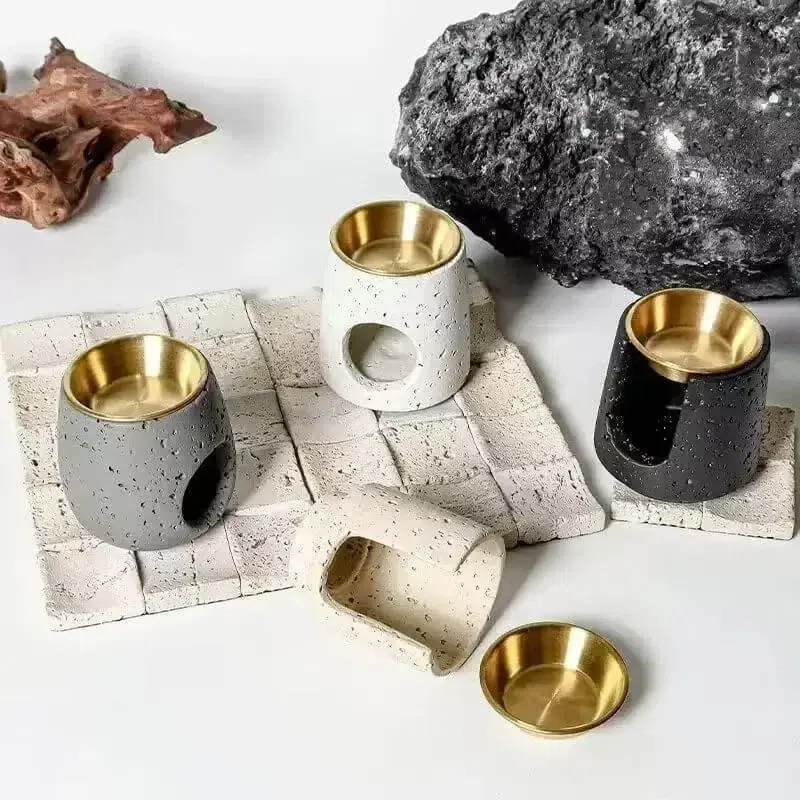
Industry Professional FAQ of Custom Incense Burner
Typically, 25-30 days for mold development and 35 days for mass production.
Yes, we support laser engraving, silk screening, and high-temperature UV printing.
All our natural stone products undergo thermal shock testing to ensure safety during use.
We provide full OEM/ODM services, from initial 3D sketching to final production.
Anodizing provides a corrosion-resistant layer that prevents oils from damaging the burner.
We perform 100% manual inspection and salt spray tests for surface durability.
Using “public mold” shapes with custom glazing/logos can often lower the entry MOQ.
We offer specialized drop-test certified packaging to ensure safe global shipping.
Stone or high-fire ceramics are recommended for their superior thermal stability.
For a deep dive into industry jargon, please visit our Perfume Packaging Glossary.
Selecting the right partner for your Customized Incense Burner production is essential for maintaining brand integrity. By balancing material science with aesthetic design, your brand can provide a sensory experience that resonates with modern consumers.
