

Before diving into the technical specifications of squeeze bulb perfume customization, you may want to consult our Complete Guide to Perfume Packaging Terms & Glossary to better understand the professional terminology used in the fragrance industry.
In the cosmetic and personal care packaging industry, customized squeeze bulb perfume significantly enhances a product’s vintage appeal and brand identity. Due to the complex structure of the bulb pump—which involves the bulb, braided mesh, pump engine, dip tube, and outer housing—supply chain management and technical coordination are critical.
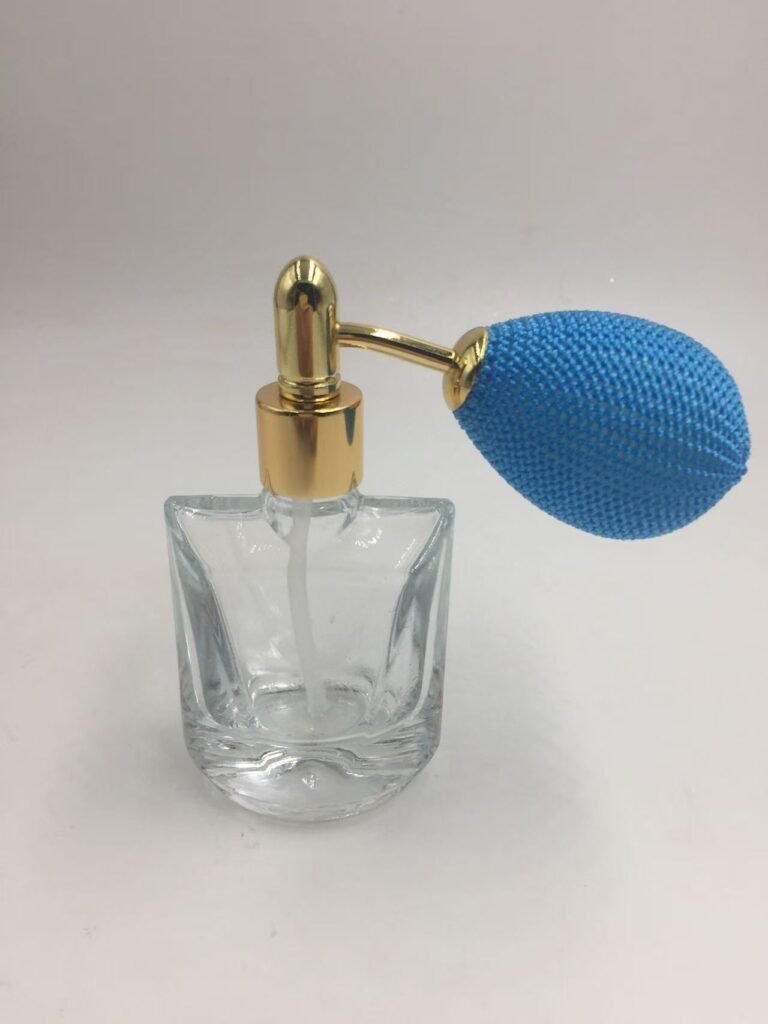
1. Core Customization Parameters
| Customization Item | Minimum Order Quantity (MOQ) | Customizable Content |
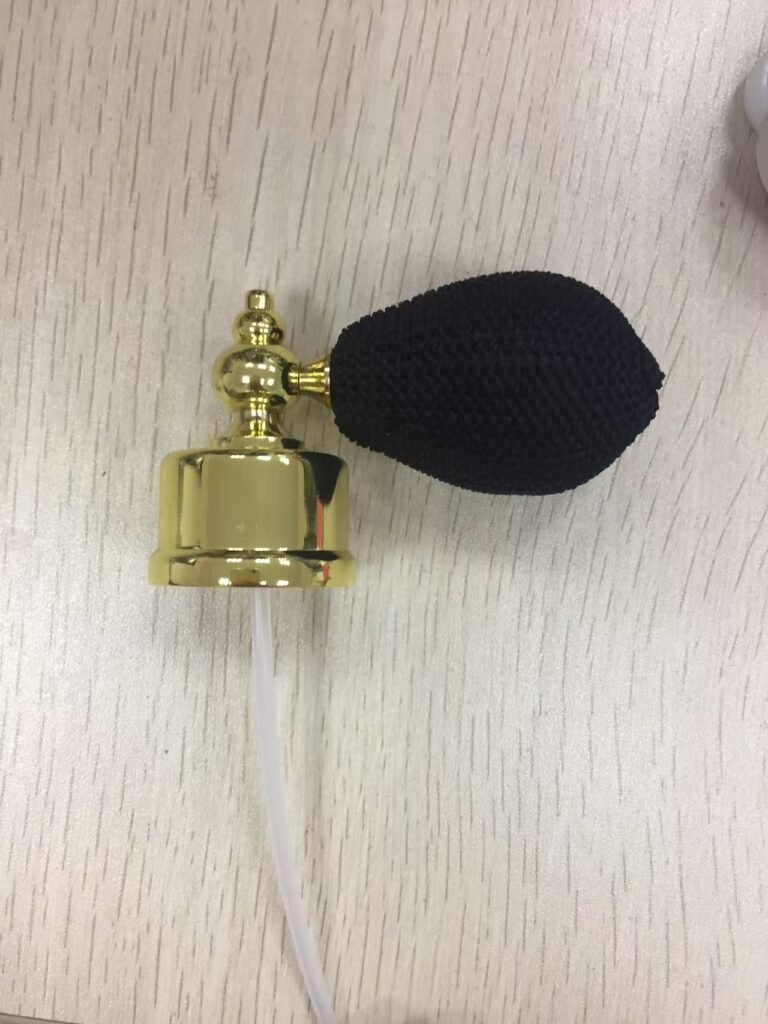
| Pump Head Style/Material | 5,000 pcs | Plastic (PP/ABS), Anodized Aluminum (Gold, Silver, Matte, etc.), Electroplating, Spray Coating, and unique pump head shapes. |
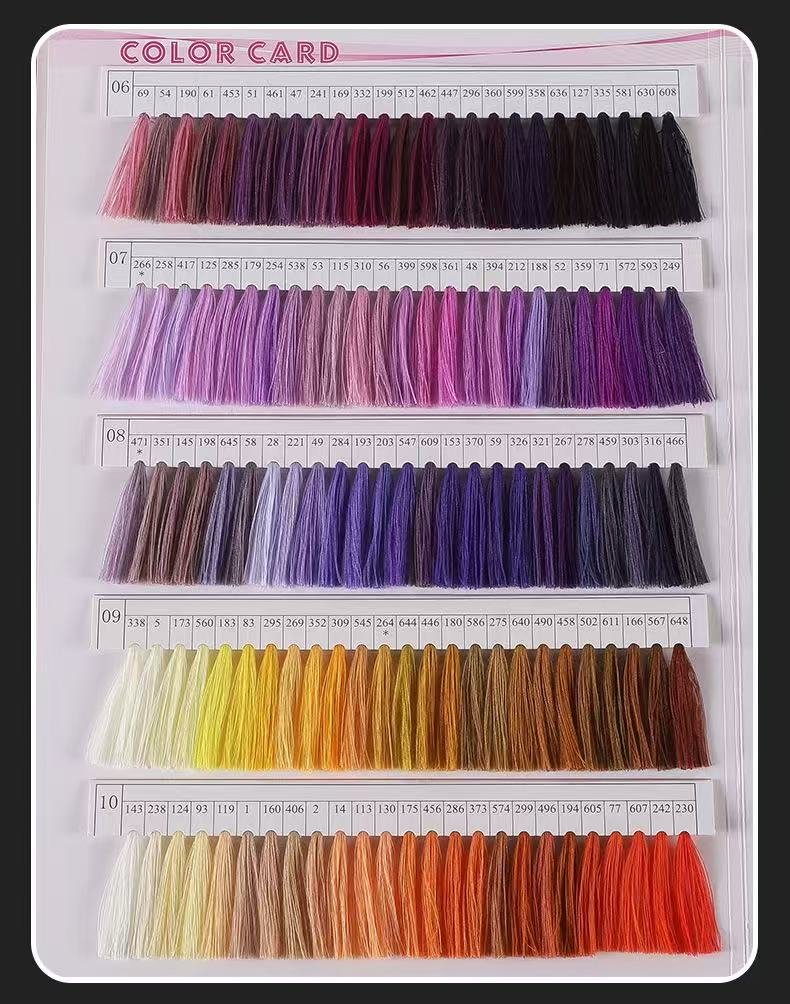
| Bulb Color | 20,000 pcs | Rubber bulb color, outer braided mesh (thread color, patterns), and tassel decoration colors. |
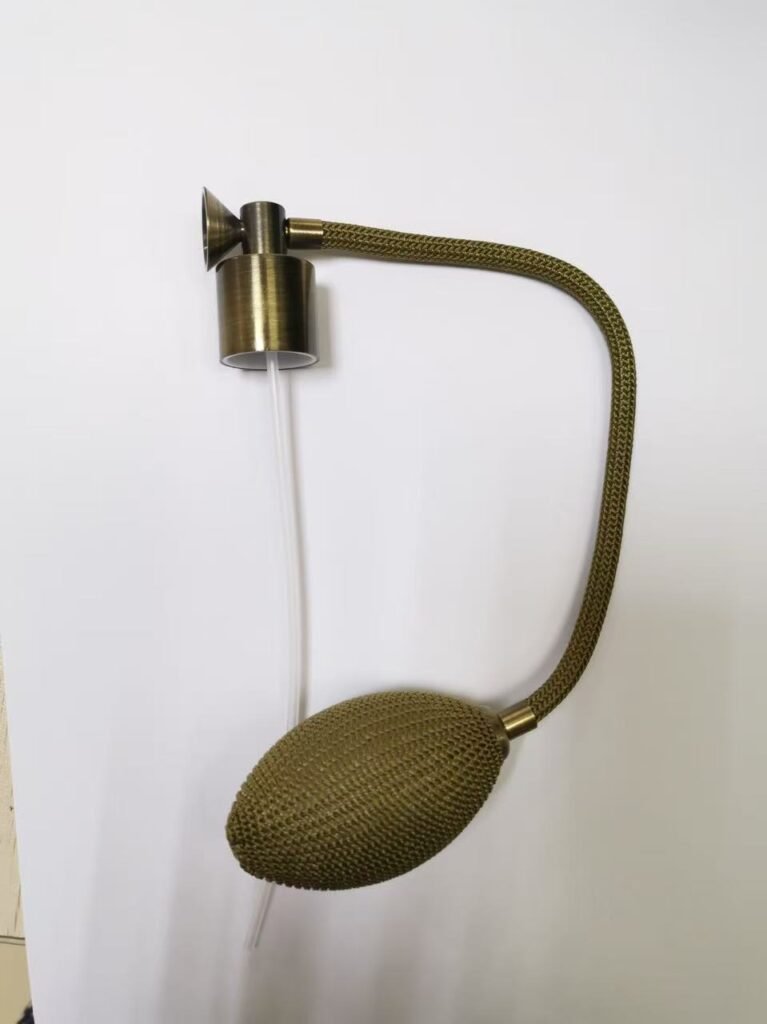
2. Potential Issues and Solutions in the Customization Process
1. Color Variance
- Problem: Discrepancies between the rubber bulb color and the outer braided mesh, or the metal electroplating color not matching the design proof.
- Solution: * Provide Pantone Numbers as the absolute standard.
- Require a Pre-production Sample (PPS) for physical confirmation before mass production.
- Compare samples under different lighting conditions (natural, warm, and cool light).
2. Air Leakage or Weak Rebound
- Problem: Incorrect rubber material ratios or aging from prolonged storage can cause the bulb to lose its “snap back” ability, rendering it unusable.
- Solution: * Request the factory to use High-elasticity Butyl Rubber or Silicone.
- Conduct 10,000-press fatigue testing.
- Increase the number of airtightness sampling points during the QC phase.
3. Fraying or Pilling of the Braided Mesh
- Problem: The textile sleeve on the bulb may snag or unravel due to friction or poor processing.
- Solution: * Select high-density, high-grammage silk threads.
- Inspect the attachment point between the pump and bulb to ensure no sharp edges can damage the mesh.
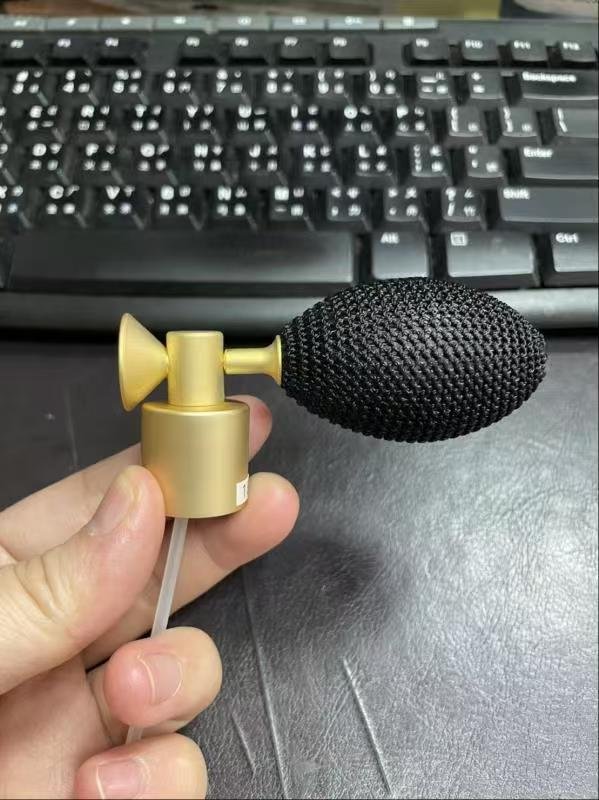
4. Compatibility Issues (Formula vs. Pump)
- Problem: High oil content or strong solvents can cause the bulb to swell or the internal spring to rust.
- Solution: * Compatibility Testing: Submerge the pump in the final formula and perform a 4-week stability test at 45°C.
- For sensitive formulas, use an external spring pump engine where the liquid does not contact the metal spring.
3. Frequently Asked Questions (FAQ) about the Squeeze Bulb Perfume Bottle
A: Customizing bulb colors requires specific rubber batch dyeing and setting up the weaving machines for the outer mesh. These machines require high-volume runs to be cost-effective. In contrast, pump styles can often be customized by changing colors on existing molds, allowing for more flexibility.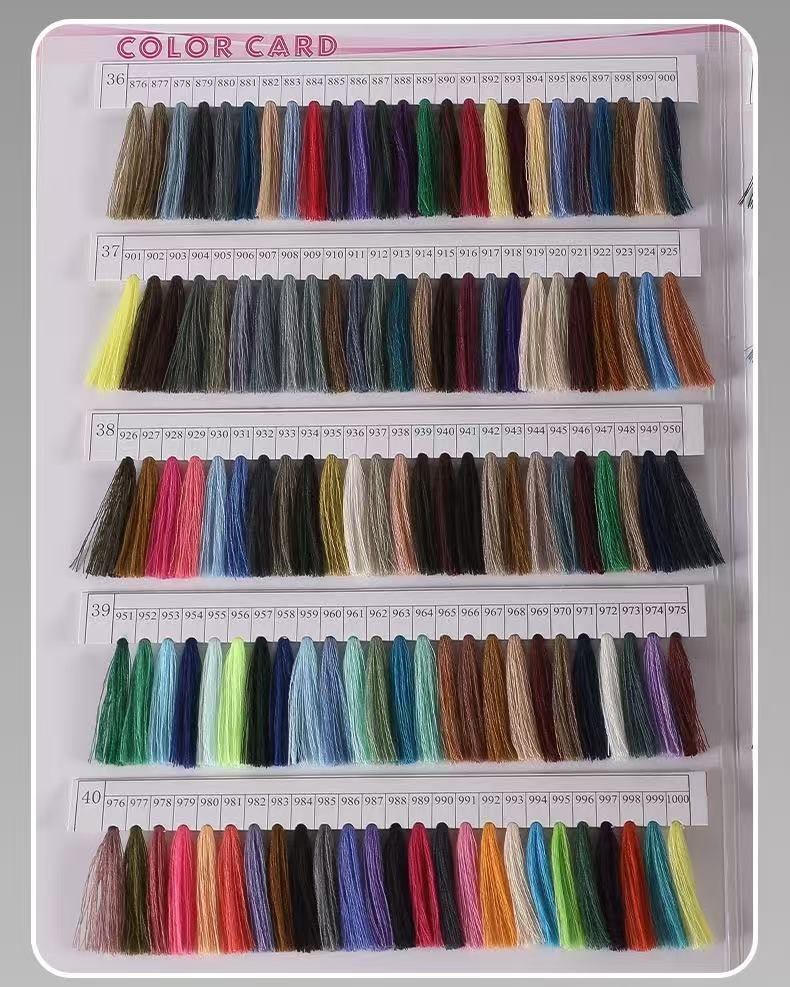 https://fragrancepackage.com/vintage-perfume-bulb-atomizers-wholesale-replacement-guide/
A: Absolutely. You can choose from the factory’s existing color library (typically black, white, gold, or silver). This allows you to stick to the 5,000-unit MOQ.
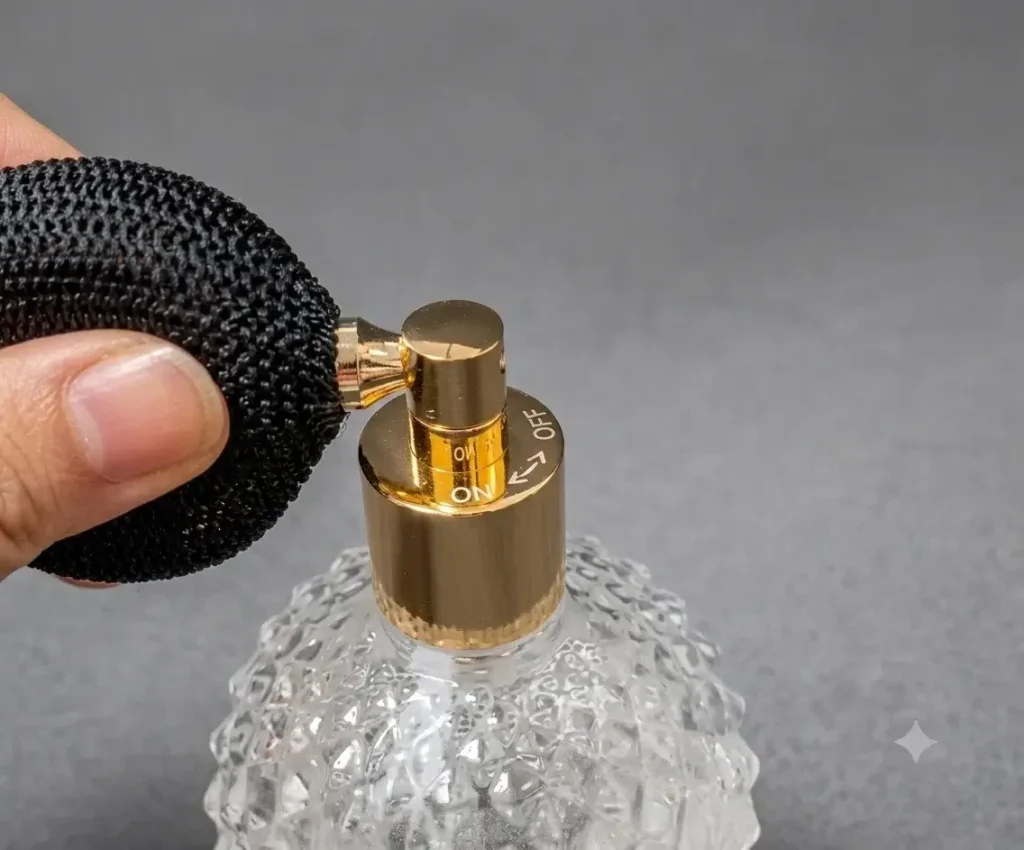
A: Bulb pumps are generally “non-sealed” systems. Without a locking mechanism or an airtight overcap, there is a high risk of leakage during transit. We recommend adding an on/off twist-lock function or a dedicated travel cap.
A: Generally: Sampling (7–12 days) → Sample Approval → Mass Production (25–35 days). If a new mold is required, add another 20–30 days for tool development.
A: Anodized Aluminum offers a premium metallic feel, is highly durable, and does not fade easily—ideal for luxury perfumes. Electroplating (often on plastic) is more cost-effective and offers a wider range of high-shine colors, but may peel over long-term use.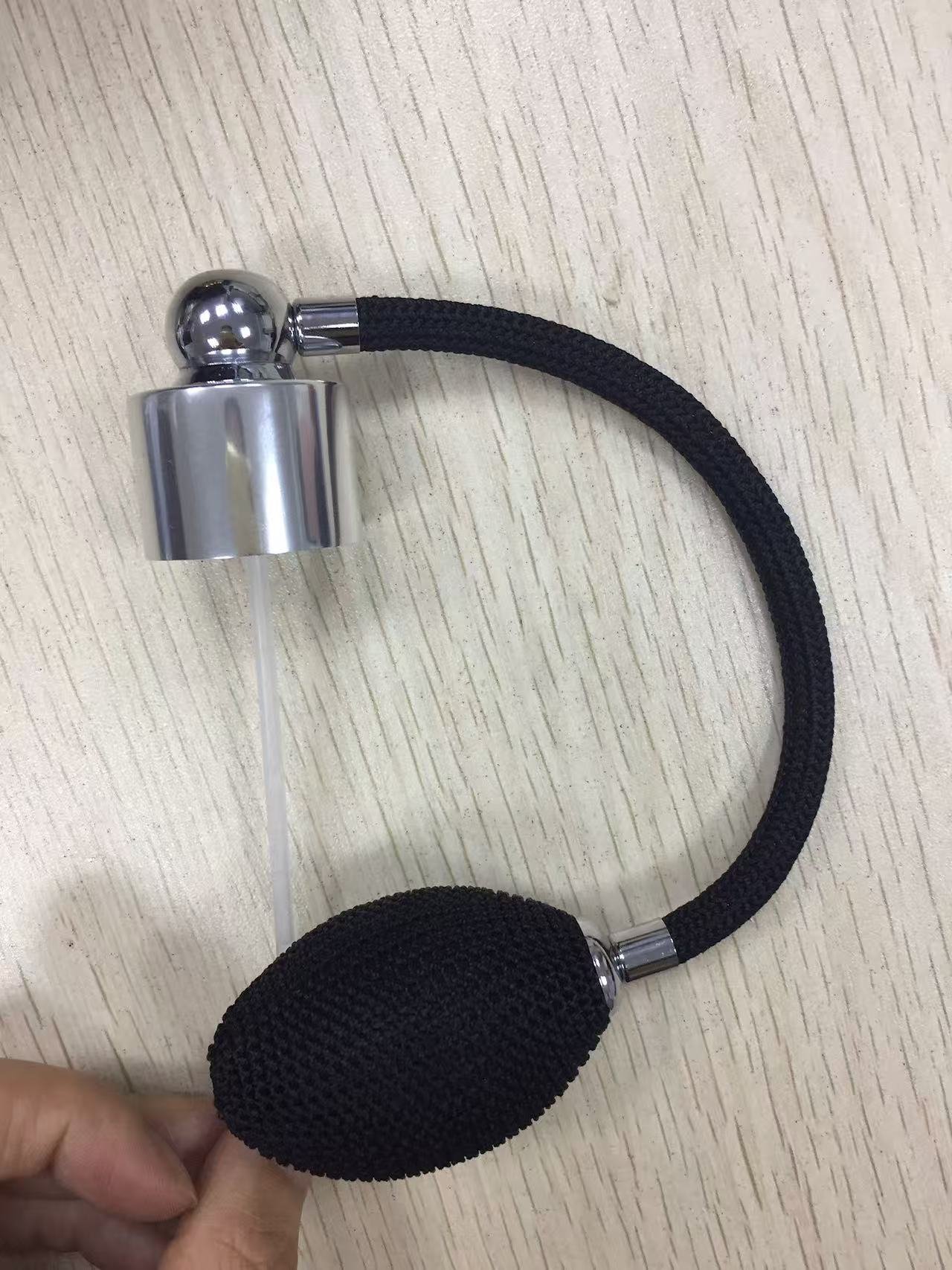
Final Recommendation:
Before committing to a 20,000-unit custom color order, ensure you perform a Drop Test and Vacuum Leak Test. This confirms that your formula (perfume, oils, etc.) atomizes correctly and does not chemically degrade the bulb material.
Good News: As the original inventor of the press-style bulb pump, we are well aware of this chronic industry pain point. After countless rounds of R&D and technical breakthroughs, we have finally brought a game-changing, innovative masterpiece—the Integrated Smooth Spray ON/OFF Locking leak-proof perfume bulb pump!
For more information on the various components mentioned above, please refer back to our Complete Guide to Perfume Packaging Terms & Glossary to ensure your technical specifications are accurate when communicating with manufacturers.
