

In the fragrance packaging industry, understanding Perfume Spray Pump details is essential. Before diving deep, you can refer to this Complete Guide to Perfume Packaging Terms & Glossary, which covers the core vocabulary of the industry.
A: “Spray Pumps” vary based on application, technical structure, and trade habits
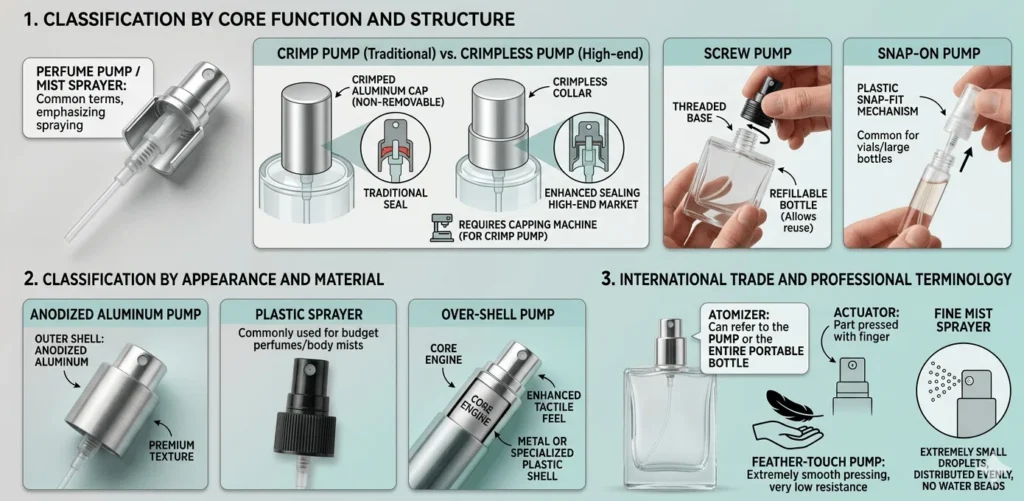
1. Classification by Core Function and Structure
- Perfume Pump / Mist Sprayer: The most common terms emphasize the spraying function.
- Crimp Pump / Crimpless Pump:
- Crimp Pump: The traditional sealing method. It requires a capping machine to tighten the aluminum cap onto the bottle neck. It is non-removable.
- Crimpless Pump: While it looks like a crimp pump, it is designed for the high-end market to provide better sealing performance.
- Screw Pump: Features a threaded base that screws directly onto the bottle. This allows consumers to refill the bottle easily.
- Snap-on Pump: Attaches to the bottle neck via a plastic snap-fit mechanism. Common in perfume vials or large plastic bottles.
2. Classification by Appearance and Material
- Anodized Aluminum Pump: Refers to pumps with an outer shell made of aluminum that has undergone anodic oxidation, offering a premium texture.
- Plastic Sprayer: Commonly used for budget perfumes or body mists.
- Over-shell Pump: A pump where the core engine is encased in a metal or specialized plastic shell to enhance the tactile feel.
3. International Trade and Professional Terminology
- Atomizer: In English-speaking markets, this can refer to just the pump or the entire portable perfume bottle.
- Actuator: Technically refers to the top part that you press with your finger.
- Feather-touch Pump: A pump designed for an extremely smooth pressing experience with very low resistance.
- Fine Mist Sprayer: Emphasizes that the spray consists of extremely small droplets, distributed evenly without forming water beads.
4. Vintage and Specialized Structures
- Bulb Atomizer / Balloon Pump: Features a vintage fabric bulb. These are mostly seen in retro niche perfumes or luxury vanity displays.
- Long Nozzle Sprayer: Features an extended nozzle, often used for specific decorative perfume bottle designs.
5. Internal Industry Slang (Common in Factories)
- Pump Engine: Specifically refers to the internal mechanical structure of the pump.
- Aluminum Collar: Refers to the metal sleeve or ring around the base of the pump.
- Dip Tube: Though technically an accessory, it is usually included as part of the “Pump Assembly.”
Summary and Comparison
| Term | Focus | Common Usage Scenarios |
| Perfume Sprayer | Functionality | General communication, B2B searches |
| Crimp Pump | Installation Method | Manufacturing, technical specifications |
| Atomizer | User Experience | Brand marketing, retail terminology |
| Bulb Pump | Vintage Aesthetics | High-end customization, antique replicas |
B. Deep Dive into Common Pump Types
Crimp Pump
This is the most popular choice for high-end perfumes.
- Structure: Actuator, Anodized Aluminum Cap, Aluminum Ferrule, Pump Engine (piston, spring), and Dip Tube.
- Pros: Excellent sealing. Anti-counterfeit and leak-proof. Premium look with no visible threads.
- Cons: Requires a capping machine. Cannot be opened once sealed.
- Common Issues: Leaking due to poor sealing.
- Solution: Adjust the capping machine pressure and mold size strictly.

Screw Pump
Commonly used for niche perfumes or body mists.
- Structure: Actuator, Aluminum or Plastic Cap with internal threads, Pump Engine, and Dip Tube.
- Pros: Easy to install by hand. The bottle is refillable and eco-friendly.
- Cons: Sealing is weaker than crimp pumps. Users can easily unscrew it.
- Common Issues: Loosening and leaking during transit due to vibration.
- Solution: Add a sealing gasket or use a tiny bit of thread-locking glue.
Snap-on Pump
Often used for sample vials or large-capacity personal care products.
- Structure: Plastic Actuator, Snap-fit Pump Body, and Dip Tube.
- Pros: Low cost. Very fast assembly.
- Cons: Feels “plastic.” It may loosen after many uses.
- Common Issues: The pump head may pop off during pressing.
- Solution: Optimize the bottleneck specs for a precise fit.
Vintage Style Bulb Atomizer
A highly decorative and classic choice.
- Structure: Knitted Bulb, Connector Tube, One-way Valve Engine, and Metal Nozzle.
- Pros: High aesthetic value. Great spraying ritual.
- Cons: Alcohol evaporates easily. The bulb has a limited lifespan.
- Common Issues: Dried alcohol clogging the valve or rubber aging.
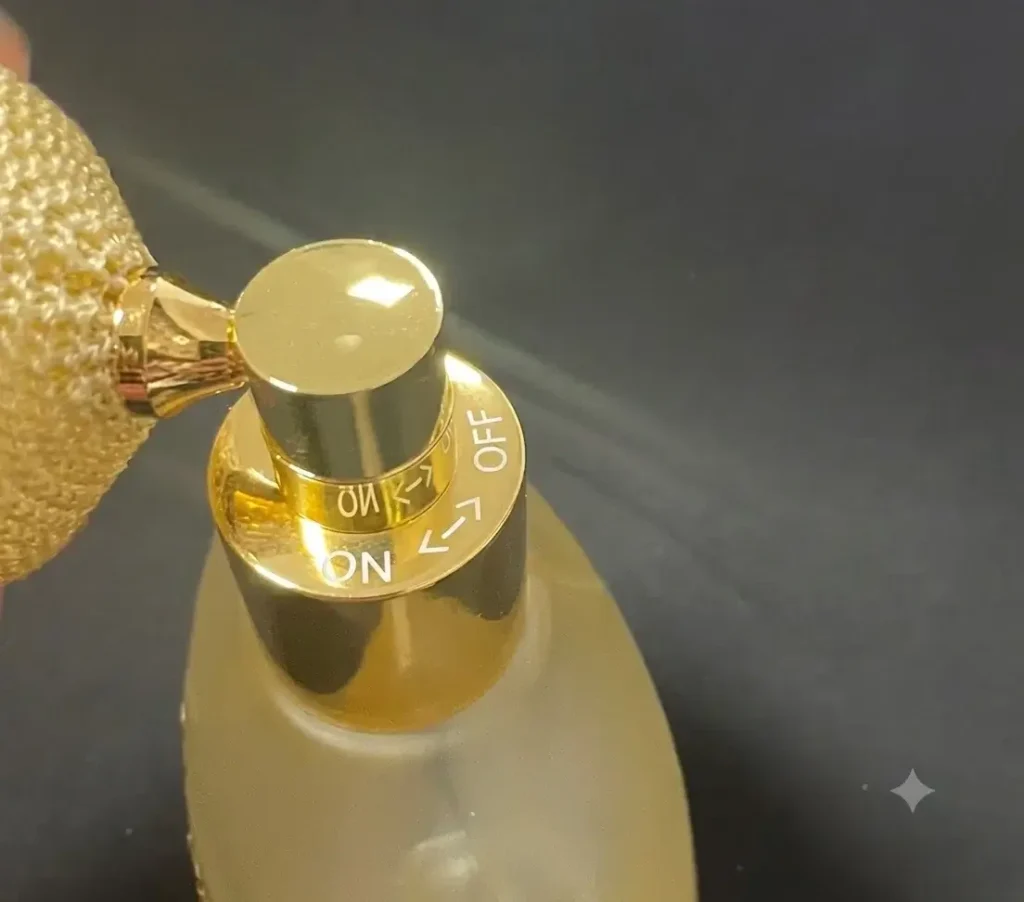
- Solution: Use high-quality anti-corrosion bulbs and add an on/off lock.
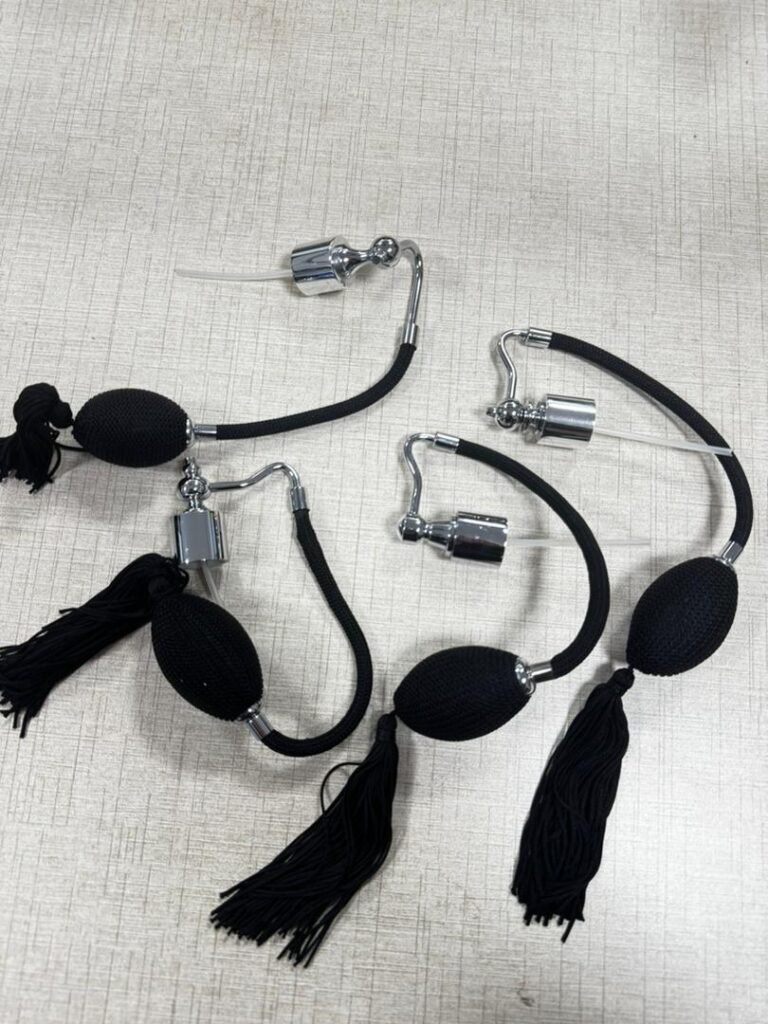
Leak-Proof Perfume Bulb Atomizer
A highly decorative and classic choice.
- Structure: Knitted Bulb, Connector Tube, One-way Valve Engine, on/off lock, and Metal Nozzle.
- Prevent perfume leakage during shipping
For more details on materials, don’t forget to check our Pillar Page Content.
C. Pump Series Summary Table
| Pump Type | Core Advantage | Main Risk | Best For |
| Crimp Pump | 100% Sealed, Luxury feel | Needs special machinery | Luxury & Commercial Fragrance |
| Screw Pump | Refillable | Can loosen easily | Eco-friendly brands, Testers |
| Snap-on Pump | Fast assembly, Cheap | Lower grade feel | Budget mists, Sample vials |
| Bulb Atomizer | Vintage Luxury | Evaporation risk | Collector editions, Gifts |
| Leak-proof Pump | can be locked/unlocked to prevent accidental actuation during transportation and storage. | No | High-end brands |
D. Industry FAQ about Perfume Spray Pump
A: This is normal. There is air in the engine. Press 3-5 times to prime it.
A: The tube should just touch the corner of the bottle bottom.
A: Usually a damaged nozzle or low pressure. Replace with a high-quality engine.
A: Yes, but screw pumps are more likely to leak under high altitude pressure.
A: It could be high alcohol purity or poor surface treatment.
A: Standard perfume pumps are usually 0.07ml to 0.15ml per spray.
A: The internal spring is too stiff, or the piston lacks lubrication.
A: The tube material is reacting chemically with the fragrance oils.
A: It could be both. Run a “Vacuum Leak Test” to check the fit.
A: It is very difficult. It is better to replace the bulb component.
A: As a patented perfume pump manufacturer, we offer custom luxury on/off perfume bulb atomizer. Welcome to contact us to test samples and mass order.https://fragrancepackage.com/leak-proof-vintage-perfume-bulb-pump-atomizer-with-on-off-lock/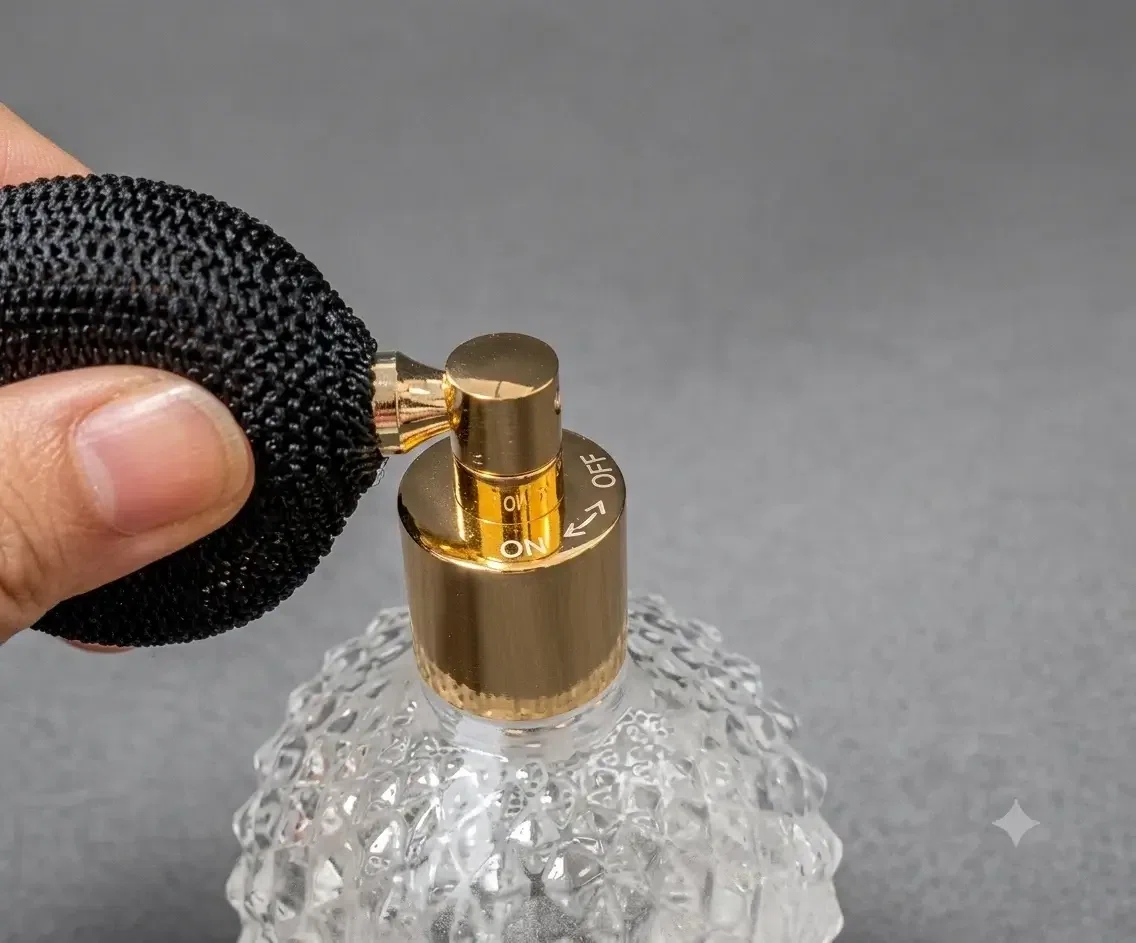
We hope this article helps you master the basics of pumps. If you want to learn about bottle bodies or other accessories, please continue reading our Complete Perfume Packaging Glossary.
