

In the world of high-end perfumes, cosmetics, and home fragrances, Magnetic Resin Stone Caps are rapidly emerging as the premier alternative to natural stone. While resin offers unparalleled design flexibility, achieving a “hyper-realistic” and “versatile” aesthetic involves overcoming significant technical hurdles.
For those looking to deepen their understanding of the industry’s vocabulary, including components and materials, you can refer to our Complete Guide to Perfume Packaging Terms & Glossary.
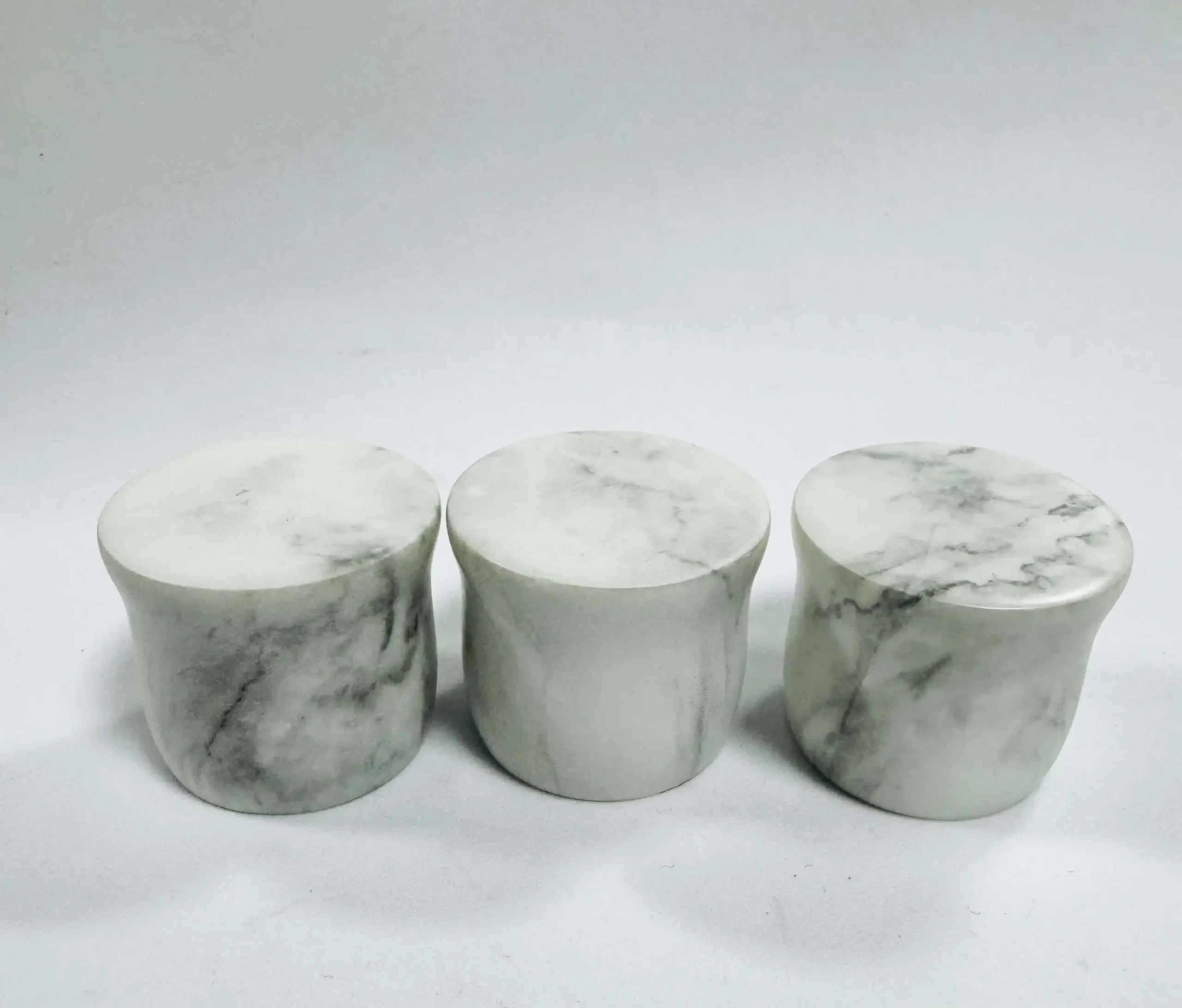
Why Resin Over Natural Stone?
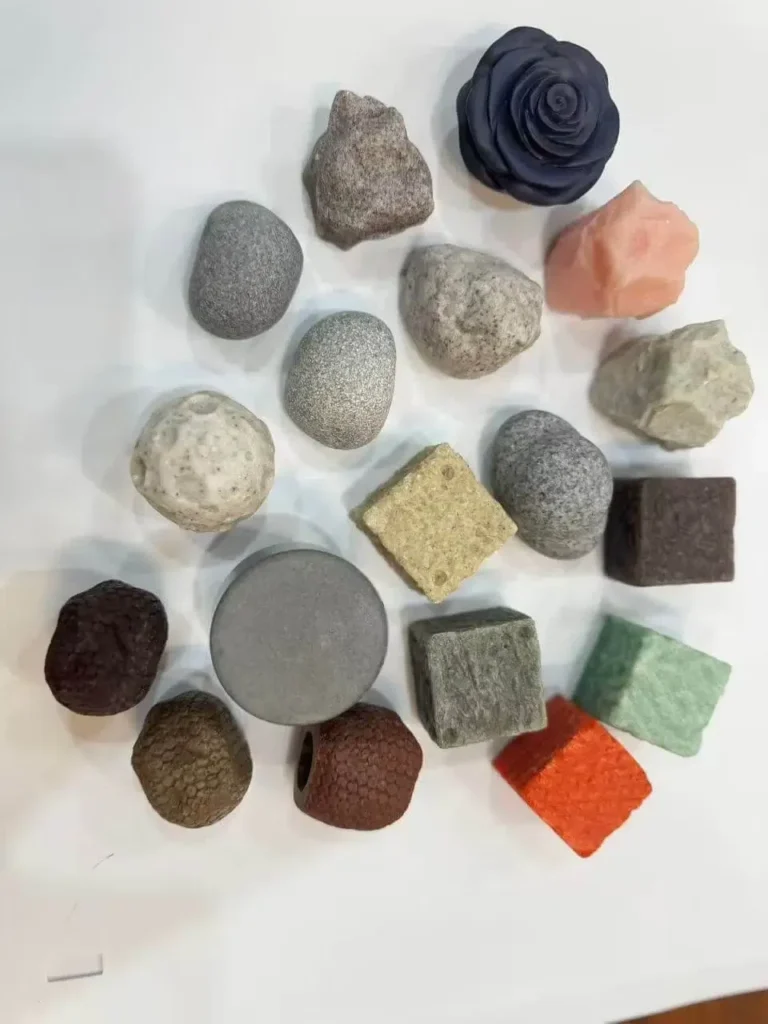
Natural stones like marble or malachite are breathtaking but notoriously fragile. Their physical brittleness makes it nearly impossible to precision-drill internal cavities for magnets without cracking the material. Furthermore, their color palettes are limited by geological availability. Resin, however, allows for human-calibrated artistry, enabling integrated magnetic structures and a limitless spectrum of colors and textures.
1. Core Bottlenecks in Color Realization
When developing solid, mixed, or specialty effects, manufacturers face three primary challenges:
- Color “Turbidity” in Mixing: When simulating marble or flowing sand patterns, different resin colors can blend too aggressively inside the mold. This results in blurred edges and a “muddy” appearance rather than distinct, crisp veins.
- Sedimentation of Effect Pigments: Achieving a “glittering gold” effect requires metallic powders, pearlescent pigments, or sequins. Due to the density difference between these particles and the resin base, they tend to sink during the curing process, leading to a thin color at the top and heavy accumulation at the bottom.
- Inconsistency in Surface Finish: High-gloss finishes can magnify internal bubbles or impurities. Conversely, poorly executed matte finishes can look “plastic” and cheap, failing to evoke the warm, organic tactile feel of real stone.
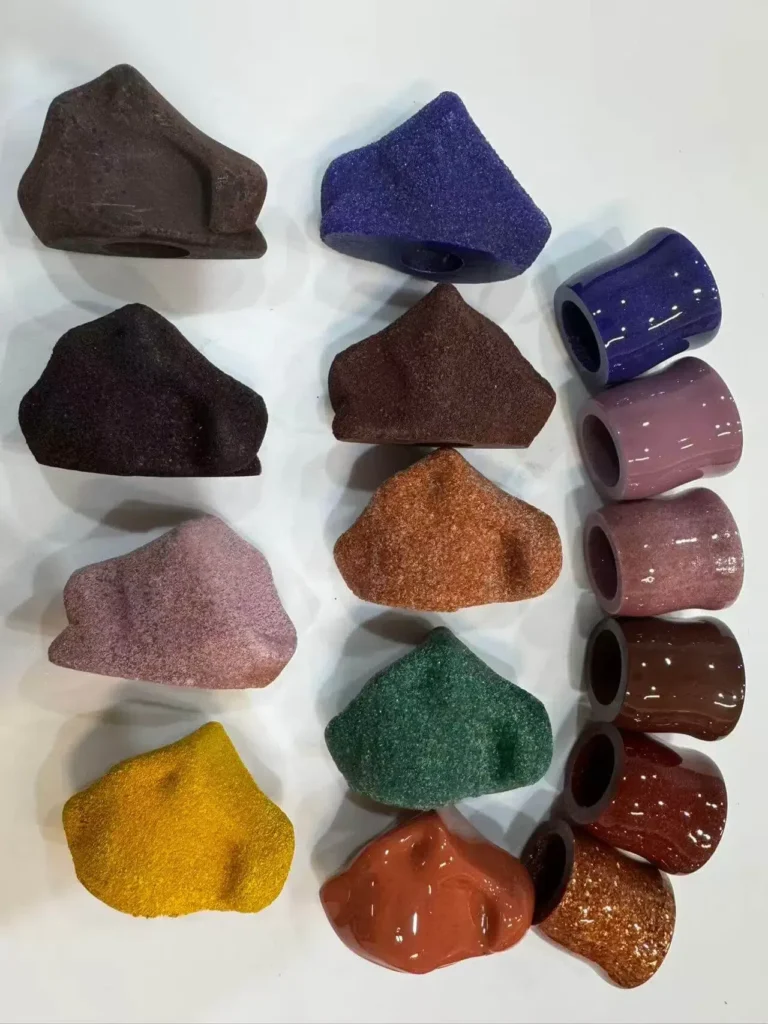
2. Solutions and Optimization Paths
- Multi-Component Phased Pouring: To solve the texture blending issue, resins of varying viscosities are dripped in layers. By leveraging different curing rates and using manual or mechanical agitation, we create natural “folds” in the pattern, preventing total color fusion.
- Anti-Settling Additives & Suspension Tech: By adding coupling or thixotropic agents to gold powders and special pigments, we increase the “support” of the resin before it hardens. This ensures shimmering particles remain uniformly suspended in 3D space.
- Precision Tooling and Post-Processing:
- Glossy Finish: Utilizing mirror-polished steel molds combined with vacuum degassing to eliminate visual flaws.
- Matte Finish: Using sandblasted molds or applying a fine “Rubber Paint” coating to simulate the frosted, tactile texture of raw ore.
- Integrated Magnetic Pre-Embedding: Taking advantage of the resin’s fluidity, magnets are fixed onto a central mold core before injection. The resin then completely encapsulates the magnet, ensuring precise magnetic alignment and protecting the metal from oxidation or moisture.
FAQ: Common Questions Answered
A: Natural stone is hard and brittle; machining it to fit a magnet often leads to breakage. Resin is molded in a fluid state, allowing the magnet to be “wrapped” seamlessly inside. This results in a cleaner exterior with no visible gaps and a more accurate magnetic force.
A: No. Because the mixing process mimics natural fluid dynamics, every cap features a unique pattern. This is a key selling point—combining industrial quality standards with the “one-of-a-kind” soul of an art piece.
A: The secret is “depth of field.” Instead of a surface-level gold paint, we suspend various sizes of gold leaf and pearlescent flakes within transparent resin layers. This creates a multidimensional shimmer as light refracts through the different depths.
A: High-quality matte caps undergo surface stabilization. We add UV-resistant agents to prevent yellowing in light colors, and the fine matte texture is actually more resistant to fingerprints than high-gloss surfaces.
A: No. As the resin cures, it undergoes a slight shrinkage that creates a “bite” around the magnet. We also design internal physical locking slots and use chemical bonding agents to ensure the magnet is permanently secured.
For more insights into how these components fit into the broader landscape of product development, don’t forget to explore our Complete Guide to Perfume Packaging Terms & Glossary.
