
In the luxury fragrance market, perfume caps do more than seal bottles. They create the first physical impression of your brand. Natural stone perfume caps made of marble, jade, or travertine are becoming a top choice for niche and luxury brands due to their unique textures and premium weight. However, natural stone caps vs traditional zinc alloy (Zamac) caps differ greatly in materials, production, minimum order quantities (MOQ), costs, and target markets. This guide compares both materials to help you make the right choice.
Why Are Luxury Fragrance Brands Choosing Natural Stone Caps?
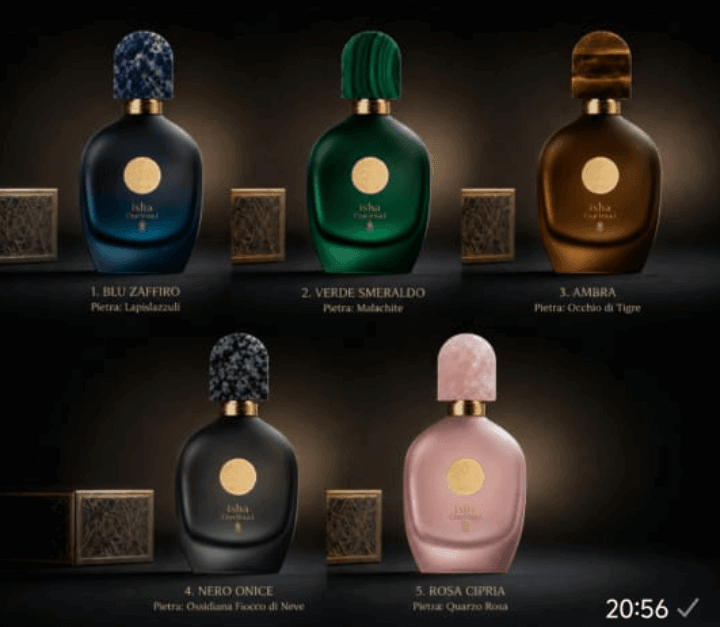
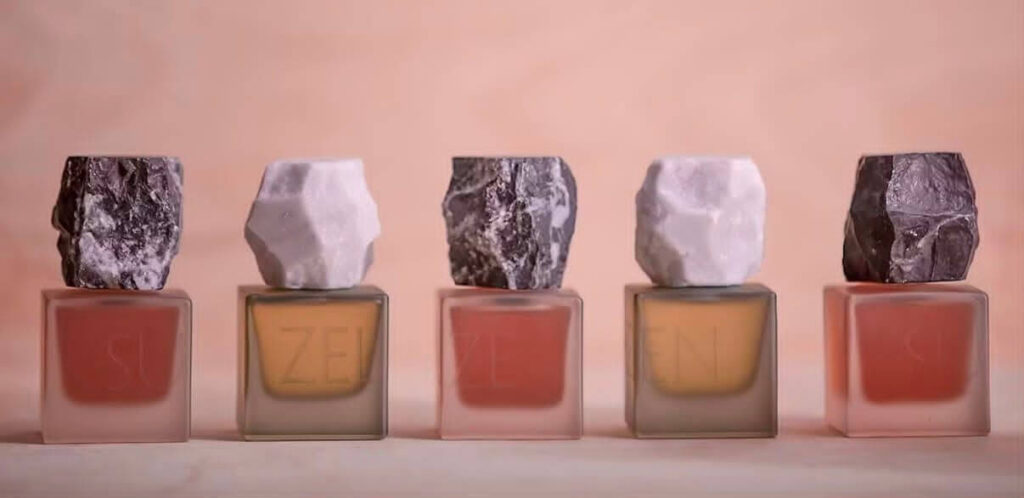
Natural stone caps feature a “one-of-a-kind” texture. Every single cap is crafted by nature over millions of years, giving your fragrance a custom feel and a sophisticated, organic aesthetic.
Before placing an order, brand buyers must balance engineering designs, total costs, and shipping durability.
Natural Stone Caps vs. Traditional Zamac Caps
Here is a quick comparison between natural stone caps and zinc alloy (Zamac) caps:
| Feature | Natural Stone Perfume Cap | Traditional Zamac Cap |
| Look & Feel | Unique natural patterns; cool and smooth to touch; feels like a piece of art | Smooth electroplated, painted, or matte finishes; uniform industrial look |
| Molding Cost | Low sampling cost (Uses CNC carving; no expensive metal mold required) | High mold cost (Requires custom steel injection molds) |
| Minimum Order (MOQ) | Flexible (500 – 1,000 pcs) | High (5,000 – 10,000 pcs) |
| Lead Time | Samples: 10-15 days; Bulk: 35-45 days (Requires extra polishing steps) | Fast mass production after mold creation |
| Weight & Structure | Heavy stone (2.6-2.8 g/cm3 density); uses a hollowed-out structure with plastic inserts to cut weight | Solid metal weight (6.6 g/cm3 density); durable and drop-resistant |
| Best For | Niche perfumes, limited editions, and eco-luxury brands | Mass luxury, commercial fragrances, and high-volume product lines |
Engineering & Quality Questions for Natural Stone Caps
1. Natural stones have color variations. How do you control quality in bulk orders?
Natural stone cannot be 100% identical. Suppliers use a Master Range Board during sampling. This board shows the acceptable limits for light and dark shades, as well as light and heavy veining. Bulk products are approved as long as they fall within this agreed range.
2. Are stone caps too heavy? Will they raise shipping costs or break the pump?
Modern stone caps use a hollowed-out design. The stone wall is kept 2-3 mm thick, with a lightweight PP plastic insert inside. This cuts weight by 40% to 60%, protecting the spray pump and lowering freight costs.
3. Stone breaks easily. How do you pass drop tests and prevent shipping damage?
To prevent breakage:
- Shock-Absorbing Inserts: Internal plastic inserts absorb shock energy.
- Beveled Edges: Sharp 90° corners are smoothed to $R0.5-R1.0$ chamfers to reduce stress.
- Safe Packaging: Bulk orders use custom EVA foam trays to stop caps from hitting each other.
4. Stone has pores. Will alcohol or fragrance oil stain or corrode it?
Finished stone caps receive an impregnation sealing and nano-coating treatment. This invisible shield seals surface pores, making the cap resistant to 75%+ alcohol and perfume oils.
5. How do stone caps fit onto bottle necks or achieve a magnetic feel?
Caps use a glued insert structure. The inner stone space is carved out with CNC tools. High-strength AB epoxy or UV glue bonds a plastic insert (with snap grips or magnets) into the stone cap. Magnetic versions use strong NdFeB magnets for a smooth snap closure.
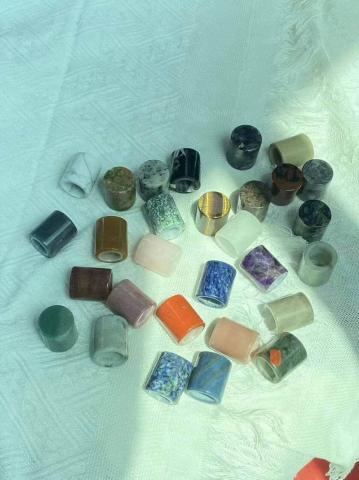
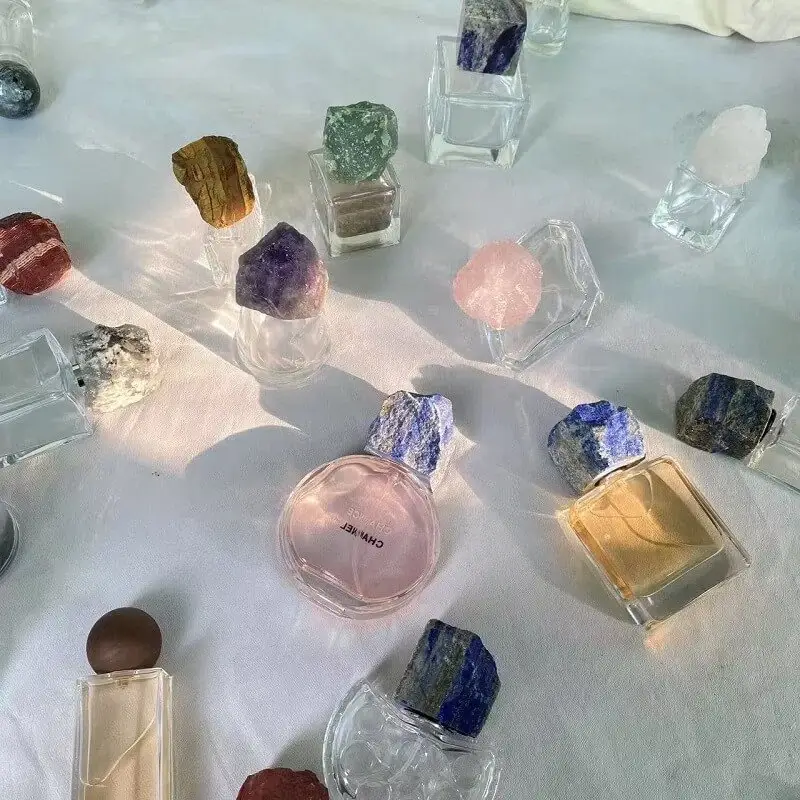
6. What types of natural stone are available? Which offers the best value?
- Natural Marble (e.g., Carrara White, Nero Marquina): Classic patterns, highly mature process, excellent value.
- Natural Jade / Onyx: Translucent and smooth with an Eastern feel; higher production costs.
- Crystals (Quartz, Amethyst, Tiger Eye): Semi-precious stones; high raw material costs; ideal for limited editions.
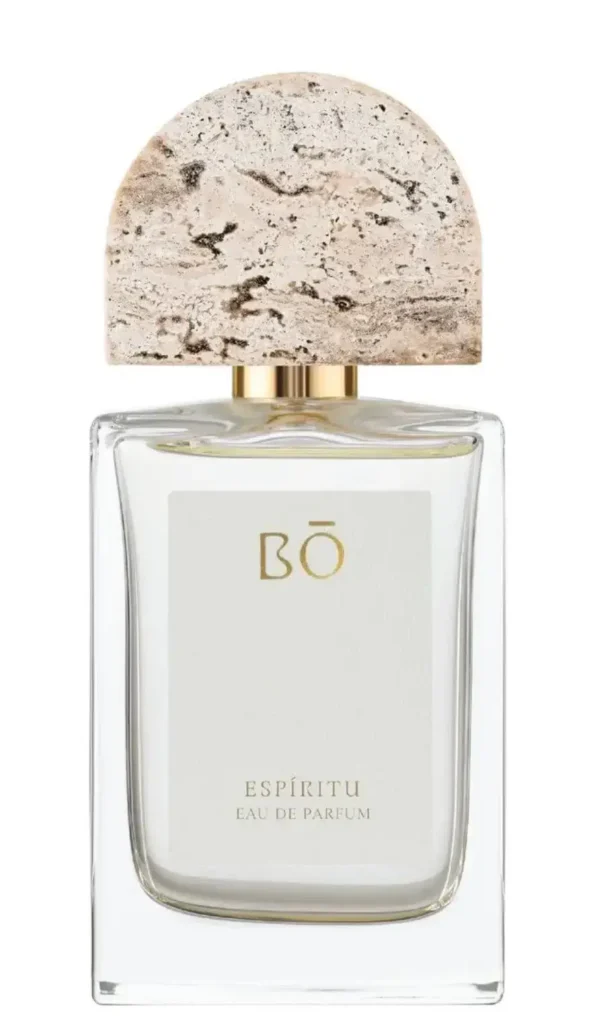
- Travertine / Volcanic Rock: Porous texture with a raw, natural aesthetic.
7. How do you add brand logos to natural stone caps?
Three main methods:
- Laser Engraving: Engraves the logo directly into the stone, which can then be filled with gold or silver paint.
- Metal Badge Inlay: Carves a slot on top of the cap and glues in a electroplated metal badge.
- Screen / UV Printing: Works best on flat, lightly veined stone surfaces at a low cost.
8. How do you test bulk quality? What are the QC standards?
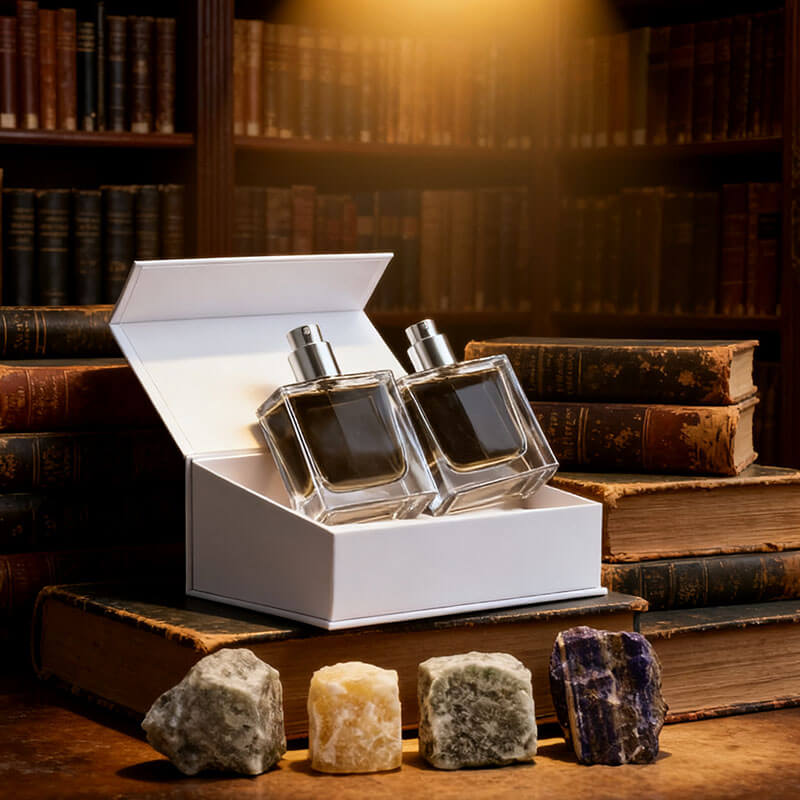
Standard QC tests include:
- Pull Force Test: Keeps the capping force between 5N and 15N so the cap stays secure without jamming.
- Alcohol & Cross-Hatch Test: Uses 75% alcohol wipes to ensure logo paint and coatings do not peel.
- Temperature Test: Tests caps from -20 ℃ to 60 ℃ to ensure the glue inside does not weaken.
- Visual Inspection: Checks for deep natural cracks that could cause structural weakness.
FAQ: What Emerging Fragrance Brands Often Ask
Stone caps use standard molded plastic inserts (PP/POM). The fit relies on the molded insert rather than the raw stone, keeping tolerances within pm 0.1 mm.
Sampling takes 10-15 days. Since caps are carved using CNC machines without expensive metal molds, sampling costs are much lower than Zamac or plastic molds.
No. Fully carved, polished, and sealed stone caps are processed mineral goods. They do not require fumigation certificates.
No. Suppliers use industrial-grade AB epoxy or heat-cured UV glue. All caps pass 60 ℃ high-temperature and -20 ℃ low-temperature cycles before shipping.
Custom shapes increase CNC machine run time and hand-polishing work. Costs rise by 20% to 40% compared to simple cylinders, but you still avoid expensive mold fees.
Yes. Thanks to the nano-coating, dust and oil stay on the surface. Users can simply wipe the cap with a soft damp cloth.
Most standard inserts fit industry-standard 15 mm (FEA 15) crimp pumps. Inserts can also be customized for screw pumps.
Expected transit breakage is under 1% to 2%. Most suppliers send 1% to 2% extra spare caps with your bulk order to cover minor transit loss.
Yes. Stone surfaces can be mirror-polished, sandblasted for a matte look, or acid-washed for a vintage texture.
Yes. Brands can use an “outer stone + inner aluminum” structure or precise mechanical friction fits without plastic inserts.
Summary & Buyer Advice
Natural stone perfume caps offer low MOQs, zero expensive mold fees, and unique natural textures. They are an effective way for niche fragrance brands to elevate product value. When sourcing, focus on suppliers with proven CNC hollow-out capabilities, nano-sealing finishes, and climate-tested glues to ensure high quality and long-term durability.
