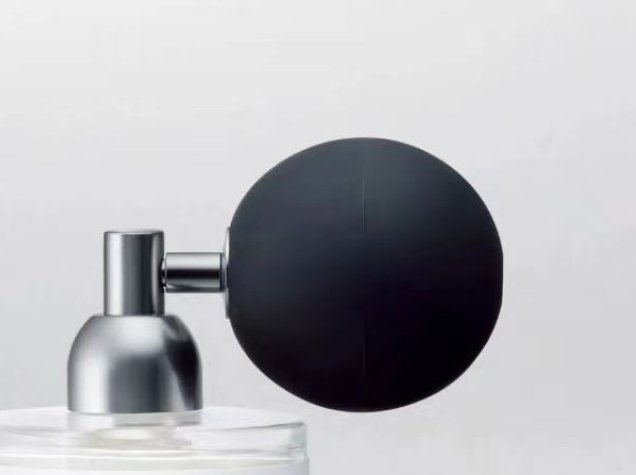

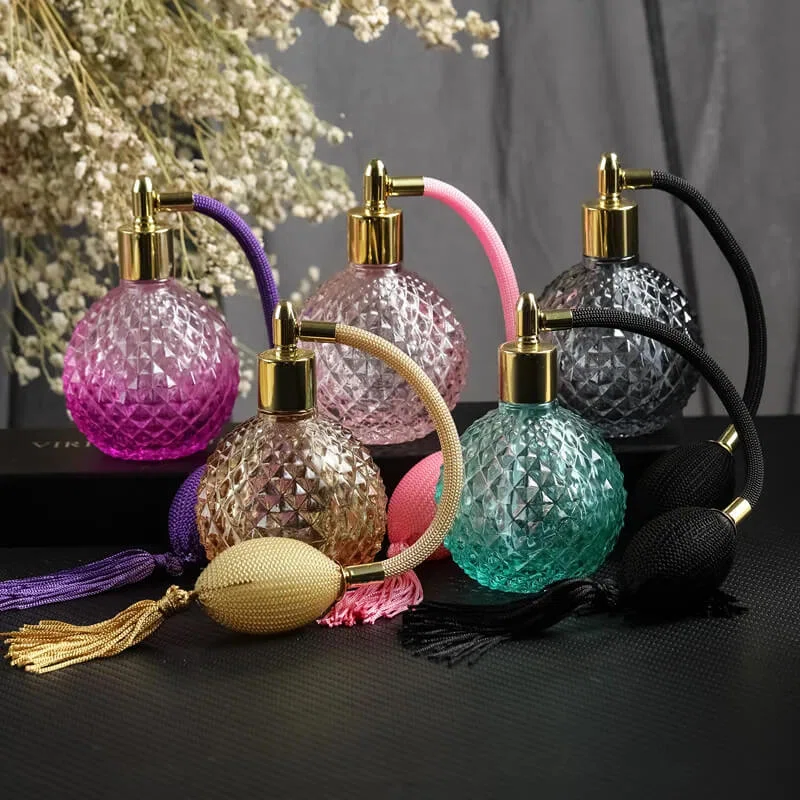
For emerging perfume brands, the atomizer is not just a dispenser—it’s the final touchpoint of the customer experience. Vintage-style bulb atomizers, with their timeless elegance and tactile satisfaction, are increasingly popular in niche and artisanal fragrance markets. However, behind the aesthetic appeal lies a complex interplay of engineering, material science, and rigorous testing. As a packaging specialist with over decades of experience collaborating with fragrance houses, I’ll dissect the vintage atomizer from an industry insider’s perspective, providing actionable data and benchmarks to guide your selection process.
1. Deconstructing the Squeeze Vintage Perfume Atomizer Spray Bulb Bottle: Core Components & Technical Parameters
A Squeeze Vintage Perfume Atomizer Bulb Bottle operates on a simple principle: squeezing the rubber bulb creates air pressure that forces fragrance through a dip tube and out a fine nozzle, producing a mist. Yet, its performance hinges on precise specifications:
| Component | Material Standards | Key Parameters | Industry Benchmark |
|---|---|---|---|
| Glass Bottle | USP Type I Borosilicate Glass or Soda-Lime Glass | Thickness (≥1.2mm), Capacity Tolerance (±2%), Annealing Quality | ASTM E438-92 (Standard Specification for Glasses in Laboratory Apparatus) |
| Rubber Bulb | Natural Latex or Silicone (FDA 21 CFR 177.2600) | Durometer Hardness (Shore A 40-50), Compression Set (<20%), Chemical Resistance | ISO 48-4:2018 (Rubber, vulcanized — Hardness testing) |
| Dip Tube | Polypropylene or Glass | Inner Diameter (1.0-1.5mm), Length Tolerance (±0.5mm) | USP <661> (Plastic Packaging Systems) |
| Nozzle/Orifice | Stainless Steel or Acetal | Orifice Diameter (0.15-0.25mm), Surface Finish (Ra ≤0.4µm) | Mean Droplet Size (Md): 20-50µm for premium mist |
The Pain Point: Inconsistent orifice machining leads to droplet size variation, causing anything from an unsatisfying fine mist to a drenching spray. One client batch had 30% of units with Md > 70µm, resulting in consumer complaints about product waste and application imprecision.
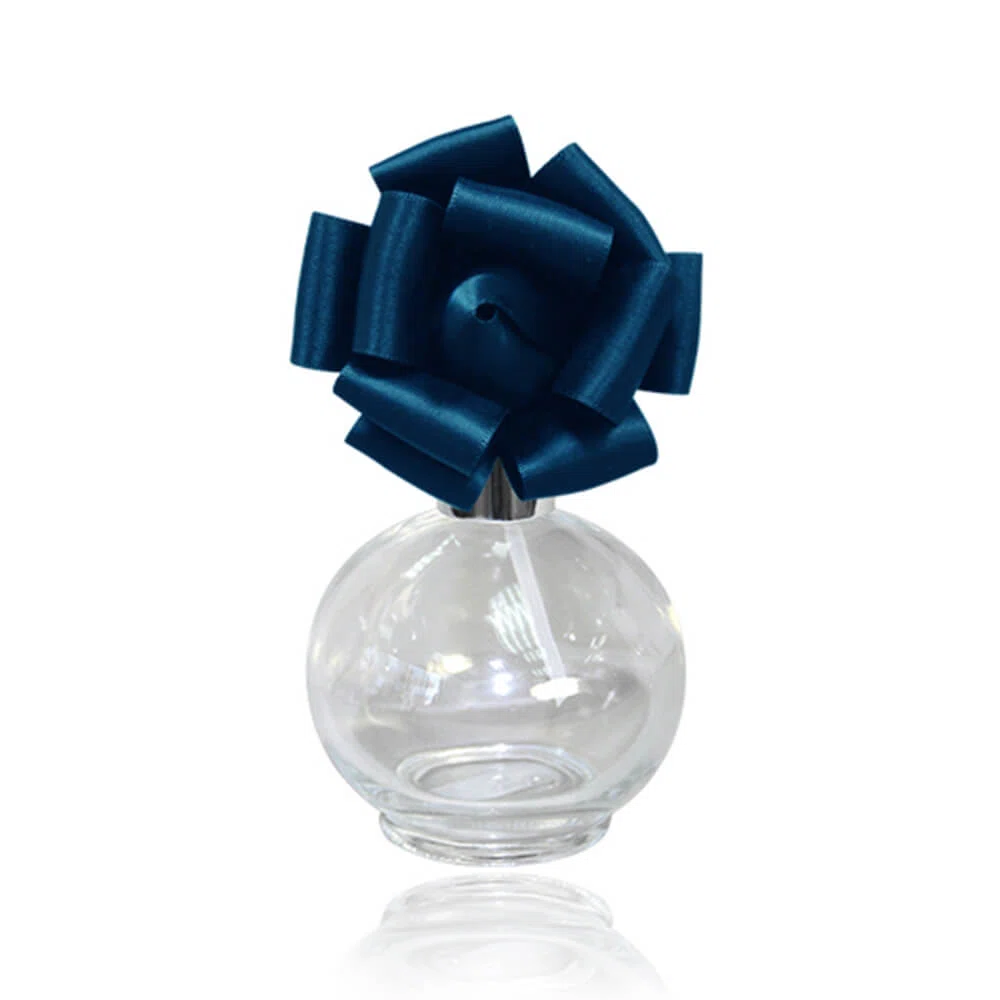
Understanding the mechanics of a perfume atomizer bulb starts with recognizing the various components that make up a fragrance bottle. If you are new to the industry, you might find some technical names confusing. For a deeper dive into the professional terminology, you can refer to our Complete Guide to Perfume Packaging Terms & Glossary, which provides a solid foundation for understanding how these parts work together.
2. The Certification Labyrinth: What “Compliant” Really Means
For global distribution, your atomizer must pass more than a visual check.
- FDA Compliance: For the US market, materials in contact with the fragrance must comply with FDA regulations for indirect food additives. This is non-negotiable. Always request a Declaration of Compliance (DoC) and FDA Substance Inventory Letters from your supplier.
- REACH & Proposition 65: If targeting the EU or California, ensure the assembly contains no SVHCs (Substances of Very High Concern) above 0.1% weight and is free of listed carcinogens.
- Stability & Compatibility Testing: This is the critical, often overlooked step. A perfectly compliant atomizer can fail with your specific fragrance formulation.
Case Study: The Essential Oil Degradation Incident
A client using a high-concentration citrus oil blend found their bulbs cracking and becoming sticky within 3 months. Lab analysis (GC-MS) revealed limonene migration had plasticized the standard latex bulb. Solution: We switched to a fluorosilicone bulb (cost +25%) and validated performance with a 28-day accelerated stability test at 40°C/75% RH. No degradation was observed post-test. Lesson: Certifications are a baseline; formulation-specific testing is mandatory.

3. Performance Evaluation Framework: Beyond the Aesthetic
We use a standardized 100-point scoring system to evaluate vintage atomizers for our clients:
- Mist Quality (30 pts): Measured via laser diffraction (e.g., Malvern Spraytec). A fine, consistent mist (Md: 25-35µm) scores 25-30 pts.
- Leak & Evaporation Test (25 pts): Units stored inverted and on side for 30 days at 25°C. Weight loss >0.5% per year fails. Our audit of 5 suppliers showed average losses from 0.8-3.2%.
- Ergonomics & Usability (20 pts): Bulb compression force (ideally 3-5 Newtons), actuation count to prime (≤2), and feel.
- Construction & Finish (25 pts): Seam inspection, glass clarity, and assembly integrity.
Supplier Benchmarking Data (2023 Sample):
| Supplier | Mist Score | Leak Test | Avg. Score | Cost/Unit (10k pcs) |
|---|---|---|---|---|
| Supplier A | 28 | Pass | 92 | $4.50 |
| Supplier B | 22 | Marginal Fail | 75 | $3.20 |
| Supplier C | 25 | Pass | 85 | $5.80 |
Data sourced from internal lab testing of provided samples. Supplier B’s “marginal fail” was a 1.1% annual weight loss in heat-cycled conditions.
4. Market Validation: Why Antique Vintage Perfume Bottle with Bulb Sprayer Atomizers Resonate
Data support the trend. According to Grand View Research, the global luxury perfume market size was valued at USD 11.7 billion in 2022, with a growing segment dedicated to artisanal, experiential packaging that vintage atomizers epitomize. A Mintel (2023) report on fragrance packaging notes that “tactile, reusable, and ceremonial packaging elements increase perceived value and brand loyalty” among millennial and Gen Z consumers.
Furthermore, showcases at major industry events like PCD Paris and Luxe Pack Monaco consistently highlight innovations in vintage-style dispensing, emphasizing sustainable materials without compromising heritage aesthetics. // Luxe Pack Monaco
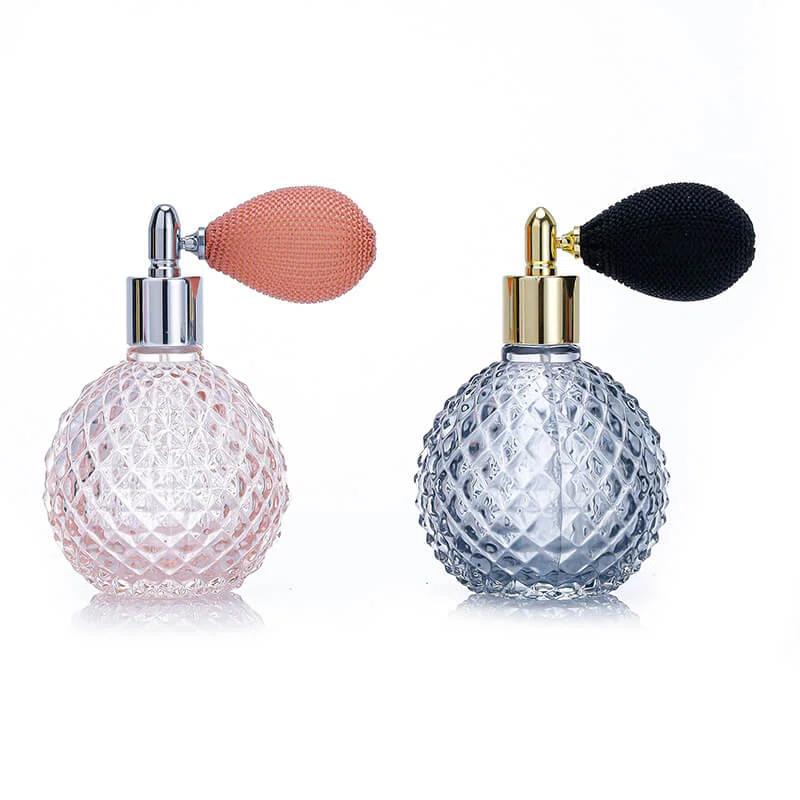
5. Partnering for Success: From Prototype to Production
Your atomizer is a critical brand asset. Here’s how a technical partnership ensures success:
- Briefing & Feasibility: Share your fragrance formulation (including alcohol percentage and essential oil profile), target cost, and volume.
- Prototyping & Compatibility Testing: We source 3-5 qualified samples and conduct in-house stability and performance tests with your actual fragrance.
- Pilot Run & QC Alignment: A 500-1000 unit run validates assembly line performance. We establish AQL (Acceptable Quality Level) checks—typically Level II for critical defects (leaks), Level IV for minor defects (cosmetic).
- Production & Ongoing Audit: Continuous support with pre-shipment inspections (PSI) per ISO 2859-1 sampling standards.

FAQ: What Perfume Brand Founders Need to Know about Custom Perfume Vintage Bulb Atomizers
Q1: What is the minimum order quantity (MOQ) for custom vintage atomizers?
For full customization, including bespoke glass molds and specific bulb colors, standard MOQs typically start at 10,000 to 15,000 units. However, if you are looking for a more accessible entry point, we offer stocked components with custom assembly (such as adding your logo to a standard bottle), where MOQs can be as low as 3,000 to 5,000 units. Understanding these requirements is a key part of navigating the, as MOQ levels often dictate the available manufacturing techniques.
Q2: How long does the development process take for custom designs?
The journey from your initial brief to a sealed production sample generally takes 10 to 14 weeks. This timeline accounts for critical phases: 4 weeks for sampling, 4 weeks for rigorous compatibility testing, and 2 to 4 weeks for the pilot run. While rush options are available, they usually incur cost premiums. For a deeper dive into what “compatibility testing” or “pilot runs” entail, you can consult us.
Q3: Can vintage atomizers be made travel-friendly or leak-proof?
Yes, modern engineering allows for several solutions. We can incorporate threaded caps with internal silicone gaskets over the bulb or provide custom travel pouches for added security. While achieving a 100% “leak-proof” status is technically challenging with traditional bulb systems, proper assembly and high-quality gasketing can reduce evaporation to negligible levels (less than 0.5% per year).
Q4: Are there sustainable material options for the rubber bulb?
Absolutely. We offer silicone as a more inert and durable alternative to natural latex, which extends the product’s lifespan. For brands prioritizing eco-friendly labels, we are currently testing bulbs made with certified sustainable natural rubber and exploring recycled silicone compounds. Utilizing these advanced materials is a great way to align your brand with modern ESG standards.
Q5: What are the most common hidden costs in perfume packaging?
When budgeting, brands should account for three primary “hidden” expenses:
- Tooling/Mold Costs: Custom glass shapes require a one-time investment of $5,000 to $15,000.
- Compatibility Testing: Ensuring your fragrance doesn’t react with the atomizer components usually costs $1,500 to $3,000 per formulation.
- Secondary Packaging: Vintage atomizers are delicate; they often require custom insert foam to protect the bulb during transit. Familiarizing yourself with our can help you identify these components early in the design phase to avoid budgetary surprises.
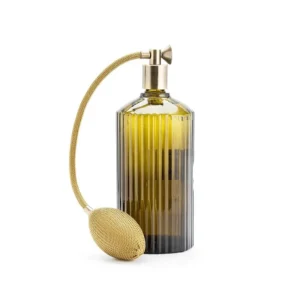
Q6: What is the mechanical principle behind a perfume atomizer bulb?
The bulb atomizer works on Bernoulli’s Principle. When you squeeze the bulb, it forces a quick stream of air across the top of a vertical tube dipped in the perfume. This high-speed air creates a low-pressure area (a vacuum effect) at the tube’s tip, drawing the liquid upward. The air then shatters the liquid into tiny droplets, creating the iconic fine mist associated with vintage fragrance application.
Q7: How do I clean and maintain a vintage bulb atomizer?
To prevent clogging, it is recommended to flush the metal spray head with warm distilled water or a high-percentage alcohol solution. Avoid soaking the rubber or silicone bulb directly in water, as this can cause the material to degrade or lose its elasticity over time. Simply wipe the exterior of the bulb with a soft, dry cloth to maintain its finish and grip.
Q8: Can I use a bulb atomizer for high-viscosity oils or extracts?
Bulb atomizers are specifically calibrated for standard alcohol-based perfumes (Eau de Parfum or Eau de Toilette). High-viscosity oils or thick extracts may not atomize correctly, often resulting in “spitting” or large droplets rather than a fine mist. If you are launching an oil-based line, we suggest consulting our Packaging Glossary to find compatible pump specifications for heavier formulations.
Q9: Why is my perfume atomizer bulb not springing back?
If the bulb stays collapsed after being squeezed, it usually indicates a failure in the internal air valve or a loss of material “memory” in the rubber. Over time, exposure to high heat or direct sunlight can cause natural latex bulbs to become brittle or sticky. Transitioning to silicone bulbs is a common solution as they offer superior durability and “rebound” consistency.
Q10: How does altitude or air pressure affect bulb atomizers?
Since bulb atomizers rely on air pressure differentials, they can be sensitive to altitude changes. During air travel, the pressure in the cabin can cause the air inside the bottle to expand, potentially leading to minor leakage through the spray head. This is why we recommend using a “locking” mechanism or a travel cap, as further explained in our Perfume Packaging Instructions.
Q11: Are bulb atomizers compatible with all fragrance bottle neck sizes?
The most common neck sizes for bulb atomizers are 18/415 and FEA 15, but they are not universal. It is crucial to match the thread of the atomizer to the bottle neck precisely to ensure an airtight seal. Using an incorrect size will lead to rapid evaporation of the fragrance and potential leakage.
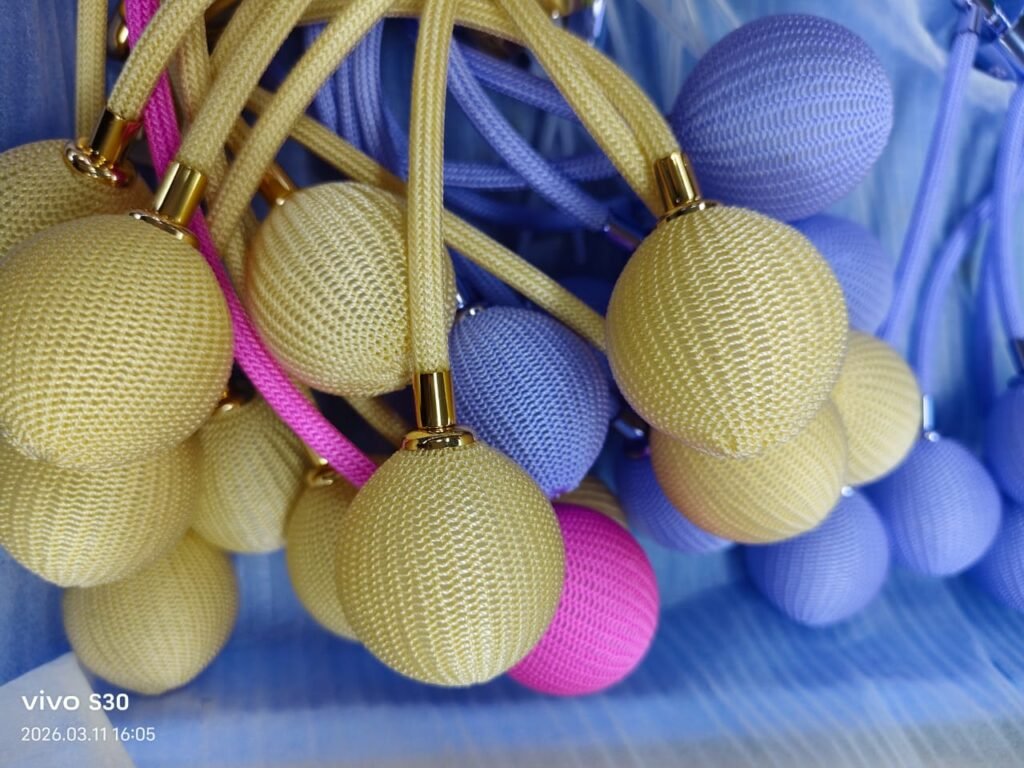
Q12: How can I prevent the “tassels” on the bulb from fraying?
The decorative tassels or silk coverings are a hallmark of luxury vintage design. To prevent fraying, ensure the bulb is handled by the “neck” or the rubber body rather than pulling on the threads. For high-end retail, we often apply a discrete heat-seal or specialized textile adhesive to the ends of the silk cords to maintain a pristine aesthetic for the consumer.
Q13: Can the bulb and tassel colors be customized to match brand identity?
Yes, customization is one of the primary advantages of our manufacturing process. We can produce bulbs in specific Pantone colors and offer tassels in various materials—from high-gloss silk to matte cotton. For brands seeking a modern twist on a vintage classic, we also offer metallic-flecked cords or braided nylon for a more contemporary “industrial-luxe” feel.
Q14: Which major brands have you collaborated with for fragrance packaging?
With years of expertise in high-end design and manufacturing, we have successfully partnered with a diverse range of global industry leaders and lifestyle brands. Our portfolio includes providing specialized packaging components and luxury solutions for iconic names such as Dior, Guerlain, Lancôme, Dolce & Gabbana, and YSL. Additionally, we have collaborated with globally recognized retailers like Ikea and Muji to develop functional yet aesthetic fragrance solutions, all core parts made by hand. These partnerships underscore our commitment to maintaining the rigorous quality standards often detailed in our Perfume Packaging Encyclopedia.
Conclusion: The Art of Precision in Custom Vintage Atomizer Form
Choosing a vintage atomizer is a strategic decision that blends emotion with engineering. The right partner doesn’t just supply a component; they de-risk your launch, validate your product’s integrity, and ensure the unboxing moment perfectly captures your brand’s essence.
Ready to Engineer Your Signature Scent Experience?
Your fragrance deserves a delivery system as refined as its formulation. Let’s translate your vision into a flawlessly performing reality.
Contact us today for a confidential consultation and a complimentary sample kit of our benchmarked China vintage atomizer bulb sprayer perfume bottles wholesale.
As a Branded Perfume Packaging Supplier, Such As Dior, Guerlain, Ikea, Lancome, Muji, Dolce & Gabbana, YSL, Paul & Shark, Lattafa, REEF, Amouage, Arabian Oud, EMPER, AFNAN, LAVERNE , ROJA, AL MAJID, our team deeply understands the dreams and challenges of a fragrance entrepreneur, not a simple perfume packaging wholesaler, but a strategic partner focused on providing complete fragrance packaging solutions—from concept to shelf for emerging and growing perfume brands.
WhatsApp: +86 18107699312
E-mail : info@fragrancepackage.com
Whether you are a collector or a brand owner, knowing how your perfume atomizer works helps in maintaining the longevity of your fragrance. However, the world of fragrance housing is vast, covering everything from material types to decorative techniques. To further expand your industry knowledge beyond atomizers, be sure to bookmark our Complete Guide to Perfume Packaging Terms & Glossary as your go-to reference for all packaging-related inquiries.