

For Chief Procurement Officers (CPOs) and Product Development Directors in the luxury fragrance sector, the bulb atomizer represents the pinnacle of “sensory packaging.” However, the transition from aesthetic concept to a reliable, industrial-grade delivery system requires rigorous technical oversight.
This report outlines the engineering standards, R&D lifecycles, and quality protocols necessary to integrate high-end China vintage perfume pump atomizers into your brand portfolio.
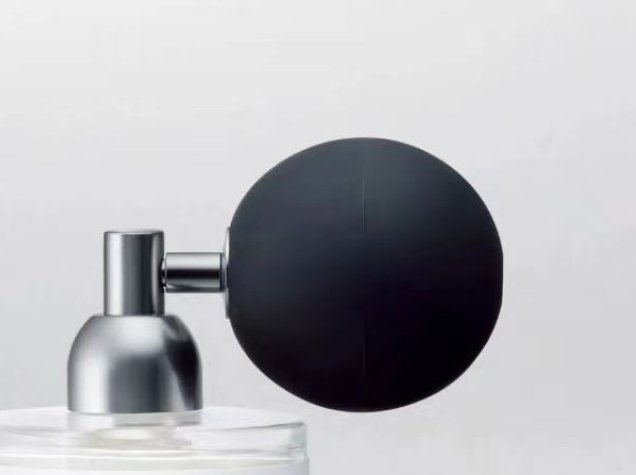
I. Construction & Material Science: The Engineering of Luxury
A vintage atomizer is a multi-component assembly where material compatibility is paramount. A failure in any layer results in evaporation or scent degradation.
- External Bulb Assembly: Premium bulbs utilize high-GSM (grams per square meter) composite weaving. We offer silk, nylon, or polyester sheaths that are treated with oleophobic coatings. Internally, the “heart” of the bulb is transitioned from traditional latex to anti-fatigue TPE or Butyl rubber, which provides superior resistance to ethanol-induced cracking.
- Precision Pump Engine: We utilize AISI 304 or 316L stainless steel springs to ensure zero corrosion. The housing is molded from high-purity Polypropylene (PP), and the design incorporates a unidirectional air-assist valve to prevent bottle negative pressure, which often causes bottle “implosion” in lower-quality units.
- Sealing Technology: Adhering to FEA standards, we employ PTFE (Teflon) or Fluorinated Silicone gaskets. These are critical for creating a chemical barrier against high-concentration alcohol, ensuring the fragrance’s top notes remain intact over a 3-year shelf life.
- Adaptive Dip Tubes: We provide high-clarity, anti-stress-crack PE tubing. These can be customized with V-cut notches to prevent suction blockage at the bottle base and adjusted for length to match specific glass geometries.
II. Usage & User Experience (UX): Calibrating the Senses
- Atomization Performance: Our pumps are engineered for a dosage of $0.07\text{cc} – 0.12\text{cc}$ per actuation. Through laser diffraction testing, we maintain a Median Droplet Diameter ($D_{50}$) of $60\mu\text{m}$, ensuring a “dry mist” feel that avoids large droplets or “spitting.”
- Ergonomics & Tactility: We control the Shore A hardness of the bulb between 35 and 45. This ensures the “perfect squeeze”—soft enough for a graceful user experience but firm enough to provide a rapid recovery time of under 1.2 seconds.
- Safety & Portability: To mitigate the “leakage on-the-go” risk inherent to vintage designs, we offer proprietary Twist-lock collars or elegant metal safety pins that physically obstruct the air path during transit.
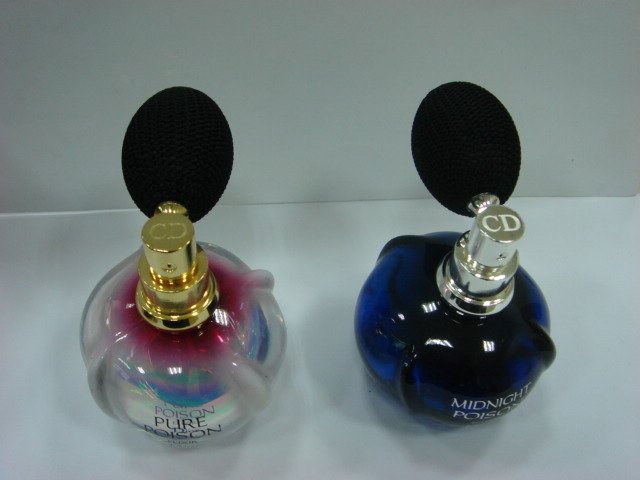
III. R&D Timeline & Project Management
Navigating the China perfume atomizer bulb pump replacement manufacturing timeline is essential for timely product launches:
- Requirement Analysis (3-5 Days): 3D modeling and headspace compatibility checks.
- Functional Prototyping (7-10 Days): 3D-printed or CNC-machined samples for initial “spray-and-feel” validation.
- Tooling & Validation (25-35 Days): Creation of multi-cavity molds and T1 sample reviews.
- Pilot Production (10-15 Days): Compatibility testing with the final fragrance formulation to ensure no swelling or discoloration occurs.
IV. Interaction & Decision Support
As a leading wholesale and custom perfume bulb atomizer manufacturer, we provide decision-makers with the data required for risk mitigation:
- Technical Consultation: We conduct chemical resistance assessments based on your specific essential oil percentages (EDP vs. Extrait).
- Quality Protocols: We strictly follow AQL 0.65 (Critical) / 1.5 (Major) / 4.0 (Minor) acceptance standards, providing full inspection reports prior to shipment.
- Compliance Transparency: All components are backed by SGS or Intertek certifications, meeting REACH (EC No 1907/2006) and RoHS requirements, ensuring your brand is protected in global markets.
Technical Specification: FEA15 Standard Bulb Atomizer from China Top Vintage Perfume Atomizer Bulb Pump Factory Company
| Technical Parameter | Specification | Reference / Standard |
| Neck Fitment | FEA 15mm (Crimp/Screw) | ISO 11040 / FEA 215 |
| Output Dosage | $0.08\text{ml} \pm 0.01\text{ml}$ | Gravimetric Lab Testing |
| Shroud Finish | Anodized Aluminum (A6063) | Industrial Metal Specs |
| Bulb Material | Modified TPE + Polyester Silk | 90-day Stability (38°C) |
| Recovery Cycle | $\le 1.2$ Seconds | 10,000 Actuation Fatigue Test |
| Seal Integrity | No leak at -0.05MPa / 5min | ASTM D3078 |
| Locking Torque | $3.5 – 5.5 \text{kgf}\cdot\text{cm}$ | Digital Torque Meter |
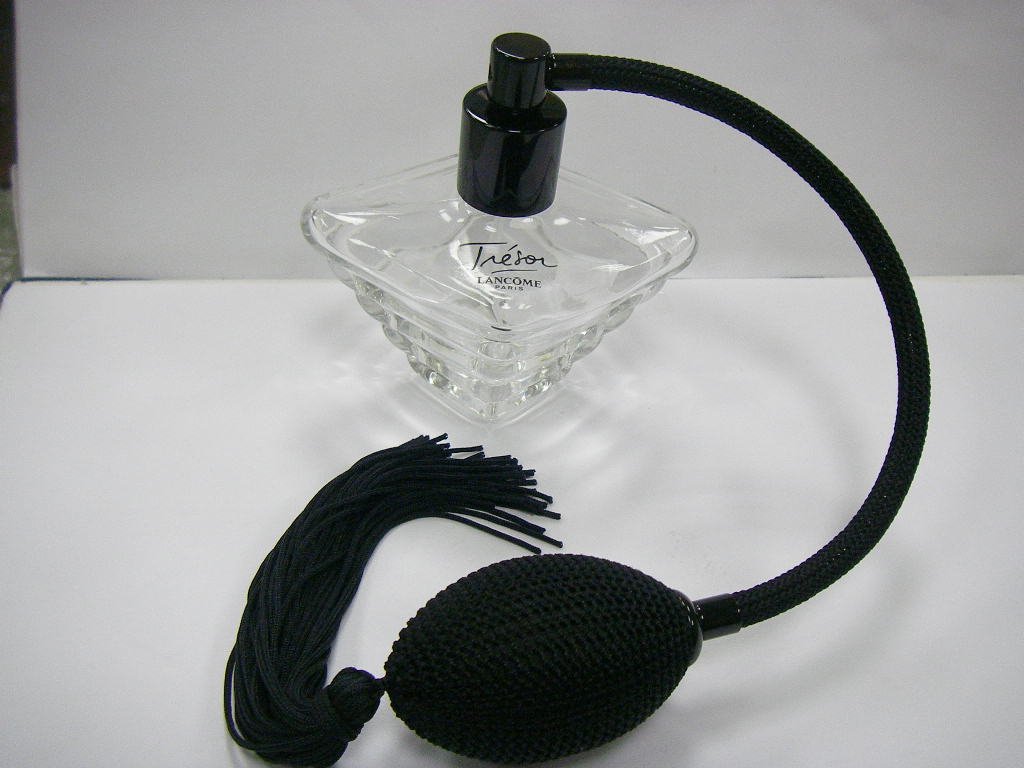
Expert FAQ from China’s best customized vintage perfume pump bulb atomizer bottles wholesaler manufacturer
Technical Q&A
Q: Why do vintage bulb atomizers offer superior leak prevention on FEA15 necks compared to screw-thread bottles?
A: The crimp (FEA15) finish provides 360-degree uniform vertical and horizontal compression, which allows for optimal deformation of the internal sealing gaskets. According to research by Packaging Digest, crimp seal stability is approximately 25% higher than screw-on alternatives in high-alcohol environments.
Q: How do you prevent the internal bulb from becoming “tacky” or “sticky” due to perfume alcohol vapors?
A: We utilize Barrier TPE (Thermoplastic Elastomer). While traditional natural latex is highly susceptible to alcohol corrosion, our modified TPE significantly reduces molecular permeability, preventing degradation and ensuring long-term elasticity.
Q: What causes an atomizer to spray “large droplets” instead of a fine mist?
A: This is typically due to insufficient Pre-compression or swirl chamber design flaws. Our pump engines feature a mechanical pre-compression function; the valve opens only when internal pressure reaches a critical threshold, ensuring a fine mist from the very first actuation.
Q: How do you ensure the woven textile sheath on the bulb remains stain-resistant?
A: We integrate a Nano-Oleophobic Coating into the weaving threads. This creates a barrier that effectively resists hand oils, sweat, and accidental perfume spills, maintaining the luxury aesthetic.
Q: What is the mechanical difference between a “Long Stem” bulb pump and a standard pump?
A: Long-stem designs require higher vacuum suction. We recalibrate the K-value of the valve spring to overcome the fluid resistance of the extended travel path, ensuring consistent output regardless of tube length.
Q: Can bulb atomizers pass Child-Resistant (CR) testing?
A: While vintage pumps are not primarily sold for CR purposes, we can integrate physical mechanical locking pins to align with the core safety principles of ISO 8317.
Q: How do you prevent electroplated components from developing black spots when in contact with acidic fragrances?
A: We utilize an Acid-Copper base plating followed by multi-layer decorative plating. Our components must pass a 48-hour Salt Spray Test, simulating a practical shelf life of 3–5 years.
Q: What is the scientific basis for the V-cut at the end of the dip tube?
A: The V-notch prevents the tube from forming a vacuum seal against the flat bottom of the bottle, ensuring unobstructed fluid intake (referencing Fluid Dynamics in Cosmetic Packaging).
Q: Are the bulbs replaceable?
A: Yes. To support sustainable packaging trends, we offer a modular bulb structure. Brand owners can sell replacement bulbs as separate accessories to extend the product’s lifecycle.
Q: Why is the pump spring built-in? Does it come into contact with the liquid?
A: We offer a “Spring-out-of-path” (Metal-Free Path) structure. This design prevents the metal spring from coming into contact with expensive fragrance oils, thereby protecting the original olfactory profile from metallic oxidation.
General & Business Q&A
Q: What are the supply chain advantages of your factory’s location in China?
A: We are located in Guangdong. This region hosts the world’s most mature mold-making and electroplating industrial ecosystems. Logistics efficiency here is 15–20% higher than in other provinces (Source: 2024 China Supply Chain Report).
Q: What is the margin of error between a 3D prototype and the final mass-produced unit?
A: 3D printing is primarily used for structural verification. We guarantee that the dimensional tolerance between functional samples and mass production is controlled within $\pm 0.05\text{mm}$.
Q: How do you manage communication across different time zones?
A: We have a dedicated B2B Rapid Response Team for decision-makers, guaranteeing a response to technical drawing revisions or inquiries within 12 hours.
Q: Can you provide custom colors for the bulb and mesh?
A: Yes. We support full Pantone matching. This includes not only the weaving threads but also custom gradients or matte finishes on the metal anodized components.
Q: Why do vintage bulb atomizers typically take up more packaging volume?
A: The bulb structure increases the horizontal footprint. To mitigate this, we offer “Slim-line Design” solutions to optimize shelf space and secondary packaging dimensions.
Q: Does the factory accept third-party (e.g., SGS) on-site audits?
A: We welcome audits at any time. We are ISO 9001:2015 certified and maintain rigorous production logs for every critical stage of the manufacturing process.
Q: Will the bulb atomizer fail in cold climates?
A: Extreme cold can harden rubber. We conduct Freeze-Thaw Cycling Tests ($-15^\circ\text{C}$) to ensure the bulb does not become brittle and maintains its recovery speed in cold weather.
Q: Do you provide matching glass bottles?
A: We have deep strategic partnerships with leading high-clarity glass manufacturers, allowing us to provide one-stop Tolerance Compatibility Testing for the pump and bottle.
Q: How do you protect the delicate weaving from abrasion during bulk shipping?
A: Each pump is placed in an individual Blister Tray slot and sealed in anti-static bags to ensure the woven layers arrive in pristine condition without pilling or friction damage.
Q: How is the Non-Disclosure Agreement (NDA) executed for custom designs?
A: We sign a legally binding NDA before any design phase begins. All custom molds are serialized and managed in a restricted area, ensuring they are never utilized for unauthorized third-party orders.
Data & Reference Notes:
- FEA Standards: Based on the Fédération Européenne de l’Aérosol (European Aerosol Federation) specifications.
- AQL Standard: Per ISO 2859-1 (Sampling procedures for inspection by attributes).
- Material Compliance: Compliant with EU REACH Directive (EC) No 1907/2006.
