

In the field of fragrance packaging, 1% tolerance error may lead to a 100% market disaster. As a perfume packaging design manufacturer with nearly 40 years of industry accumulation, it has accumulated its own excellent one-stop perfume packaging materials supporting supply chain, and can perfectly provide customers with overall packaging solutions, from concept to finished products, from bottles, pumps, lids to gift boxes, fragrancepackage.com combining many years with well-known perfume brands( Dior, Guerlain, Ikea, Lancome, Muji, Dolce & Gabbana, YSL, Paul & Shark, Lattafa, REEF, Amouage, Arabian Oud, EMPER, AFNAN, LAVERNE, ROJA, AL MAJID and so on) In our experience of cooperation, we deeply understand that high-end fragrance packaging is not the stacking of artworks, but the delivery of precision engineering.
Chapter 1: Transparency Data and Brand Access Threshold of the Global Fragrance Packaging Market
1.1 Global Supply Chain Efficiency Indicators for 2026
According to the latest industry research, the average loss rate of fragrance brands in the packaging process is $4.2. Still, after integration through the “One Stop Eco Supply Chain”, this indicator can be reduced to below $0.8.
| Metric Dimension | Multi-vendor Model | fragrancepackage.com Integrated Model | Optimization Rate |
| R&D / Molding Cycle | 60 – 90 Days | 35 – 45 Days | ⬇ 45% |
| Component Failure Rate | 2.5% (Leakage/Loose) | < 0.2% | ⬇ 92% |
| Logistics/Comm. Friction | High (Coordinating 4-6 factories) | Extremely Low (Single Window) | ⬇ 70% |
| Total Procurement Cost | Benchmark Price | Benchmark * (80%-85%) | ⬇ 15%+ |
Chapter II: Physical standards for the production of perfume glass bottles: technical barriers of Super Flint and description of external surface technology
2.1 Material composition and transmittance data
High-end perfume bottles must use Super Flint (high white material) glass, whose core lies in the extremely strict control of iron oxide (Fe_2O_3) content.
- Technical Specifications:
- Iron oxide content: must be <0.015 % (ordinary glass is 0.05 % -0.1 %).
- Light Transmittance: ≥ 91.5% (vs. 82%-85% in standard glass).
- Refractive Index: 1.52, approaching that of a crystal.
2.2 Neck Finish Tolerances and Fit Standards (Critical Data)
The neck finish is the high-risk zone for leakage. We utilize FEA (Finite Element Analysis) to simulate stress under pump compression.
| Model | Neck OD Tolerance (E) | Neck ID Tolerance (I) | Verticality (TIR) | Compatible Pump |
|---|---|---|---|---|
| FEA 15 | ± 0.15 mm | ± 0.10 mm | ≤ 0.3mm | 15mm Crimp/Screw |
| FEA 18 | ± 0.20 mm | ± 0.20 mm | ≤ 0.4mm | 18mm Premium Large |
2.3 Perfume Glass Bottle Post-Processing: Solving Industry Pain Points
As the “visual soul” of fragrance brands, every flaw in glass bottles will be magnified by consumers.
Fragrancepackage.com has accumulated nearly 40 years of production data to summarize the most commonly encountered process pain points and failure modes (FMEA) in the industry, and has developed standardized industrial solutions.
The value of a perfume glass bottle lies not only in the glass itself, but also in its surface treatment process.
2.3.1 UV Metallization / PVD
Evaporate metal (usually aluminum or chromium) in a vacuum and deposit it on the surface of the bottle, creating a luxurious, mirrored metallic feeling.
| Process steps | Key Pain Points | Potential Risks | Elegant Packaging Solutions |
|---|---|---|---|
| Adhesion | The coating is prone to peeling off or being scratched by nails | Paint peeling and film peeling | Adopting a three-coat and three-bake process to enhance the adhesion of the base coat, and conducting a 100-cycle alcohol friction test |
| Chemical stability | Perfume sprayed on the bottle mouth causes corrosion of the electroplating layer | Discoloration, blackening, and the formation of oxidation spots | Use a high acid-resistant nano topcoat and conduct a 48-hour alcohol immersion experiment |
| Environmental dust | Fine particles can cause surface protrusions | Pinholes, pockmarks, and orange peel patterns | Operate in a 10000-level dust-free workshop with a fully automatic electrostatic precipitator system |
2.3.2 Internal Coating
Spray paint inside the transparent bottle to give it a ceramic-like depth when viewed from the outside, without covering the transparency of the glass.
- Pain point: the direct contact between the spraying layer and perfume liquid is easy to cause a chemical reaction.
- Problem points: the dissolution of the coating leads to discoloration and turbidity of perfume; Coating cracking.
- Solution: Raw material control: Only use environmentally friendly water-based paint imported from France that passes 12 weeks of high-temperature (45 ℃) compatibility testing.
- Baking temperature: Precisely controlled at 180℃, with constant-temperature baking to ensure complete cross-linking and curing of the polymer resin.
2.3.3 Silk Screen Printing
The most commonly used logo display methods are divided into high-temperature ink and low-temperature UV ink
- Pain points: Unclear small text or wear and tear during transportation.
- Problem points: Ghosting, registration error, jagged edges.
- Solution: High mesh screen: Use 350-420 mesh stainless steel wire mesh to ensure that fine lines of 0.1mm are clearly visible.
- Automatic alignment system: The robotic arm automatically grasps the bottle body, and the color matching error is controlled within 0.15mm.
2.3.4 Color Spraying
The overall coloring of the bottle body, including gradient colors, matte or glossy colors
| Process pain points | Risk performance | Industrial-grade Solutions |
|---|---|---|
| Gradient unevenness | lear sense of discontinuity at the color transition | Adopting dual arm synchronous rotation spraying to ensure extremely fine atomized particles and smooth transition |
| Fingerprint/scratch | Matte frosted surface is prone to leaving fingerprints | Adopting dual arm synchronous rotation spraying to ensure extremely fine atomized particles and a smooth transition |
| Color difference control | Industrial-grade solutions | Adopting dual arm synchronous rotation spraying to ensure extremely fine atomized particles and a smooth transition |
2.3.5 Fire Polishing
Instantly melt a very thin layer of glass surface through high-temperature flames, eliminating the mold seam left by the mold.
- Pain point: Eliminating the mold line may also cause deformation of the bottle mouth.
- Problem point: The bottleneck becomes uneven (Ovality), causing the pump head to fail to seal and leak liquid.
- Solution: * Local precise temperature control: directional heating is only applied to the position of the mold closing line.
- Post-molding inspection: After polishing, 100% will enter the automatic online measuring instrument to remove any products with excessive neck size.
2.3.6 Laser Engraving
Used for producing limited edition or high-end products with serial numbers
- Pain point: Inconsistent depth leads to visual cheapness.
- Problem points: Glass surface cracking and rough edges.
- Solution: Using a cold ultraviolet laser to change the molecular arrangement without generating thermal stress, achieving delicate scratches like silk.
Elegant Packaging Expert Tip: How to Choose the Right Craftsmanship for Your Brand?
When choosing a process, you cannot solely rely on visual effects.
fragrancepackage.com Engineering suggestions:
- Budget priority: silk screen printing>spray coating>electroplating>internal spray coating (arranged in descending order of cost).
- Function priority: If the oil content of perfume ingredients is very high, please carefully choose internal spraying.
- Environmental priority: prioritize water-based paint spraying and high-temperature ink, in compliance with the 2026 EU and North American market access regulations.
Chapter 3: Refilling Travel Atomizers are important accessories for brands to enhance user stickiness
It is mainly divided into traditional screw-top refillable and high-tech Bottom Pump Refill
Engineering experts from fragrancepackage.com will thoroughly analyze the mechanical structure and material processes of these two types of products: a precision engineering comparison between screw mouth bottles and bottom filling bottles
The core challenge of portable bottles is to achieve high-frequency opening and closing in a very small space, and to withstand pressure changes during high-altitude flight (Air Travel).
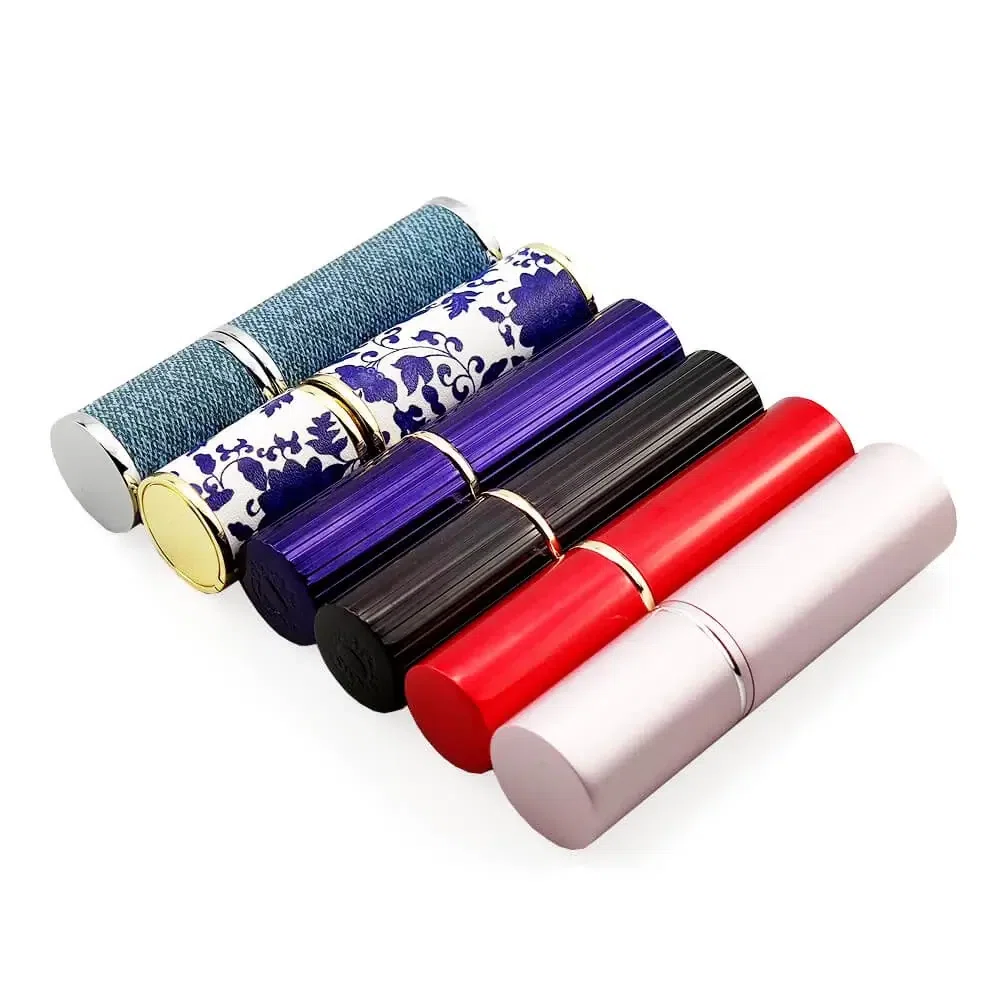
3.1 Screw-neck Refillable Vials
This is the most classic form of packaging, usually consisting of a high borosilicate glass inner liner combined with a metal or plastic outer shell.
| Process steps | Key Pain Points | Risk Points | Industrial-grade Solutions |
|---|---|---|---|
| Screw-neck mold accuracy | The screw fit between the bottle mouth and the pump head is not tight | Leakage, pump head slippage, and inability to lock | Using ISO standard GCMI 15/415 thread, increase the number of thread turns to 1.5 turns to ensure torque locking. |
| Inner glass pull tube | Uneven wall thickness of glass tube or thin bottom of bottle。 | When falling, the inner liner breaks and the filling bursts under pressure. | Select pharmaceutical grade borosilicate glass (Borosilicate 3.3) with a constant wall thickness of 1.1mm ± 0.05 mm |
| Shell oxidation process | Inconsistent color of aluminum alloy shell | Color difference (ΔE>2.0 ) and sand holes on the surface | Uneven wall thickness of the glass tube or a thin bottom of the bottle |
3.2 Bottom Pump/Genie Refill System
Directly connecting the one-way valve at the bottom of the bottle to the large bottle nozzle for “pump suction” filling without the need for a funnel is currently the mainstream innovation.
- Process pain point: The one-way valve at the bottom fails to seal after multiple refills.
- Problem points: overflow during filling, oil leakage at the bottom, and inability to fill (pressure cannot be discharged).
- Solution:
- Multi-layer composite silicone valve: using aviation-grade self-healing silicone, combined with a cross-cut design, to ensure that the sealing of -0.05MPa is maintained even after more than 50 fillings.
- Exhaust and pressure relief structure: A microporous hydrophobic membrane is designed at the top of the inner tank, which only exhausts without draining, solving the problem of air lock during filling.
- Patented pump core adaptation: the bottom interface adopts the elastic ladder design to adapt to the 98 % big brands’ perfume nozzle conduit (diameter 2mm-5mm) on the market.
3.3 Material and Surface Treatment: Aluminum Shell vs Plastic Shell
- Anodized Aluminum: High-end feeling
- Pain point: The edges are prone to whitening due to collisions.
- Solution: Increase the sealing time of the oxide film to enhance its impact resistance.
- Electroplated Plastic: Low cost
- Pain point: easily peeled by perfume and alcohol.
- Solution: Adopt UV vacuum electroplating, combined with high-adhesion medium paint, and pass a 12-hour alcohol immersion test.
3.4 Mandatory Lab Tests for Perfume Packaging System Laboratory
- Altitude/Low Pressure Test:
- Content: Place the bottling bottle in a vacuum chamber and simulate an environment at an altitude of $12000 meters -0.07 MPa for 4 hours.
- Requirement: There should be no liquid leakage from the bottom valve and nozzle of the bottle.
- Refill Cycle Test – Only applicable to bottom-filled bottles:
- Content: Use a standard nozzle to perform 100 consecutive filling actions on the bottom filling valve.
- Requirement: The valve should rebound quickly without deformation, and there should be no leakage after being filled and left to stand for 24 hours.
- Drop Impact:
- Requirement: Drop freely from a height of 1.2 m to the concrete floor with the outer shell, without the inner shell breaking or the outer shell falling off.
- Dosage Consistency:
- Requirement: The amount of water sprayed should be constant between 0.08 ml and 0.12ml, with an error of ±10 %.
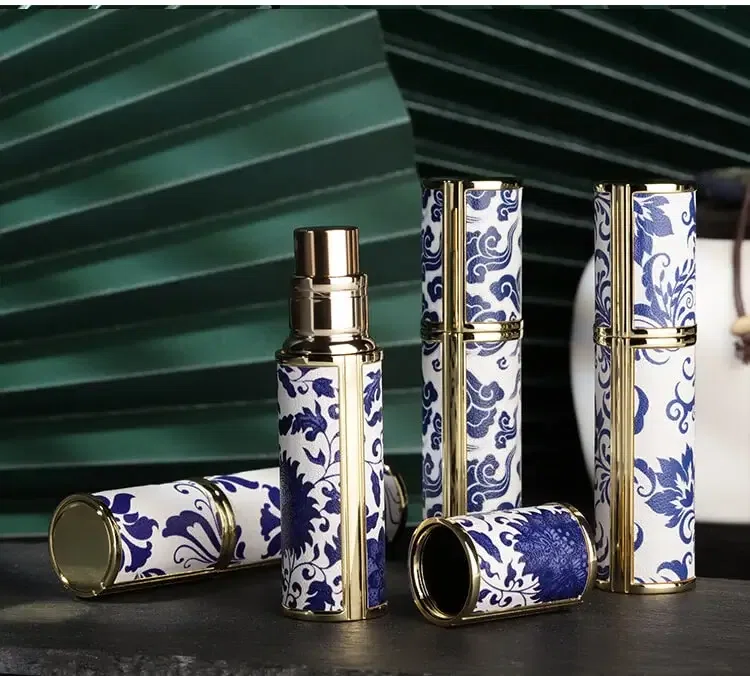
Elegant Packaging Technical consultants and supply chain experts suggest: how to choose the most suitable refillable perfume packaging solution?
- If you are positioning yourself as a light luxury brand, prioritize aluminum shell bottom-filling bottles. Although the cost is $30-50% higher than that of a screw bottle, its “black technology” filling experience can greatly enhance the brand’s communication power and high-end feel on social media.
- If you pursue minimalism and environmental protection, we recommend screw on all glass bottles with metal nozzles. Its structure is the most stable and suitable for long-term use in handbags.
- Key reminder: Regardless of the structure, the gasket must be made of polytetrafluoroethylene (PTFE) or butyl rubber, and it is strictly prohibited to use low-cost and easily swollen ordinary rubber.
Does your portable perfume packaging have any complaints of liquid leakage due to the aviation air pressure?
Contact our Packaging System Engineering Department – We will provide you with a proprietary ‘Bottom Filling Bottle Internal Structural Tolerance Analysis Table’ to assist you in optimizing your existing product design.
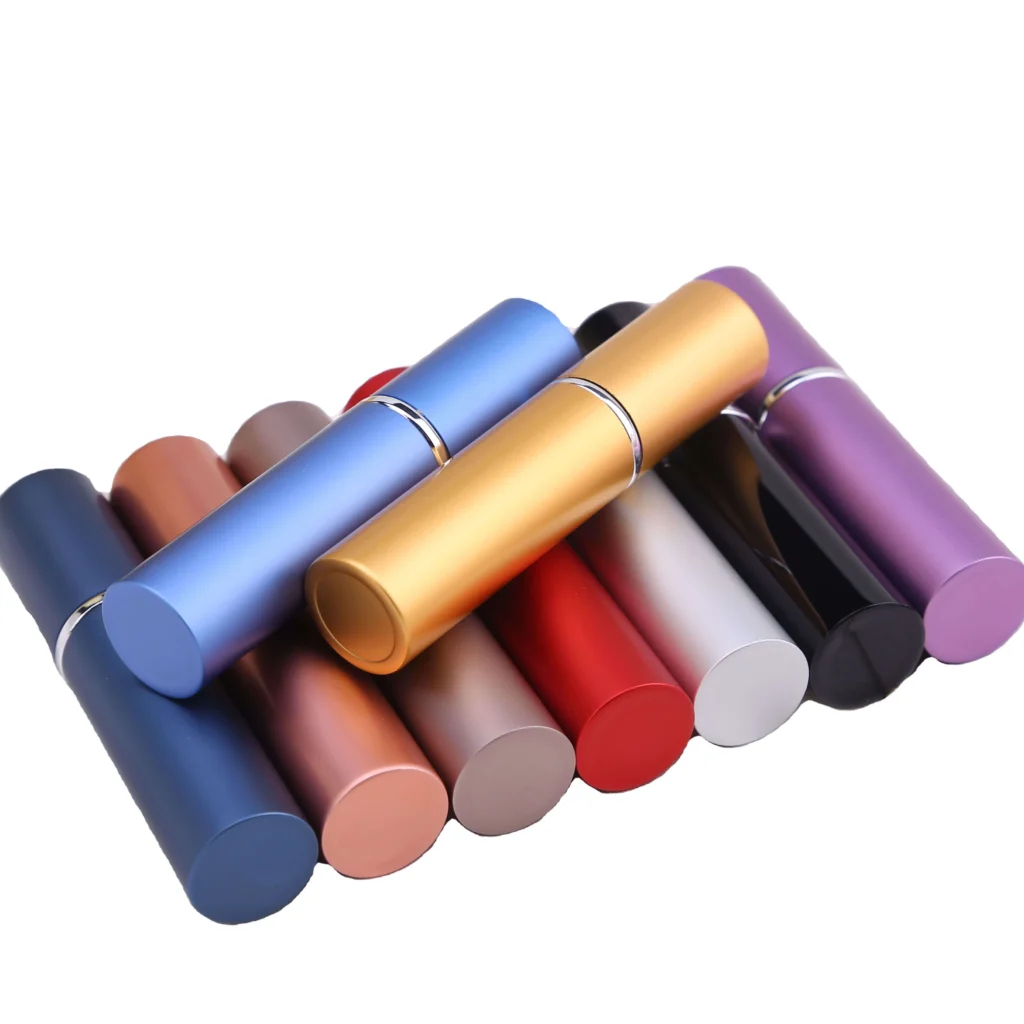
Chapter 4: Quantitative comparison of the “sense of value” of perfume lid material science
Brand premium often stems from the tactile sensation of users’ fingertips. We have quantitatively compared the physical properties of mainstream materials.
4.1 Material Performance Matrix Table
| Material Category | Density (g/m³) | Rockwell Hardness | Chemical tolerance (perfume stock solution) | Core Process | Brand Positioning |
|---|---|---|---|---|---|
| Zamac 3 (Zinc alloy) | 6.6 | 82 HRB | Extremely strong (requiring electroplating protection layer) | Die casting+polishing | Luxury/Weight Sense |
| Surlyn | 0.94 | 65 HRB | Extremely strong (crack resistant) | Injection molding | Minimalist/Highly Transparent |
| Natural Marble | 2.7 | 3-5 Mohs | Extremely strong (crack-resistant) | Computer (CNC) | Art Customization |
| Beech/Walnut Wood | 0.6 – 0.7 | LOW | Generally (easy to absorb oil) | Woodworking lathe+sealing paint | Environmental Protection/Nature |
In the system engineering of fragrance packaging, perfume Caps are not only seals, but also a heavyweight embodiment of brand texture. The physical properties of different materials vary greatly, and their processing techniques and post-quality control points are also completely different.
4.2 Deep disassembly of the production process of mainstream and luxury perfume caps
Reveal failure modes and industrial countermeasures that are not often disclosed in the industry, and fully analyze the process of multi-material perfume covers, from material mechanics to surface finishing.
The core of the research and development of the perfume caps is how to ensure the long-term adaptability with the actuator while maintaining the aesthetic design.
4.2.1. Zamac / Zinc Alloy Perfume Cap
Zinc alloy is the preferred choice for high-end fragrances due to its touch and weight that are close to gold and silver.
| Process Flow | Key Pain Points | Risk Points | Industrial-grade Solutions |
|---|---|---|---|
| Die-Casting | Insufficient precision of the mold leads to excessively thick clamping lines. | Burrs, surface pores, and loose structure. | Adopting 80T-160T high-precision die-casting machine, the mold hardness reaches HRC 48-52, ensuring the smoothness of the initial embryo. |
| Manual/mechanical polishing | The dead corners of the irregular cover cannot be completely polished. | The mirror surface is uneven and there are pockmarks after electroplating. | Introduce a five axis linkage polishing machine combined with manual positioning, and perform ultrasonic oil removal after polishing. |
| Trivalent chromium plating | Uneven thickness or poor adhesion of the plating layer. | Peeling, discoloration, and fingerprint residue. | Introduce a five-axis linkage polishing machine combined with manual positioning, and perform ultrasonic oil removal after polishing. |
4.2.2 Perfume Magnetic Cap System
The pain point of the magnetic cap is not from the cap, but the durability and alignment accuracy of the magnetic force.
- Process pain points: magnet polarity reversal or detachment.
- Problem points: The perfume lid cannot be closed, the suction force is too strong (unable to be pulled out) or too small (easy to fall off), and the logo cannot be returned to its original position.
- Solution:
- Magnetic pole locking: Use N42 or N45 level strong magnets, combined with a fully automatic polarity detector, to ensure 100% attraction.
- Structural reinforcement: Use secondary injection molding or laser welding to fix the magnet, completely preventing the magnet from falling off due to adhesive aging.
- Damping debugging: Install a polymer elastic damping ring at the contact point between the inner cap and the bottle mouth to achieve a “crisp and smooth” suction sound.
4.2.3 Natural Marble / Stone / Cement Perfume Caps
Marble, jade, cement, and other materials endow the product with natural non-replicability.
- Process pain points: large brittleness, difficult to control dimensional tolerance, easy to be corroded by perfume.
- Problem points: cracked cover, loose lining, discoloration caused by stone oil absorption.
- Solution:
- CNC precision machining: using a multi-axis waterjet or CNC machining center, with tolerance controlled within ± 0.2 mm.
- Vacuum impregnation process: vacuum macromolecule sealing treatment is carried out on the surface of the stone to prevent the volatile oil of perfume from infiltrating.
- Suspended lining structure: The lining and outer shell are double fixed by structural adhesive and physical card slots to alleviate the thermal expansion and contraction differences between stone and plastic.
4.2.4 Environmentally Friendly Wood / Bamboo Perfume Lids Caps
Compliant with the sustainable development trend of 2026, but extremely sensitive to environmental humidity.
| Pain point | Risk performance | Prevention and Solutions |
|---|---|---|
| Moisture content control | Cracking or mold during transportation | After 72 hours of drying, the moisture content of the raw materials is locked at the golden ratio 10% ±2%. |
| Coordination stability | Inner liner and wooden shell detached | Adopting a floral tooth lining design to increase physical bite force, replacing pure adhesive bonding |
| Painting process | Surface paint peeling off | Use environmentally friendly UV sealing primer to completely seal the wood fibers and enhance the adhesion of the paint film. |
4.2.5 Surlyn / Acrylic / PP Plastic Perfume Lids Caps
Usually used for projects that pursue transparency or high cost-effectiveness.
- Surlyn lids: Known for their high transparency and chemical stability, it is commonly used in high-end brands.
- Pain point: easy to create bubbles and flow marks.
- Solution: Adopt a heavy wall injection molding process, strictly control the cooling cycle time, and ensure that the visual quality is as solid as crystal.
- Acrylic Perfume Lids :
- Pain point: Exposure to high concentrations of alcohol can lead to stress cracking.
- Solution: Annealing is performed to release internal stress, and the inner liner must be made of PP material with strong alcohol resistance.
4.2.6 QC Indicators
fragrancepackage.com Perform the following 4 core physical tests on the lid before leaving the factory:
- Pull-off Force: The opening force needs to be stable between 1.5kg and 2.5kg
- Alcohol Resistance: Soak in 95% alcohol for 24 hours, with no bubbles, fading, or dissolution on the surface.
- High and low temperature cycling test (Thermal Shock): Cycle from -20 ℃ to 60 ℃ for 48 hours to ensure that the lining does not loosen.
- Adhesion Test: Electroplating or coating must reach level 0-1 (no peeling)
4.2.7 Elegant Packaging Expert suggestion: How to avoid the risk of perfume lid selection?
As a perfume packaging expert and industry consultant, it is recommended that the brands follow the logic below when selecting the Perfume lids :
- If pursuing a sense of brand weight, please choose Zamac 3 zinc alloy perfume lids.
- If pursuing ultimate transparency, please specify the use of DuPont’s original Surlyn material.
- If the product is sold to high-humidity areas such as Southeast Asia, please strengthen the salt spray test requirements for wooden or electroplated covers.
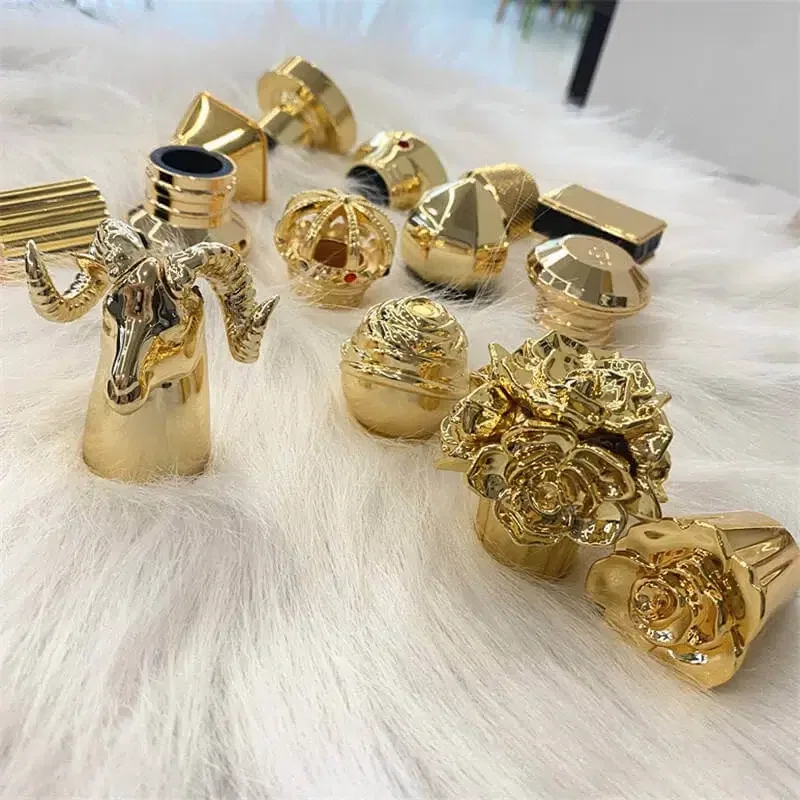
Have you encountered any leakage or loosening issues with the perfume lid adaptation?
Contact us for Technical consultation and a sample application, and we will provide you with a free tolerance analysis and issue a Perfume Bottle Cap Adaptation Improvement Plan.
Chapter 5: Vintage Perfume Atomizer Bulb: Exclusive craftsmanship and international brand standards
Let us delve into the “Crown Pearl” in the field of fragrance packaging——Vintage Perfume Atomizer Bulb
As the first manufacturer to develop and create this product independently in China, fragrancepackage.com Not only provides long-term supply to top brands such as Dior, Chanel, Guerlain, etc., but also overcomes the industrial challenges of sealing, volatilization, and hand feel for Vintage Perfume Atomizer Bulb in practice. We not only manufacture products, but also develop industry standards.
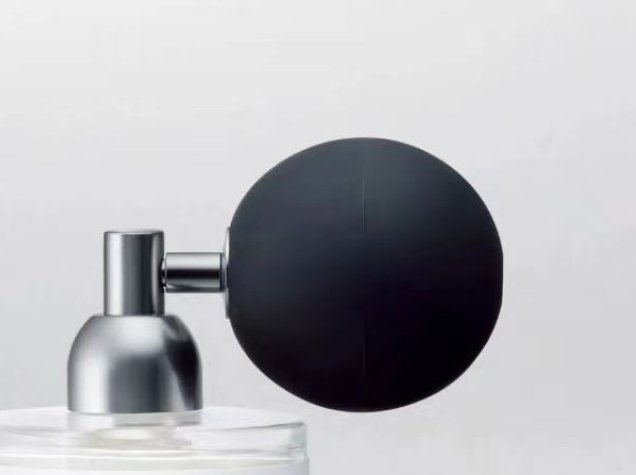
5.1 Carefully crafted over 30 components of vintage vacuum hand air rubber bulb pump perfume atomizer
The failure rate of ordinary pump bulbs on the market is as high as 3%, but our perfume spray bulb pump maintains a customer complaint rate of less than 0.1% through the following process:
- Hand-woven thread technology: High elastic anti-aging fiber is used, and the number of stitches per inch (SPI) is always 12 to ensure the consistency of air bulb rebound.
- Precision valve system: A double one-way ball check valve (Check Valve) is placed inside to prevent the bulb from being polluted by the backflow of perfume.
- Handmade cutting: Each airbag and bulb edge is manually trimmed by a master with over 5 years of technical experience to ensure no burrs or scratches.
5.2Full analysis of the process of Mist spray rubber squeeze hand-bulb perfume atomizers: system engineering from precision parts to manual weaving
The vacuum hand air rubber bulb pump is highly favored by high-end brands due to its elegant vintage feel, but its complex structure (involving over 30 precision components) also poses a high risk of failure. The following is a deep breakdown and solution of the core process.
5.3 Bulb Weaving & Forming for vintage perfume bottle tube with spray atomizer bulb
Pump is not only a power source, but also a visual focal point.
| Process | Pain Points | Potential Risks | Solutions |
|---|---|---|---|
| Weaving | Uneven weaving density and rough hand feel | Thread shedding, pilling, visually cheap | High elastic and anti-aging nylon fiber is used, and constant stitches (15 stitches/inch) are set to ensure a smooth surface texture. |
| Handmade sewing and cutting | The edge processing is not precise | Edge overflow and uneven seams | Fully handmade cutting and sewing, operated by technicians with over 5 years of experience under a magnifying glass to ensure invisible seams. |
| Material selection for the inner bulb | Rubber is prone to aging and sticking | The air bulb leaks, changes color, and feels hard. | Abandoning ordinary rubber and using high-performance TPE environmentally friendly materials, passing a 72-hour high-temperature aging test. |
5.4 Check Valve Precision of perfume atomizer bulb wholesale
The most fatal defects of the vintage hot hand natural rubber squeeze atomizer pump bulb are “reflux” and “volatilization”, which depend entirely on the sealing of the internal valves.
- Process pain point: the valve is insensitive to open and close, resulting in perfume not being sucked up or overflowing from the air bulb.
- Problem point: The ball and valve seat do not fit tightly, resulting in air or liquid leakage.
- Solution:
- Double check valve system: High precision 316L stainless steel ball bearings are embedded inside, matched with special springs to ensure one-way pressure transmission.
- Double automatic assembly: using a self-developed automated assembly line, sensors monitor the pressure tolerance of each valve in real time, and the qualification rate is increased to 99.9%.
5.5 Air-Liquid Separation of replacement atomizer bulbs for perfume bottles
The vintage perfume atomizer bulb is easy to produce a “water drop” spray instead of fine fog, and it is easy to volatilize when standing.
- Process pain point: the internal air path crosses with the perfume path, resulting in high volatility.
- Problem point: After three months of storage, perfume significantly reduces (the volatile weight loss rate reaches more than 5%).
- Solution:
- Independent sealed channel: Add a vacuum isolation ring in the pump core structure, which only opens the path at the moment of pressing.
- Anti volatilization valve: exclusively developed with a “locking turntable” design, it rotates to close the passage when not in use, controlling the annual volatilization rate within <0.5%.
The pressure provided by the airbag is small and unstable, requiring extremely high design requirements for the nozzle.
| process indicators | Industry common problems | fragrancepackage.com standard |
|---|---|---|
| Spray particle size (D50) | > 120 um(water drop) | ≤60 um(Ultimate fine mist) |
| spray angle (Angle) | Narrow or asymmetrical angle | 45℃-60℃ Fan-shaped uniform distribution |
| Residual liquid volume | Dropping and dripping at the nozzle | Using oil repellent nano coating, no residual liquid is left on the nozzle surface |
5.7 QC Hard Data for vintage hot hand natural rubber squeeze atomizer pump bulb
In response to the special characteristics of the bulb pump atomizer, we set the following four “life and death tests” to retain residual fluid:
- Cycling Test: The bulb can be pressed continuously for 5000 times without cracks, no air leakage, and a constant rebound time within 0.8 seconds.
- Vacuum Test: Maintain a vacuum pressure of -0.06 MPa for 45 minutes, and there is no liquid leakage from the air bulb and connection.
- Compatibility: Soak in high-concentration alcohol and various essence oils for 12 weeks, and the bladder fiber will not decolorize, and the liner will not expand.
- Evaporation Rate: After being filled with perfume and placed in an environment of 40℃ for 30 days, the weight reduction must be less than 0.15 g.
Why choose our vintage hot hand natural rubber squeeze atomizer pump bulb?
As an expert in fragrance packaging and a long-term supplier of Dior, Chanel, YSL, Guerlain, Lattafa, REEF, Amouage, I would like to offer you the following practical advice:
- Brand value: The atomizer pump bulb is synonymous with “high-end customization”. Our hand-knitting process can significantly improve the perfume’s performance in a single bottle by 30% -50%.
- Supply chain security: More than 30 components of the airbag pump head are all produced in our own factory, from weaving, manual sewing, to manual trimming of burrs; the entire chain is controllable, completely solving the problem of leakage caused by cross-factory cooperation.
- Low failure rate: Traditional trade goods typically have a failure rate of 3%-5%, while our industrial-grade standards compress the failure rate to within 0.1%
Has your brand received any customer complaints due to leakage or evaporation issues with the bulb pump replacement?
Contact Us – We will provide 1:1 or upgraded customized samples based on your bulb pump specifications.
Chapter 6: High-end Fragrance Boutique Gift Box: The Ritual of Opening the Box and Physical Protection
In the delivery of high-end fragrance products, secondary perfume packaging is the key to determining the “first glance value”. An excellent gift perfume box should not only provide physical protection, but also create a luxurious sense of ceremony through material touch, opening damping, and inner tray precision.
As an engineering expert at fragrancepackage.com, let me deeply analyze the manufacturing process of high-end gift boxes and reveal how to avoid the common risk of “unboxing and overturning” through engineering methods.
High-end gift boxes usually use Gray Board as the skeleton, combined with special decorative paper and complex post-processing. The following is a comparison and pain point analysis of four core processes.
6.1 Structural Engineering of a Luxury Perfume Box
The structure not only determines the strength of the box, but also determines the “unboxing experience” of consumers.
| Common structures | Process difficulty | Pain Points | Multi-layer drawer box |
|---|---|---|---|
| Lid & Base | Extremely high (requiring controlled air pressure damping) | The lid is too tight and difficult to open, or too loose and easy to fall off. | Using CNC cutting V-slotting to ensure 90 ° right angled edges; By precise tolerance calculation, achieve a damping sensation of 3-5 seconds of uniform sliding. |
| Book-style | Magnetic attraction balance | Uneven magnetic adsorption and raised cover. | Use a high-weight double gray board to prevent deformation, and embed a high-strength magnet on the cover, combined with a fully automatic positioning system to ensure magnetic alignment. |
| Multi layer drawer box | Smoothness of track | The drawer is stuck or loosens after being pulled out. | The internal guide rail is made of low-friction coefficient paper material, and a 0.5mm $expansion allowance is reserved to prevent the paper from expanding and getting stuck in humid environments. |
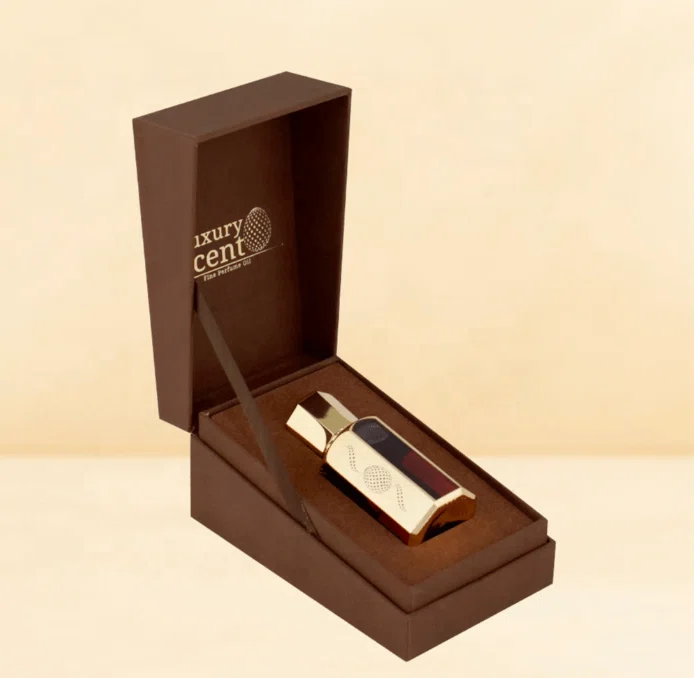
6.2 Surface Decorative Paper and Handmade Sticker Craftsmanship (Lining & Wrapping)
High-end gift PERFUME boxes often use special paper, silk, or spot film.
- Process pain points: glue penetration, bubbles, and uneven corner wrapping.
- Problem points: Gummosis on light colored paper and Warping caused by environmental humidity.
- Solution:
- Glue control: Use environmentally friendly animal glue (Jelly Glue), strictly control the moisture, and adopt drum-type ultra-thin coating technology.
- Fully automatic corner sticking machine: With constant pressure, it ensures tight and wrinkle-free edges around, presenting a sharp industrial aesthetic at corners.
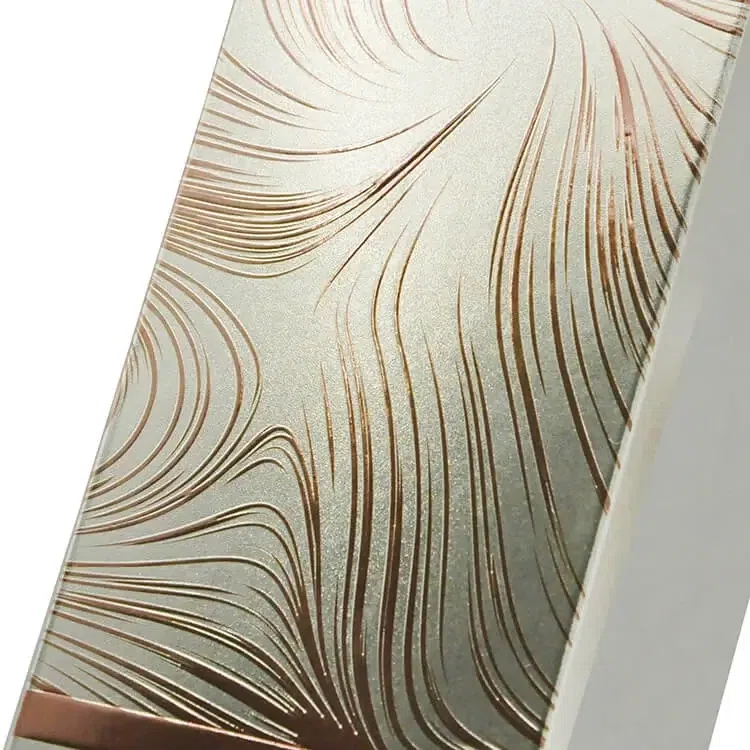
6.3 Surface Finishing Effects for luxury perfume packaging box
Hot stamping, embossing, UV, and other processes are the core of enhancing brand recognition.
| Surface Effects | Risks | Solutions |
|---|---|---|
| Foil Stamping | Small text with gold chipping, pasting, and edge is not clear. | Using copper die instead of zinc die for more uniform heat transfer; Adjust pressure and constant temperature according to paper texture to ensure sharp edges of text。 |
| Embossing | Paper fiber breakage and inaccurate positioning. | Conduct a paper flexibility test in advance; Using male and female mold hedging technology to ensure a concave-convex three-dimensional degree of 0.3 mm-0.5 mm and not broken. |
| Spot UV | UV layer peeling and color deviation from the base. | Perform corona treatment before UV treatment to enhance adhesion, and use LED cold light source for curing to avoid discoloration caused by thermal deformation. |
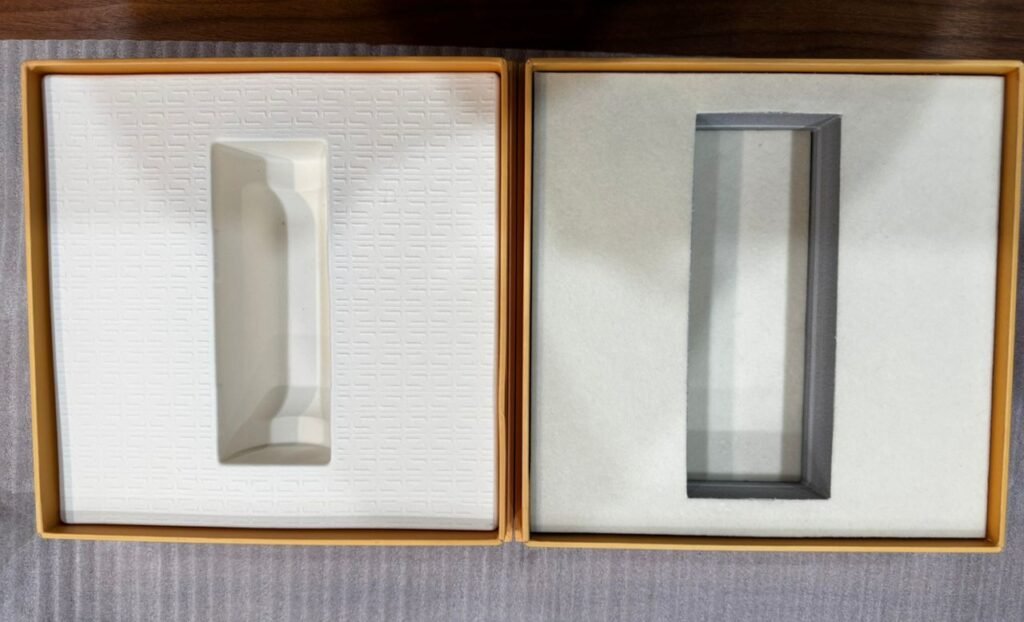
6.4 Insert & Cushioning of Custom Fragrance and Cosmetics Box
Inner tray not only fixes the perfume bottle, but also deals with the impact of logistics。
- Pain points: if the material of the inner is cheap, the peculiar smell interferes with the perfume, and the size can not be matched perfectly.
- Problem points: ordinary EVA has a heavy odor (affecting the sense of smell), the flocking inner holds off, then the perfume bottles shake and wear during transportation.
- Solution:
- Low odor EVA: adopt environment-friendly odorless EVA, and after 48 hours of ventilation, ensure that the top note of perfume will not be affected.
- Precision mold opening: according to the 3D file of the perfume bottle, carry out CNC engraving mold to ensure that the bottle body is closely matched with the inner support, and the gap is controlled within 0.2mm.
- High-weight cardboard inner tray: If pursuing environmental protection, use a full cardboard folding inner tray, combined with a mechanical structure to achieve a 1.2 m drop without damage.
6.5 Testing Standards for perfume gift box
fragrancepackage.com Perform the following mandatory tests before all fragrance gift boxes leave the Elegant Packaging factory:
- Drop Test: Simulate transportation and perform one corner, three edges, and six-sided drop according to ISTA-1A standards. The inner lining must not crack, and the bottle body must not be damaged.
- Crush Test: Simulate warehouse stacking without deformation under vertical pressure of 50kg.
- Climate Chamber: 40℃ / RH 90 % environment for 48 hours to ensure that the cardboard does not come off, no open, no mold.
- Rub Test: For hot stamping and printing surfaces, make 200 cycles of drying and wet rubbing to ensure that the logo does not fade.
Elegant Packaging Expert advice: How to balance “cost” and “luxury”?
As an expert in the supply chain of perfume packaging materials, fragrancepackage.com provides the perfume brands with the following strategies:
Start-up brand: adopting standard structure (top and base box)+special paper (using the texture of the paper itself to enhance the high-end feeling), saving expensive full-page surface printing costs.
High-end series and upgrading perfume box: Strengthen “unboxing damping” and “magnetic sound”, these invisible details are the core support of brand premium.
Global shipping: must follow FSC environmental certification and proof of anti-mold treatment to avoid legal and warehousing risks in cross-border trade.
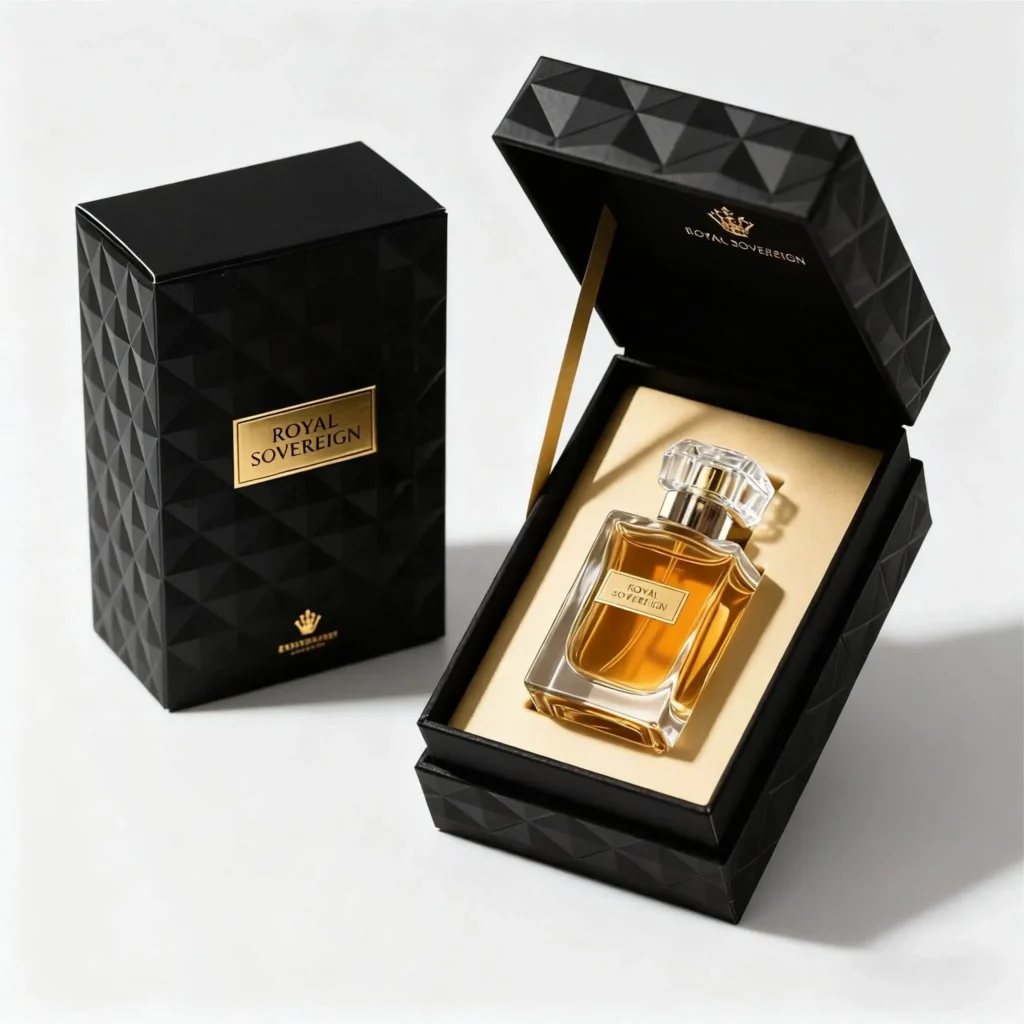
Chapter 7: In the Fragrance Ecosystem, Custom Incense Burners/Bakhoors are a High-end Extension of Spatial Fragrances
Unlike perfume bottles, the core of the incense burner’s design is the balance between high-temperature physical properties and heat-transfer materials.
fragrancepackage.com As a one-stop solution expert for fragrance packaging materials, we not only focus on the luxurious appearance, but also on the structural safety of the product under extreme heating conditions.
7.1 Complete Analysis of Customized Incense Burner Process: Material Heat Resistance, Casting Aesthetics, and Functional Optimization
The manufacturing of incense burners involves metal pressure casting, high-temperature sintering of ceramics, and precision processing of stone materials. The difficulty of the process lies in how to maintain the surface decorative layer from peeling off and producing no odor under continuous heating (usually up to 200℃ -300℃ ).
7.1.1 Metal Die-Casting for Zinc Alloy and Aluminum Alloy Incense Burner
High-end Bakhoor incense burners commonly used for export to the Middle East market.
| Process | key Pain Points | Risk Points | Key Pain Points |
|---|---|---|---|
| Alloy ratio | Poor quality alloys release harmful gases when heated | Generate a pungent metallic odor and foam on the surface | Strictly use environmentally friendly 3 # zinc alloy or ADC12 aluminum alloy, and pass SGS heavy metal testing. |
| Heat resistance of electroplated layer | Conventional electroplating changes color or cracks at high temperatures. | Blackening, peeling, and loss of luster of the coating | Adopting High Temperature Vacuum Plating (PVD) and applying a special heat-resistant transparent protective oil (resistant to 300 ℃) on the surface. |
| Thermal insulation structure design | The bottom is too hot, damaging the surface of the furniture | Burn the user and cause deformation of the base. | Install high-density insulation silicone pads or design “air convection layers” on the base to reduce heat transfer efficiency by utilizing physical gaps. |

7.1.2 Ceramic & Bone China Incense Burner
Suitable for Eastern Zen incense burners or modern minimalist styles
- Process pain point: Thermal Shock Failure caused by uneven heating.
- Problem points: Glazing cracking and permanent black spots at direct contact with charcoal fire.
- Solution:
- Strengthening material: Adding spodumene to clay to improve the thermal shock resistance of ceramics.
- High temperature resistant glaze: Using a special formula for stain-resistant glaze, even if exposed to charcoal fire for a long time, it can be restored as new with just a wipe of a damp cloth.
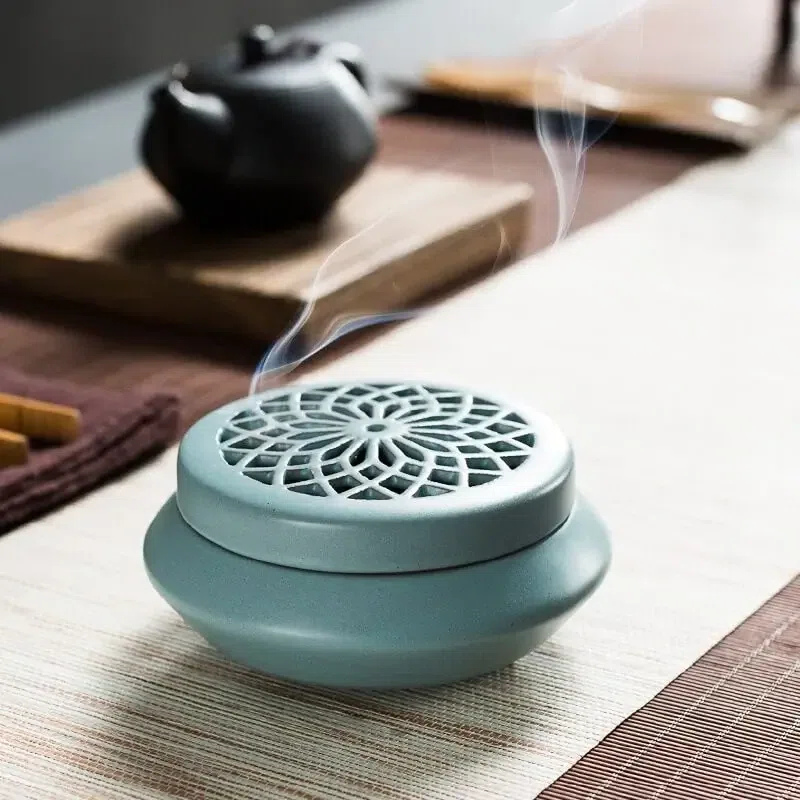
7.1.3 Natural Stone CNC and marble stone Incense Burner
Natural stone incense burners have become the preferred choice for top luxury brands due to their heaviness and natural texture.
- Process pain point: Natural cracks rapidly expand upon heating, leading to fracture.
- Problem: Uneven heating of the stone locally generates stress, leading to overall cracking.
- Solutions:
- Built-in insulation liner: never allow spices or charcoal fire to directly contact the stone. We have designed a 316 stainless steel detachable inner liner that utilizes an air layer to isolate heat.
- Material selection non-destructive testing: Ultrasonic testing is performed on the marble raw stone before processing to remove stones with internal hidden cracks (Hairline cracks).
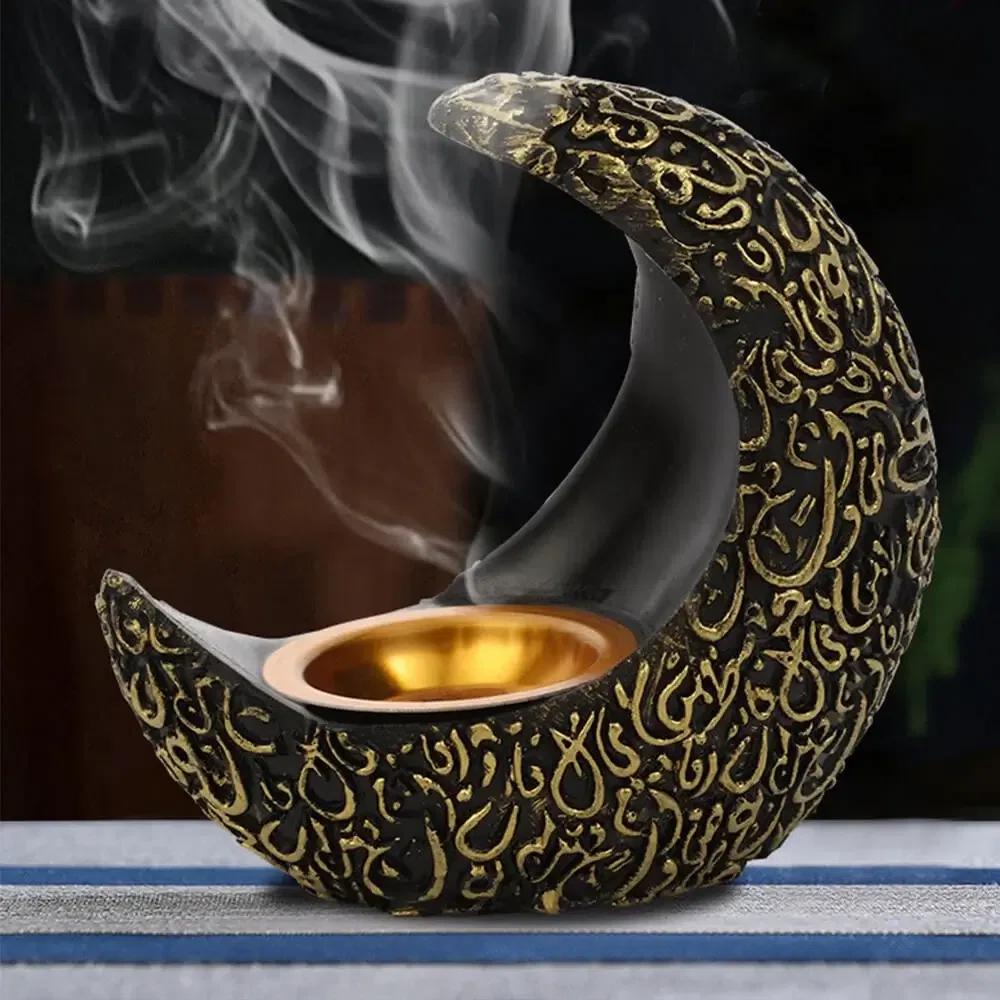
7.1.4 Surface Decoration Craftsmanship: Enamel&Inlay Incense Burner
In order to achieve a magnificent visual effect, enamel or imitation gemstone inlay is often combined.
| Decorative craftsmanship | Potential Risks | Solutions |
|---|---|---|
| Enamel/Drip Glue | Softens or turns yellow at high temperatures | Using high-temperature hard enamel (Cloisonn é) technology, fired at $800 ℃, it will never fade or deform. |
| Gemstone inlay | The adhesive fails due to heat, causing the gemstone to fall off. | It is strictly prohibited to use thermal glue. Using a mechanical claw setting or high-temperature resistant ceramic adhesive. |
7.2 Incense Burner Mandatory Lab Tests
To ensure that every incense burner produced by fragrancepackage.com meets international safety standards, we conduct the following tests:
- Heat Endurance Cycle:
- Requirement: Heat in an electric furnace to 250 ℃ for 2 hours, cool naturally, and repeat 20 times. Require no deformation of the structure and no blistering of the coating.
- Surface Temperature Test:
- Requirement: Test the position of the base and handle of the incense burner under normal ignition conditions. The temperature of the handle must be ≤45℃ (in accordance with ergonomic grip safety).
- Stability/Anti-Tip:
- Requirement: The incense burner should be placed on a 15 °inclined surface and should not be overturned to prevent the overflow of charcoal fire from causing a fire.
- Vapor Composition Analysis:
- Requirement: Detect volatile compounds in the air burning state to ensure that the packaging material itself does not produce volatile organic compounds (VOCs).
7.3 Fragrance Packaging Expert advice: “Avoiding pitfalls” criteria for customizing incense burners
As a perfume packaging material expert and industry technical consultant, we offer the following suggestions for your product planning:
- Safety is the first premium point: Highlighting the “built-in insulation liner” and “high temperature resistance test data” in the product description can impress B-end buyers (such as high-end hotels and gift merchants) more than fancy pictures.
- Functional innovation: Consider designing a detachable cleaning structure. Long-term use of incense burners can accumulate oil stains, and the easy-to-clean design is a huge addition to the user.
- Cross-border matching: Selling incense burners with customized boutique gift boxes and customized metal fragrance shovels to create a complete “fragrance ceremony” solution.
Are you developing the Bakhoor series for the Middle East market?
[Contact our incense burner R&D team] – We provide a comprehensive consultation from 3D mock-up to material heat-resistance analysis, and we can also schedule a visit to our ‘High Temperature Performance Testing Laboratory’.
Chapter 8:Custom Solid Perfume Containers / Fragrance Balm Tins
Customized perfume containers (Solid Perfume Containers/Fragrance Balm Tins) are favored by high-end salon fragrance brands due to their portability and “alcohol free” properties. The core process of the perfume container lies in the extremely high sealing (to prevent the volatilization of essence oil) and the chemical inertia of the internal coating (to prevent the deterioration of the perfume). As a one-stop service expert of fragrance packaging materials, fragrancepackage.com knows that the perfume container is not only the packaging, but also the guardian of the product’s shelf life.
Customized fragrance container full analysis: sealing engineering, anti-oxidation process, and tactile design. Fragrance containers are usually made of zinc alloy, aluminum, stainless steel, or high-end plastics (such as anionic resins). The manufacturing difficulty lies in how to maintain the tightness of the lid under frequent opening conditions and ensure that the inner wall of the container does not undergo migration reactions with wax-based components.
8.1 Zinc Alloy Die-casting and Magnetic Closure Process (Zamac Die Casting & Magnetic Closure), the Mainstream Choice for Top Luxury Fragrances (such as Diptyque style).
| Process | Pain Points | Risk Points | Solutions |
|---|---|---|---|
| Sliding/flip | Wear away of the mating position after long-term use | Loose lid, inability to close, and metal friction sound | Adopting POM material wear-resistant gasket or hidden slide rail design, passed 3000 opening and closing fatigue tests |
| Magnetic attraction debugging | Easily leads to accidental opening when putting it in a bag | The surface of the perfume is contaminated with dust and dirt | Select N45H grade high-temperature resistant strong magnet, with an opening force set in the golden range of 1.2kg to 1.8kg. |
| Inner wall electroplating protection | The grease in the ointment corrodes metals | The fragrance changes color (turns green/black) and produces a metallic smell | Internally install a food-grade PP or aluminum inner liner, or use pharmaceutical-grade epoxy internal spraying technology. |

8.2 Aluminum Pressing&Deep Drawing process, suitable for lightweight and cost-effective portable fragrance cream series.
Enhanced thread design: Increase the number of thread turns and wall thickness to improve torque strength.
- Process pain points: Aluminum is relatively soft, and the threads are prone to slipping or deformation.
- Problem point: The lid cannot be tightened tightly, causing the ointment to dry and crack; The anodized layer falls off during heating filling.
- Solution:
- Enhanced thread design: Increase the number of thread turns and wall thickness to improve torque strength.
- High temperature anodizing: The thickness of the oxide film is controlled between 10 μ m and 15 μ m to ensure that there is no chemical migration during the hot filling of 80 ℃ perfume.
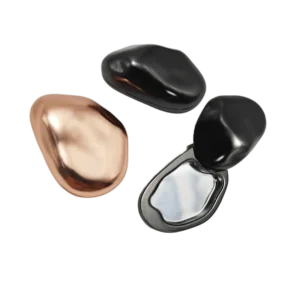
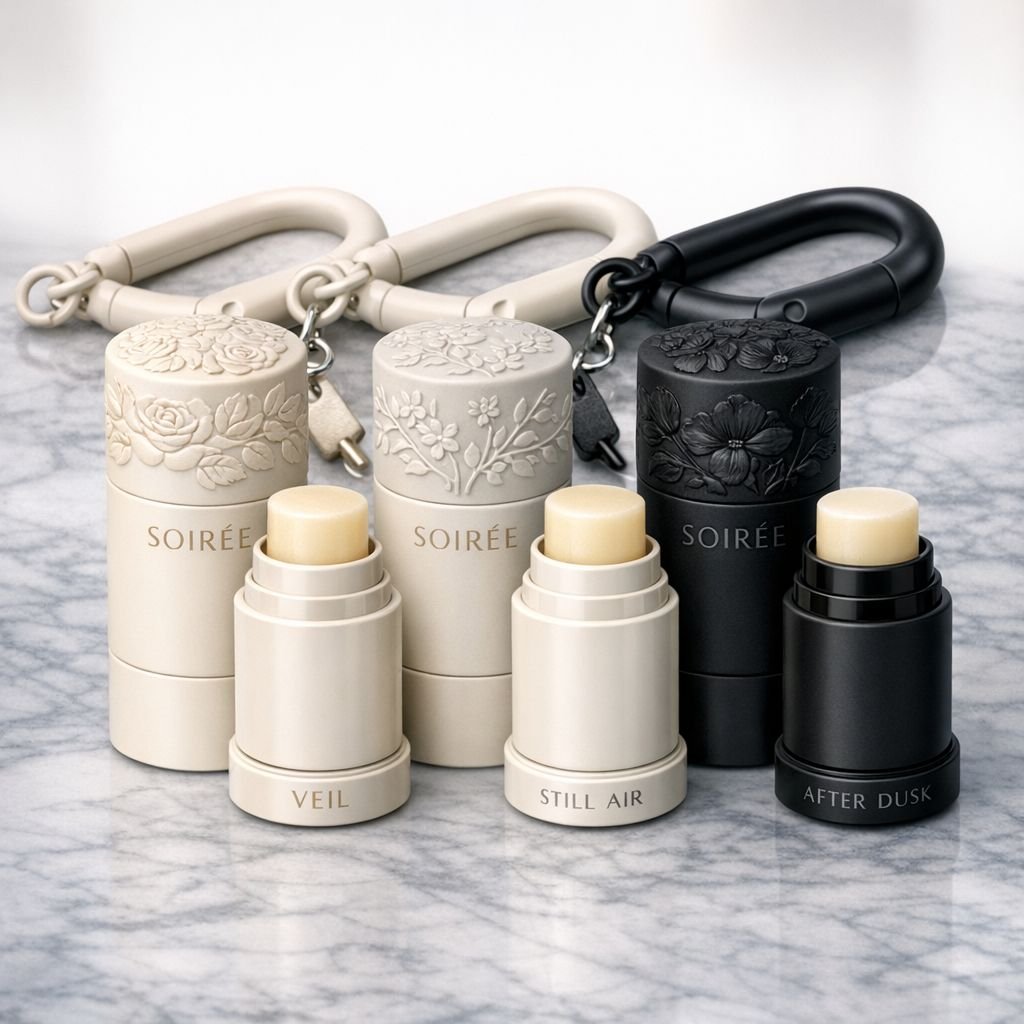
8.3 Twist-up / Stick Solid Perfume Containers, Similar to a lipstick tube structure, suitable for stick-shaped fragrances
- Process pain point: Stuck or “oil overflow” of the rotating mechanism.
- Problem points: Bottom leakage (during filling), push rod cannot retract, fragrance seeping out from gaps when heated.
- Solution:
- Double-layer sealed base: The bottom seal is reinforced with ultrasonic welding technology to ensure zero leakage during hot filling.
- Precision screw fit: Use a self-lubricating POM screw to ensure a constant rotational torque of 0.05-0.1 N · m.
8.4 Surface Decoration Process of Solid Perfume Box Container :
Enamel, shell inlay, and leather wrapping are often designed as “jewelry grade” items to enhance value.
| Decoration | Potential Risks | Solutions |
|---|---|---|
| Leather Wrapping | The edges and corners are curled up, damp, and detached | Using turned-edge technology instead of trimming, combined with water-based, environmentally friendly, strong adhesive, passed high and low temperature cycling tests. |
| Shell/Pearl/Mother Shell Inlay | The material fragile, the thickness uneven. | Using CNC precision slotting to ensure consistent depth of stone embedding, the surface is covered with transparent protective resin. |
8.5 Mandatory Lab Test for Solid Perfume Case Container
- Evaporation / Weight Loss Test:
- Requirement: After filling, place in 45 ℃ environment for 30 days, with a weight reduction of ≤ 0.1 %. Prevent the ointment from becoming hard and losing its fragrance due to solvent evaporation.
- Compatibility & Migration:
- Requirement: Place the base of the solid fragrance and the container together at 50 ℃ for 15 days to test for the migration of heavy metals (lead, cadmium, nickel) into the fragrance.
- Drop & Crush Test:
- Requirement: Simulate falling from a bag, from 1.5m height to a hard ground; the lid must not pop open, and the container must not deform.
- Torque Consistency:
- Requirement: For screw or rotating mechanisms, the deviation between the first opening torque and the 100th opening torque must be <15%.
8.6 Expert advice: How to design a “popular” solid perfume container?
- “filling-friendly” design: Perfumes are usually hot-filled in liquid form, the edge of the container should be designed with anti-overflow channels, and the bottom should withstand the instantaneous high temperature of 80 ℃-90 ℃.
- Refillable System: With the trend of environmental protection, designing a “shell+replaceable inner liner” structure can not only improve the durability of the shell, but also increase the customer repurchase rate.
- Olfactory intervention avoidance: ensure that all gaskets and glues with low odor to avoid the industrial flavor of packaging materials interfering with the top note performance of the solid ointment.
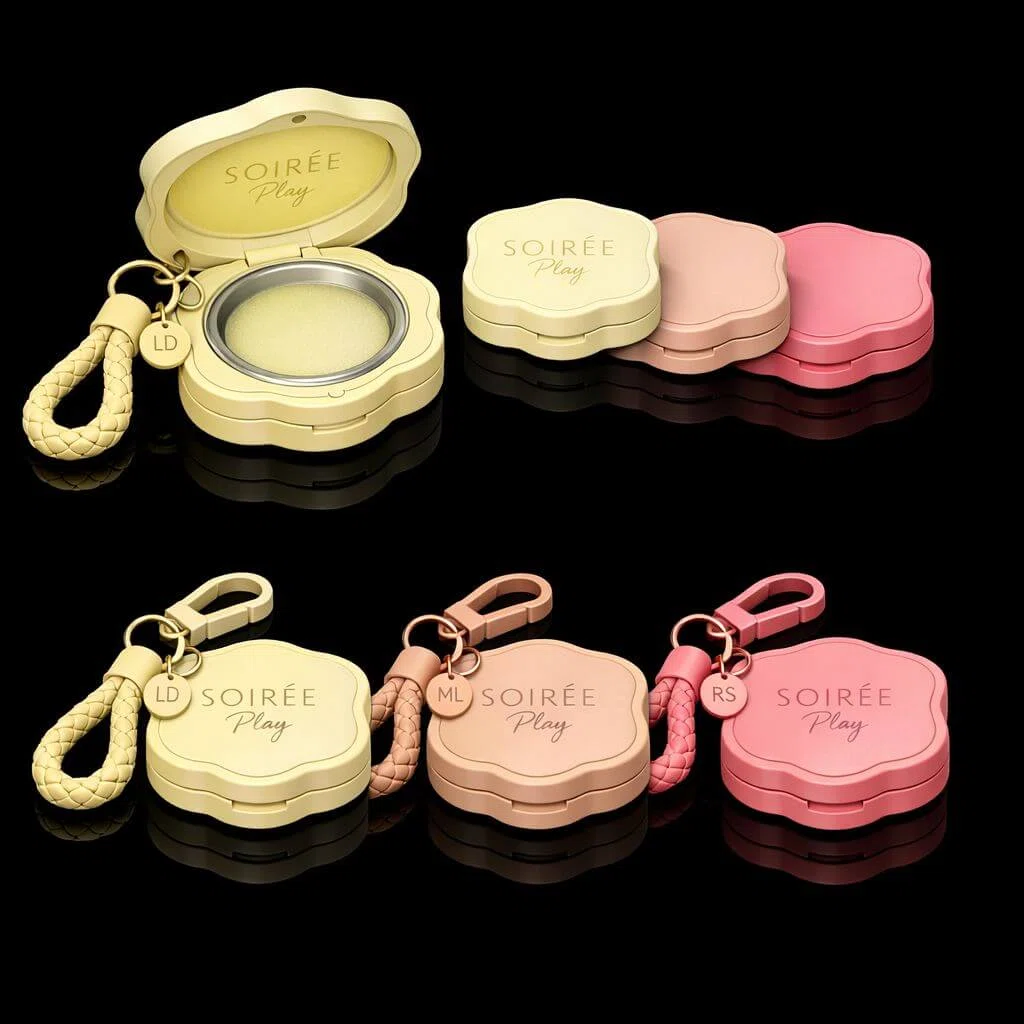
Do you Plan to Develop Portable Solid Fragrance Container Products?
[Contact our solid fragrance container expert] – We can provide you with references to multiple existing molds and samples.
Chapter 9: Car Fragrance/Car Diffusers /Car Aromatherapy Packaging Materials and Car Aromatherapy Clips: Smell Engineering for Mobile Spaces
9.1 The necessity of developing a car aromatherapy series (Strategic Necessity)
- Brand extension: expand the experience of the perfume line from “personal” to “space” to increase user retention.
- High frequency interaction place: The car interior is a closed and frequently used space, and the visual (Car Diffusers packaging design) and tactile (fragrance clip touch feeling) of the car’s aromatherapy are excellent opportunities for the brand to reach customers.
- High premium gift attribute: The refined metal car-mounted fragrance clip is often used as a gift or an independent item with a high-end gift box, and its profit margin is 30 % -50 % higher than that of ordinary perfume.
9.2 Extreme Challenges and Core Pain Points in Cars
In-car is much more complex than indoor environments, requiring extremely high tolerance to fragrance packaging materials.
| Interior Environment | Pain Points | Risk Points | Result |
| Extreme temperature difference | In summer, when sun exposure, the temperature on the dashboard can reach 80 ℃-90 ℃. | Ordinary plastic deformation and blistering of electroplating layer | The packaging material melted and damaged the interior car. |
| Alcohol corrosion | Car aromatherapy (liquid) has a high alcohol content. | Ordinary plastic deformation and blistering of the electroplating layer | Corrosion of automotive dashboard coating, resulting in expensive claims |
| UV aging | Long-term direct exposure | Transparent components turn yellow and fade | The visual grade has sharply declined. |
| mechanical vibration | Turbulence during vehicle operation | The car aromatherapy clip is loose and falling off, and there is noise from the glass bottle impact. | Safety hazard (stuck brake or accelerator). |
9.3 Engineering Solutions for Custom Car Fragrance/Car Diffusers /Car Aromatherapy Clips
1. Material upgrade: from “decorative grade” to “automotive grade.”
- High temperature resistant material: Abandon ordinary ABS and choose PBT or high-grade zinc alloy (Zamac 3) to ensure physical structural stability below 90 ℃, passing the cyclic thermal shock test from -20 ℃ to 80 ℃.
- Anti-corrosion lining: Use fluororubber (FKM) or high-density polyethylene (HDPE) seals inside the fragrance clip. This kind of material has strong chemical inertia to high-concentration essence and alcohol.
2. Structural Innovation: Balancing Safety and Experience
- Silicone-coated clip: The elastic surface of the car clip is coated with food-grade silicone. This can provide a stable gripping force of $1.5kg -2.5kg and prevent scratching of the vehicle’s air outlet blades.
- Solid/Ceramic Carrier: For the risk of liquid leakage, we recommend using high porosity nanoceramics or PE solid sheets. This’ solid packaging material ‘can achieve slow-release fragrance expansion and eliminate the risk of leakage and corrosion
- Magnetic suction/thread closure: When replacing the fragrance core, a strong magnetic suction design is used to ensure that it does not fall off under severe vibration, and the operation is elegant
3. Surface technology: UV protection and anti-fingerprint
- Vehicle-grade electroplating: PVD (Physical Vapor Deposition) is used instead of ordinary electroplating, combined with anti-UV varnish to ensure no fading for 3 years.
- AF Nano Coating: For the surface of aromatherapy clips that are frequently touched, an anti-fingerprint coating is added to maintain a constant metallic luster.
9.4 QC Checklist from Custom Car Fragrance/Car Diffusers /Car Aromatherapy Clips Wholesale Manufacturer
To ensure the safe delivery of every car aromatherapy diffusers or clips, fragrancepackage.com conducts the following tests:
- Sunlight Simulation Test: Simulate 500 hours of intense ultraviolet radiation to detect color change levels.
- Air outlet adaptation test: Suitable for 99.9% mainstream car models worldwide (horizontal, vertical, circular air outlets).
- Volatile consistency test: In an environment of 40 ℃, detect the aroma release curve to ensure uniform aroma expansion within 30-45 days.
- Vibration fatigue test: Place the fragrance clip loaded with fragrance cores on a vibration table, simulate a road condition of 100000 kilometers, and ensure that the structure has no abnormal noise or looseness.
Car Diffusers Expert advice: How to define a successful car aromatherapy container?
- Design: Adopting a minimalist industrial style, the metallic texture seamlessly blends with modern car interiors.
- Function: priority should be given to the “solid-state+metal shell” solution, which is the best way to avoid logistics risks and after-sales corrosion complaints.
- Environmentally friendly: Suggest replaceable inner liner design, permanent useful outer shell, regular order inner plater, achieving high-frequency repurchase of 30% – 50%.
Is your car perfume packaging series facing complaints of leakage or deformation under high summer temperatures?
[Request for stability test report of car perfume packaging] – We can conduct a comprehensive “vehicle grade” pressure assessment for your existing design.
Chapter 10: Rigorous Experimental Data for Quality Control (QC) for perfume packaging
The quality commitment without data is pale. Fragrancepackage.com executes testing processes far beyond industry benchmarks.
10.1 Mandatory Laboratory Testing Items
Since perfume contains a high concentration of alcohol (usually 70% -90%) and highly permeable essential oils, the perfume packaging must pass rigorous chemical and physical stability tests. The following are the mandatory test items, specific requirements, and industrial details for the four core components you mentioned:
- Vacuum leakage test: Place it in a vacuum chamber and maintain at -0.06 MPa (industry standard is usually -0.05 MPa) for 45 minutes.
- Salt spray corrosion test: salt water with a concentration of 5 % was sprayed continuously for 48 hours on the electroplating lids to simulate the coastal transportation environment and assess the oxidation resistance level.
- Adhesion test: After the coating film is marked with a “hundred grid knife”, use 3M 600 # tape to pull it continuously for 3 times, and the peeling rate must be 0%.
- Torque and Pulling Force: The opening force of the lid remains constant at 15 N ±2 N, ensuring sealing and optimizing user experience.
In the fragrance packaging industry, laboratory stress testing is the watershed that distinguishes between “universal perfume packaging containers” and “professional fragrance packaging”.
10.2 Perfume Glass Bottle: structural integrity and internal stress test. In addition, the glass bottle is a pressure-bearing container, and its safety and transparency are equally important.
- Annealing Test
- Content: Use a Polariscope to observe residual stresses inside the glass.
- Requirement: It must meet the actual temperature annealing standard, and the internal stress level must be controlled at level A or B of the ASTM C148 standard.
- Detail: Excessive stress can cause the bottle body to explode during high and low temperature changes.
- Thermal Shock Test
- Content: Quickly cycle the bottle between 0 ℃ ice water and 60 ℃ (or higher) hot water.
- Requirement: To withstand the temperature difference impact of ΔT 40℃ without breaking.
- Details: Focus on checking the junction between the bottom and body of the bottle, which is the most vulnerable point due to uneven thickness.
- Verticality/TIR
- Content: Rotate the bottle body and measure the offset of the bottleneck relative to the centerline of the bottle bottom.
- Requirement: TIR (Total Bounce) typically requires ≤ 0.5mm.
- Details: Excessive deviation can lead to the inability of the pump head to fit into the neck on the fully automatic assembly line, resulting in mass production stoppage.
10.3 Perfume Bottle Caps made of different materials: adaptability and surface resistance tests. In addition, the biggest challenge for the perfume lids is the erosion after alcohol volatilization.
- Alcohol Resistance
- Content: Soak the perfume lid in 95% alcohol for 24-48 hours, or use an alcohol swab to apply pressure and friction (usually 100-200 times).
- Requirement: The surface coating should not fade, peel, become sticky, or peel off.
- Details: For zinc alloy electroplated perfume caps, additional inspection to check for signs of blackening at the edges.
- Pull-off & Torque Test
- Content: Measure the instantaneous vertical tension required to open the lid.
- Requirement: The opening force should be controlled between $1.5kg and $2.5kg (approximately 15N-25N).
- Details: The magnetic suction cover needs to be tested for decibels of suction sound and tactile damping to ensure that the magnet does not come off.
- Climate Cycle
- Content: -20 ℃ holds for 12 hours, 60 ℃/RH 90% holds for 12 hours, cycle 3-5 times.
- Requirement: The wooden cover must not crack, and the sleeve of the natural stone cover must not loosen or fall off.
10.4 Vintage Natural Rubber Squeeze Atomizer Pump Bulb: Sealing and mechanical life testing. Due to its open structure, it is the most difficult part of the test.
- Vacuum Leakage Test
- Content: Place the assembled bottle in a vacuum box -0.06MPa for 45 minutes.
- Requirement: There should be no liquid leakage at the air BULB connection and nozzle.
- Details: The valve of the air BULB pump must be one-way and highly sealed, otherwise perfume will flow back to the airbag along the air flow pipe.
- Life Cycle Test
- Content: The automatic robotic arm continuously presses.
- Requirements: After at least 5000 times of pressing, the spray mode remains the same, and the airbag rebound time does not increase.
- Detail: Focus on observing whether the hand-woven thread breaks due to repeated rubbing.
- Evaporation/Weight Loss
- Content: Place in a constant temperature chamber of 40 ℃for 30 days.
- Requirement: The weight loss rate must be less than 1% (industry standards may even require less than 0.5%).
- Details: The weight loss difference of the bulb pump must be tested in both the “on” and “locked” states.
10.5 High-end Perfume Gift Box: Logistics Protection and Environmental Tolerance Test. The value of Gift Box is to Protect the Fragile Glass Inside.
- Drop Test – ISTA 3A
- Content: Simulate express delivery transportation, dropping from a height of 0.8m to 1.2m in a sequence of 1 corner, 3 edges, and 6 faces.
- Requirement: The glass bottle should be undamaged, the edges of the gift box should no serious creases, and the inner tray should not be displaced.
- Details: For zinc alloy lids weighing over 100g, pay attention to whether their inertia will break the inner support.
- Cross-Hatch Test
- Content: Use a hundred grid knife to draw lines at the hot stamping or printing area of the perfume gift box, and pull with 3M tape.
- Requirement: The peeling level must reach level 0-1.
- Detail: touch film paper is most prone to insufficient adhesion during hot stamping.
- Anti-Mold Test
- Content: Observe for 48-72 hours in a high-temperature and high-humidity place.
- Requirement: Especially for wooden components and cardboard, there should be no mold spots or odors.
10.6 Three Global Details that must be Noted in the Production Process of Fragrance Packaging and before shipment
- Compatibility test is the premise: all tests should use the actual perfume liquid provided by the customer instead of water. The influence of different essence ratios (EDP vs. EDT) on the swelling of the pump head seal ring (Gasket) is completely different.
- Tolerance Accumulation: Laboratory testing not only tests individual products, but also tests the entire set. The fit of the lid on the bottleneck directly affects the vacuum test results.
- Batch stability: Qualified laboratory samples do not mean qualified bulk production. AQL (Acceptable Quality Level) sampling mechanism must be established to integrate laboratory testing into every stage of bulk production.
As engineering experts at fragrancepackage.com, we recommend that brands maintain a complete laboratory testing cycle of at least 15-21 days before mass production, which is the best investment to ensure brand reputation.
Chapter 11: Cost Breakdown of One-stop Ecological Supply Chain for fragrance packaging
Elegant Packaging team directly returns the premium generated by redundant links to customers through its own industrial chain. Cost composition comparison of circulation between perfume packaging material supply chains (50ml customized perfume as an example)
- Traditional procurement: raw materials (40%)+cross factory transportation (10%)+supplier intermediary profit (20%)+scrap rate of each factory (5%)+management cost (25%).
- Our ecological supply chain: raw materials (45%, with greater bargaining power for larger procurement quantities)+internal circulation (2%)+direct management (13%)+extremely low scrap (1%)=comprehensive cost reduction of about 18% -22%.
10 Critical FAQs for Your Perfume Brand’s Success
Q: Why do magnetic perfume caps sometimes misalign or repel?
A: This is caused by incorrect polarity alignment or magnetic decay. Elegant Packaging uses N42-grade Neodymium magnets and precision positioning jigs during encapsulation to ensure 100\% logo alignment and a perfect snap every time.
Q: Can the “mold seam” at the bottom of a perfume glass bottle be completely removed?
A: While it cannot be eliminated, we use automatic fire polishing and high-precision molds to keep the seam height below 0.05mm, making it virtually invisible to the naked eye.
Q: Will vintage-style bulb atomizers become sticky or discolored after six months of use?
A: Cheap rubber pumps degrade over time. We use High-performance TPE eco-friendly materials combined with an anti-UV coating to ensure they remain non-sticky and colorfast for over 3 years.
Q: How do you prevent wooden perfume caps from cracking?
A: All timber undergoes 72-hour vacuum drying to lock moisture content at 10\%. We also embed a PP plastic inner liner to create a physical barrier between the perfume’s alcohol and the wood fibers.
Q: How long can the electroplating on zinc alloy (Zamac) caps last without oxidizing?
A: Under standard indoor conditions, our electroplating—fortified with a Nanocoating—is guaranteed not to fade or blacken for 3–5 years.
Q: Does internal spray coating on perfume glass bottles affect the fragrance?
A: We use eco-friendly water-based coatings cured at 200 ℃. They pass rigorous Compatibility Tests to ensure zero solvent residue and no impact on the scent profile.
Q: Which perfume bottle neck specifications do you support?
A: We offer a full range of molds covering international standards, including FEA10, FEA12, FEA15, FEA18, and FEA20.
Q: How do you protect perfume gift boxes during e-commerce shipping (e.g., Amazon)?
A: We provide customized High-density EVA inserts and conduct drop tests based on ISTA-3A standards to ensure the product arrives pristine.
Q: Can the custom perfume bottles mold fee be deducted from future bulk orders?
A: Yes. Once the order volume reaches the agreed threshold (e.g., 50,000 units), we will refund 100% of the mold fee.
Q: What is the most overlooked pitfall when customizing fragrance packaging for the first time?
A: It is the “Dip Tube Length.” If it’s too short, it won’t reach the bottom; if it’s too long, it bends awkwardly against the glass. We use 3D modeling to calculate the optimal length, accurate to 0.1mm.
If you are planning new perfume packaging projects or are not satisfied with the efficiency and quality of your existing perfume packaging supply chain
[Contact our engineering team] – We will optimize the upgrade of perfume packaging projects based on your current most challenging problem.
