

In the ultra-competitive fragrance market, the juice may be the soul, but the packaging is the body that commands attention. For brand owners transitioning from “standard” to “premium” or “prestige” tiers, packaging is no longer just a vessel—it is a critical engineering challenge and a brand’s most potent silent salesman.
This guide provides a strategic framework for decision-makers to identify, audit, and partner with top-tier custom perfume packaging suppliers.
I. Selection Strategy: Finding an Engineering Partner, Not Just a Vendor
The leap to high-end packaging requires moving away from transactional purchasing toward strategic partnerships.
1. Material Expertise and Niche Perfume Specialization
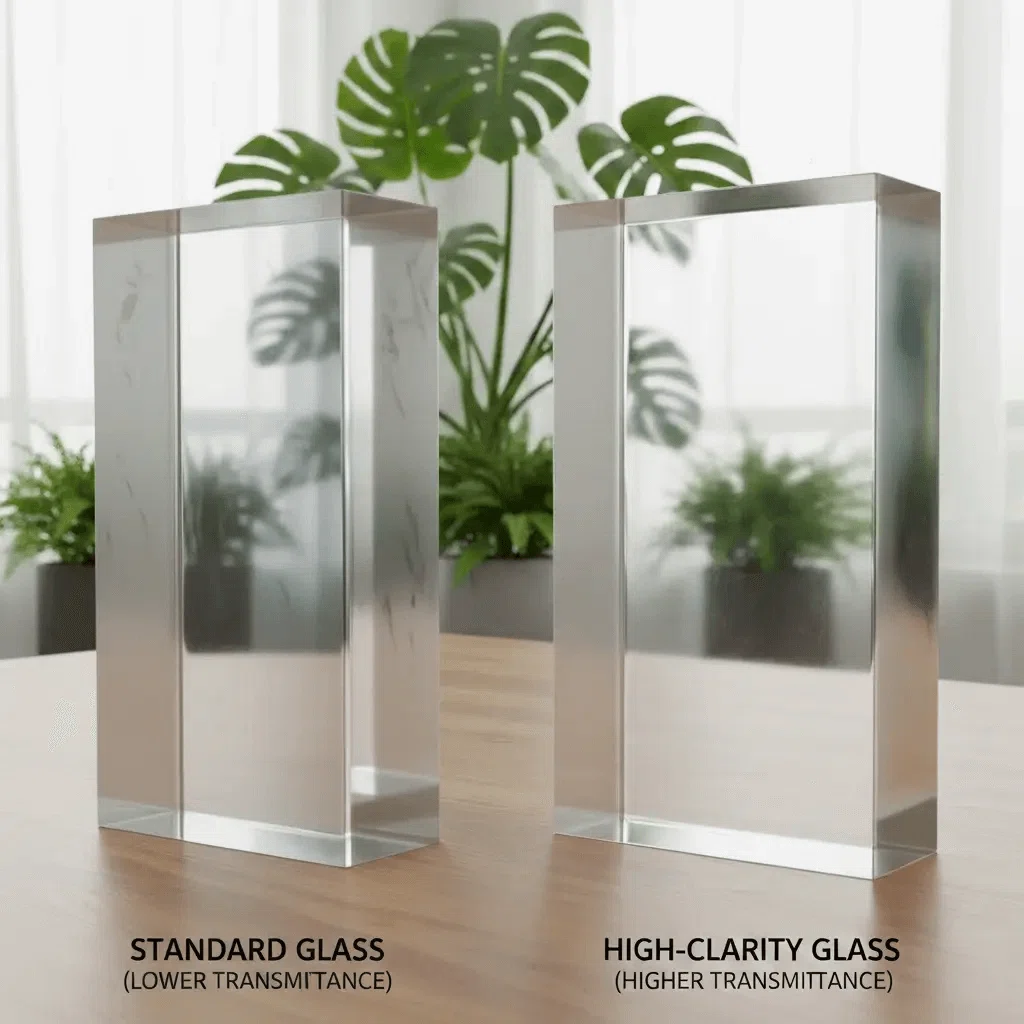
- Glass Purity (The “White” Factor): Luxury begins with glass clarity. Ensure your supplier can distinguish between “High White” and “Extra Flint” (Crystal White) glass. Extra Flint has lower iron content, removing the greenish tint common in mass-market bottles.
- Component Synergy: A common failure in the industry is “Component Mismatch.” Seek suppliers offering a Full-House Solution—integrating the bottle, pump, collar, and cap. This significantly mitigates leakage risks and mechanical failure.
- Sustainability Portfolio: Modern luxury is sustainable. Your partner should have a mature roadmap for PCR (Post-Consumer Recycled) glass and refillable perfume bottle architectures that do not compromise aesthetic brilliance.
2. Design and Engineering Depth
- Rapid Prototyping: Time-to-market is vital. Suppliers must possess in-house 3D printing and CNC machining capabilities to provide high-fidelity “mock-ups” within days, allowing you to feel the weight and ergonomics before committing to expensive steel molds.
- Structural Optimization: A premier supplier doesn’t just execute your drawing; they improve it. They should provide technical advice on glass distribution to prevent stress cracks in heavy-bottom designs and optimize cap weighting to ensure a satisfying “click” or magnetic closure.
3. Supply Chain Resilience
- Lead Time Reliability: Analyze their historical data for On-Time Delivery (OTD). A missed launch date during peak seasons (like Q4) is an expensive failure.
- MOQ (Minimum Order Quantity) Scalability: Look for a supplier that can grow with you—offering flexible MOQ for limited edition “indie” drops while maintaining the infrastructure for millions of units in global rollouts.

II. The Perfume Packaging Supplier Audit Checklist
When visiting a factory, look beyond the showroom. The most important details are often hidden in the workshop’s corners.
1. Quality Control (QC) Systems: The Foundation
- IQC (Incoming Quality Control): Inspect logs for raw material purity (e.g., quartz sand for glass or resin grades for caps).
- IPQC (In-Process Quality Control): The line must feature Automated Vision Systems to detect seeds (tiny bubbles), stones, or scratches in real-time.
- FQC (Final Quality Control): Review their AQL (Acceptable Quality Limit) charts. Prestige brands typically require a critical defect rate of 0%.
2. Shop Floor and Mold Management
- Automation Levels: Is the pump assembly manual or fully automated? High-speed automation ensures torque consistency and reduces human contamination.
- Mold Preservation: Molds are your most expensive asset. Ensure they are stored in climate-controlled libraries with rigorous maintenance logs to prevent “flash” (excess glass/plastic) at the seams.
- Cleanliness Standards: For decoration (painting/printing), a Class 10,000 cleanroom is non-negotiable. Even a single microscopic dust particle will cause a visible “pockmark” on a high-gloss finish.
3. Laboratory Reliability Testing
A luxury bottle must endure the rigors of global shipping and consumer use.
- Vacuum Leak Test: Components must show zero leakage under a negative pressure of -0.05 MPa.
- Compatibility Testing: The “juice” (fragrance oil and alcohol) is a solvent. Materials must be immersed in the perfume for 48 hours at 45°C to ensure no peeling, clouding, or scent alteration.
- Adhesion Testing: Use the Cross-Hatch / 3M Tape Test on all PVD, silk-screened, or lacquered surfaces to ensure the finish doesn’t flake over time.
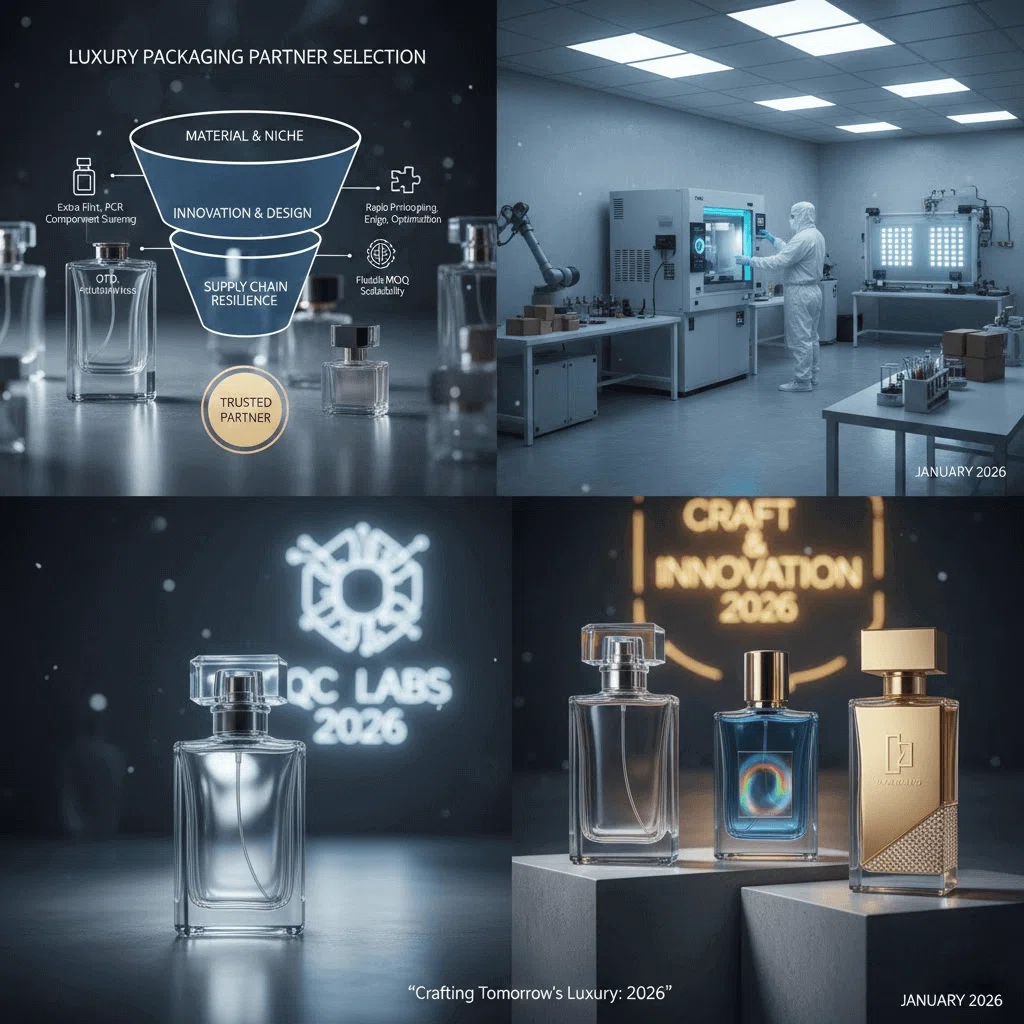
III. The Audit Scorecard: A Decision-Making Tool
Use this weighted scorecard to turn subjective observations into actionable data.
| Category | Key Metrics | Weight |
| Quality Control | Lab equipment, IPQC automation, cleanroom standards | 35% |
| Technical Craft | Glass whiteness, fire polishing, finishing precision | 25% |
| R&D & Innovation | 3D prototyping, structural engineering feedback | 15% |
| Capacity & Logistics | Automation ratio, lead time accuracy, MOQ flexibility | 15% |
| ESG & Compliance | PCR glass capabilities, ISO/Sedex certifications | 10% |
Total Score Interpretation:
- 85-100: Strategic Partner (Luxury Grade)
- 70-84: Qualified Vendor (Mass-Prestige)
- <60: Unacceptable Risk
IV. Professional FAQ for Fragrance Brand Decision-Makers
Q: What is the biggest “Red Flag” during a fragrance packaging factory audit?
A: Visible dust. If the facility is not dust-managed, your high-gloss or electroplated bottles will inevitably have surface defects.
Q: Why do pumps leak even after passing initial tests?
A: Often it’s “Neck Ovality.” If the bottle neck isn’t a perfect circle, the gasket can’t seal. You must check the supplier’s tolerance controls for bottleneck dimensions.
Q: Does PCR glass ruin the prestige look?
A: PCR content >40% adds a greyish tint. Most luxury brands use a 15-25% PCR blend to maintain “Extra Flint” clarity while meeting sustainability goals.
Q: Can I use different suppliers for the perfume bottle and pump?
A: Only if you have an elite internal engineering team. Otherwise, use a single supplier for the “set” to avoid finger-pointing if a leakage occurs.
Q: Why is “Fire Polishing” worth the extra cost?
A: It melts away mold parting lines and gives the glass a brilliant, liquid-like shine. For any bottle retailing over $100, it is essentially mandatory.
Q: What is “Mean Strokes to Prime”?
A: It’s how many pumps it takes to get the first spray. For luxury, this must be <3 strokes. Anything more feels cheap to the consumer.
Q: How do I avoid color inconsistencies?
A: Demand a Delta E ($\Delta E$) standard <1.0. Anything above 2.0 is visible to the untrained human eye as a mismatch.
Ready to Audit Your Next Partner?
Selecting a custom perfume packaging supplier is a commitment to your brand’s physical identity. By using this weighted scorecard and adhering to strict reliability testing, you ensure your fragrance launch is defined by its quality, not its defects.
Your Scent Deserves a Stage, Start a Strategic Conversation
- WhatsApp: +86 18107699312
- Email: info@fragrancepackage.com
