

Compared to plastic or zinc alloy, resin perfume caps have these special features during production:
- Lower mold cost: Silicone or low-pressure molds for resin are cheaper than injection molds, making them great for small batches and many different styles.
- Warm touch: Unlike cold metal or cheap-feeling plastic, resin feels smooth and natural, somewhere between stone and wood.
- Chemical stability: Resin resists perfume alcohol well, so it doesn’t easily corrode or fade.
Resin plays a vital role in luxury perfume packaging due to its high plasticity. To better understand how resin fits into the wider world of bottle design, you can refer to our Complete Guide to Perfume Packaging Terms, which covers all the essential industry vocabulary.
A. Resin Perfume Caps Can Be Sorted by Appearance and Function
1. By Appearance and Material
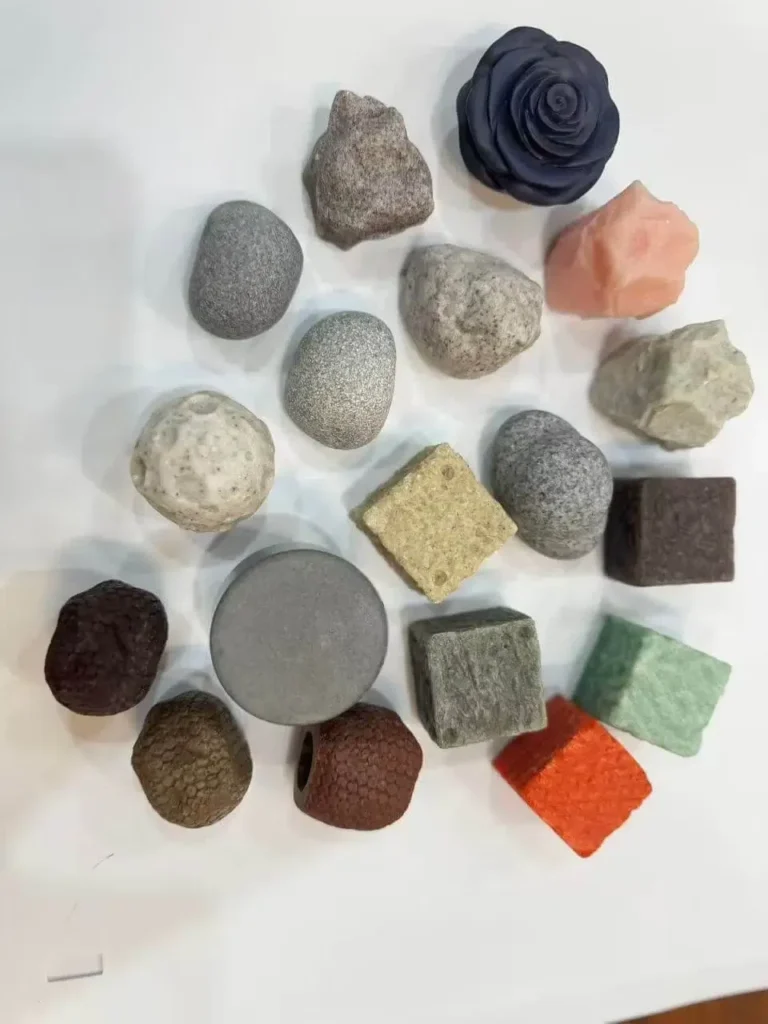
Resin’s biggest strength is its ability to imitate expensive materials by adding colors, pearl powder, or texture agents:
- Marble/Stone Effect:
The most popular type. By mixing colors unevenly, resin can look like marble, jade, or agate. Each cap has a unique pattern. - Translucent/Amber Effect:
Using clear resin to create deep amber, tortoiseshell, or frosted semi-transparent looks. Great for salon perfumes or vintage styles. - Solid Opaque:
High-saturation colors with shiny mirror or matte finishes. Heavier and more ceramic-like than plastic. - Artistic/Sculptural:
Resin can copy very detailed 3D shapes (flowers, animal heads, human figures) without the heavy polishing needed for metal.
2. By Inner Structure and Function
Resin is hard but not very flexible, so it often needs extra parts inside:
- With Inner Plastic Core:
The most common design. Resin can’t snap onto a sprayer well, so a PP or PE inner core is added for smooth opening and closing. - Magnetic Closure:
Magnets are placed inside the resin cap and the bottle neck. Popular in luxury perfumes, the clicking sound feels very satisfying. - Weighted Resin:
Metal weights are added inside. Extra weight gives a more luxurious, heavy feel in the hand.
Most resin caps require a plastic inner cap for a secure fit. If you are new to these components, check out this glossary of fragrance packaging components for a detailed breakdown of bottle parts.
B. Four Major Challenges in Resin Cap Production & Industrial Solutions
1. Controlling Pattern Consistency
Challenge:
Marble or flow patterns are random. Some caps may turn out all white or all black, or have clumpy patterns, leading to high rejection rates.
Solutions:
- Standardized color addition using precise pumps and fixed mixing speed/direction.
- Layered pouring: pour base color first, then add contrast color at a set time, using vacuum vibration for natural spreading.
- Pre-mixed color granules for stable batch colors.
2. Bubbles and Pinholes
Challenge:
Resin produces heat and tiny bubbles as it hardens. Poor air removal leaves pinholes or voids that weaken the cap.
Solutions:
- Vacuum degassing: Remove air from liquid resin before pouring.
- Pressure casting: Hardening resin under high pressure forces bubbles to become invisible, giving a mirror-smooth surface.
3. Size Precision & Shrinkage
Challenge:
Resin shrinks 0.5–2% when hardening. Even small errors make caps too loose or too tight.
Solutions:
- Shrinkage compensation in mold design.
- Secondary CNC machining for high-precision inner holes.
- Constant-temperature curing rooms to avoid uneven shrinkage.
4. Yellowing & Perfume Resistance
Challenge:
Ordinary resin turns yellow under UV light. Perfume alcohol can also swell, crack, or soften the cap.
Solutions:
- Add UV blockers to the resin formula.
- Spray a UV top coat as a protective barrier.
- Use high-performance resin (epoxy or modified polyester) for better chemical resistance.
Summary Recommendation:
For high efficiency, the best method is “resin shell + automated coating + CNC trimming” — balancing beauty and industrial quality.
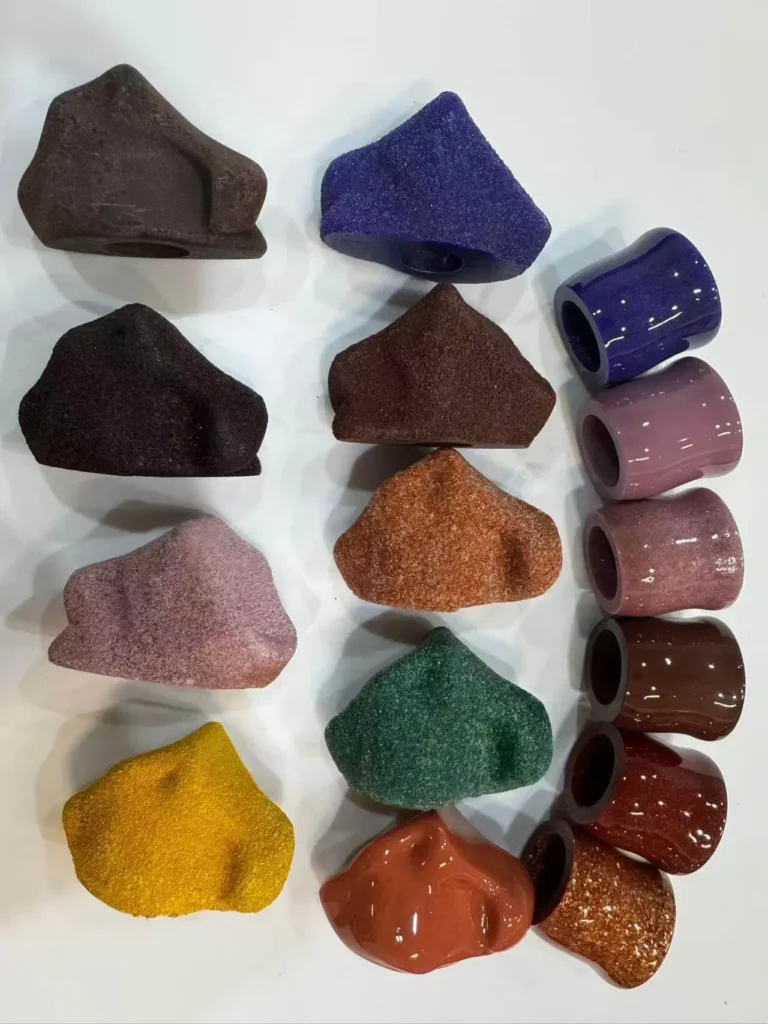
C. Four Main Shape Directions for Resin Perfume Caps
1. Nature Mimicry
Classic resin use: fake-but-real natural looks.
- Marble & stone: each cap unique.
- Jade & agate: translucent and deep.
- Wood & horn: won’t crack or get damp like real wood.
2. Geometric & Abstract
Sharp, modern art shapes.
- Multi-faceted cuts: like diamonds, very shiny.
- Asymmetric flowing shapes: easy for resin, expensive for metal.
- Minimal cylinders/squares: heavy, sleek industrial feel.
3. Sculptural & Figurative
Great for detailed shapes — often used for brand statement pieces.
- Plants & animals: fine details like feathers or scales.
- Faces & bodies: ceramic-like smoothness.
- Vintage relief: carved logos or old-fashioned patterns.
4. Hybrid Design
Mixing resin with other materials.
- Embedded: gold leaf, dried flowers, shells inside clear resin.
- Two-tone: two different colors or transparencies in one cap.
- Fabric wrap: resin core + leather or silk for soft touch.
Design Tip:
- Complex shapes → hand or semi-auto polishing to keep details.
- Simple shapes → CNC machining for perfect straight lines.
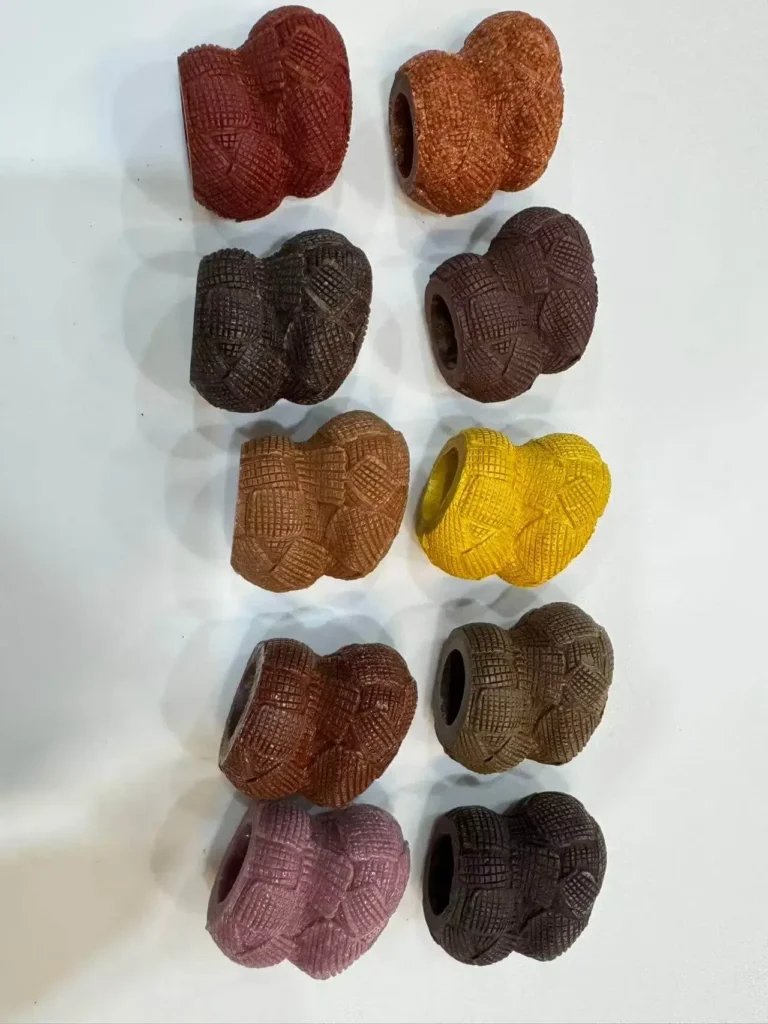
D. Two Different Paths: Minimal Geometric vs. Sculptural
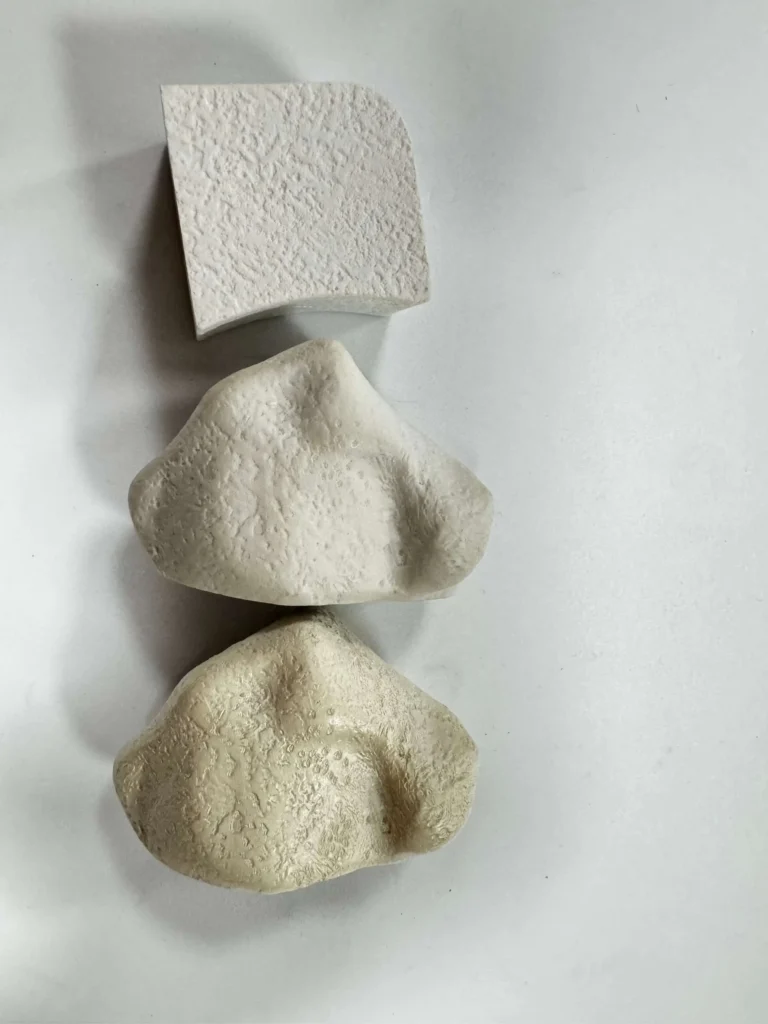
For Minimal Geometric: Perfect straight lines & finish
- Core process: CNC machining from resin blocks.
- Surface: high-gloss (mirror) or soft-touch matte.
- Detail: tiny rounded edges (R0.5–R1) to prevent chipping.
For Brand Sculptural: High detail & emotion
- Core process: Silicone molds from 3D printed masters.
- Surface: antique metal or ceramic look.
- Design challenge: hide mold lines in natural patterns.
Comparison Table
| Aspect | Minimal Geometric | Sculptural |
|---|---|---|
| Visual focus | Lines, proportion, reflection | Details, story, brand symbol |
| Mold choice | Steel or machined blanks | Silicone or precision steel |
| Finishing | Polishing, CNC touch-ups | Painting, hand-rubbed antique |
| Brand feel | Modern, cool, architectural | Luxurious, vintage, artistic |
| Weighting | Usually needs added weight | Usually heavy enough as is |
Choosing the right design involves balancing aesthetics with technical feasibility. To help you communicate more effectively with manufacturers, we have compiled a comprehensive list of perfume packaging definitions you should know.
Pro Tip: Combine Both
- Inner engraving: floating brand logo inside transparent resin.
- Top embossed: small logo on top of a simple cylinder — clean shape with brand detail.
Whether you choose a minimalist geometric style or a complex sculptural design, mastering the right materials is key to brand success. For more insights and professional tips, don’t forget to visit our Fragrance Packaging Terms & Glossary.
E. Professional FAQ about Resin Perfume Caps Custom
A: Resin feels heavier and warmer, looks more like stone or wood, and resists perfume chemicals better than regular plastic.
A: Yes! By mixing colors and using special pouring methods, resin can copy marble, jade, amber, and other natural materials — and each cap is unique.
A: For small batches, resin is cheaper than metal or injection-molded plastic because the molds cost less.
A: Resin is hard but not super flexible. If a cap falls from a high place, it might crack. Many caps have inner cores or extra weight to make them stronger.
A: Without protection, yes. But high-quality resin caps have UV blockers and special top coats to prevent yellowing.
A: Yes. Magnets can be placed inside the resin cap and bottle neck for that nice “click” feeling when closing.
A: Minimal geometric shapes (clean cylinders, cubes, or faceted designs) give a modern, architectural look. Sculptural shapes are better for artistic or vintage brands.
A: Absolutely. The logo can be carved on top, embedded inside clear resin, or added as a metal piece floating inside.
A: Some have metal weights hidden inside. Extra weight makes the cap feel more luxurious and expensive.
A: Most resin is not biodegradable, but many factories now work on recyclable or bio-based resins. Always check with your supplier.
