

I. Introduction
Fragrance is more than a scent; it is an invisible accessory that defines your presence. For many enthusiasts, longevity is the primary benchmark of a “quality” perfume. However, a common industry misconception is that short-lived scents are inferior. In reality, fragrance is a delicate balance of chemistry and art. Understanding that a citrus-heavy summer scent is scientifically incapable of lasting as long as an oud-based winter scent is the first step toward becoming a fragrance expert.
II. Concentration Levels: The Scientific Foundation
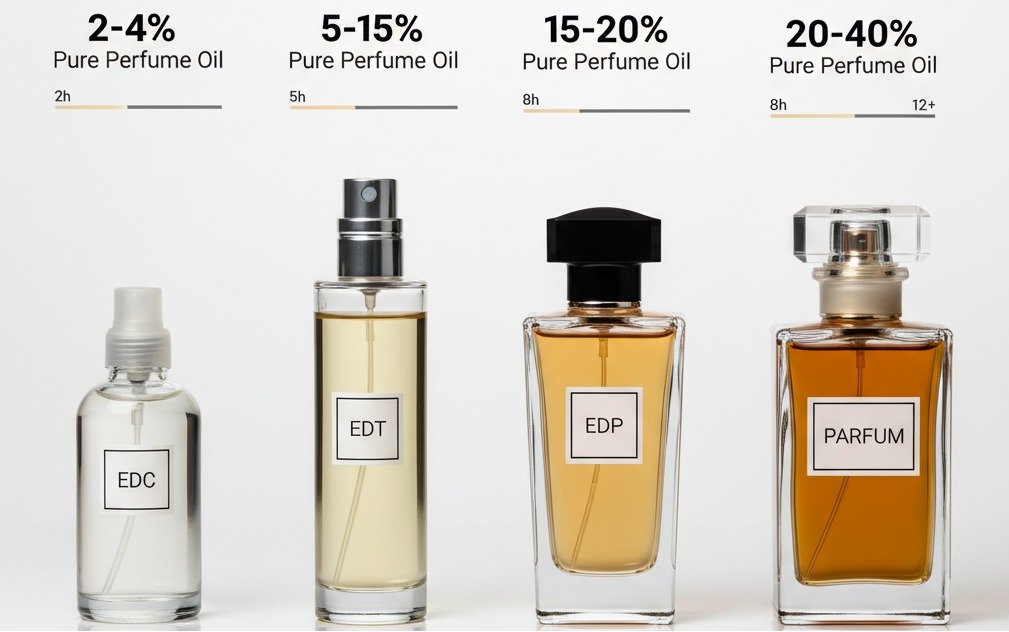
The ratio of aromatic compounds to alcohol (the solvent) dictates the initial “staying power.”
- Eau de Cologne (EDC): Contains 2%–4% oil. Designed for a refreshing burst, typically lasting 2 hours. Perfect for post-shower or gym use.
- Eau de Toilette (EDT): Contains 5%–15% oil. The most popular concentration, balancing vibrancy and endurance for 3–5 hours.
- Eau de Parfum (EDP): Contains 15%–20% oil. A richer experience that usually lingers for 5–8 hours, making it the standard for workdays.
- Parfum / Extrait: The pinnacle of luxury with 20%–40% oil. These can last 12–24 hours, often staying on clothes for days.
III. Fragrance Notes & Chemical Volatility
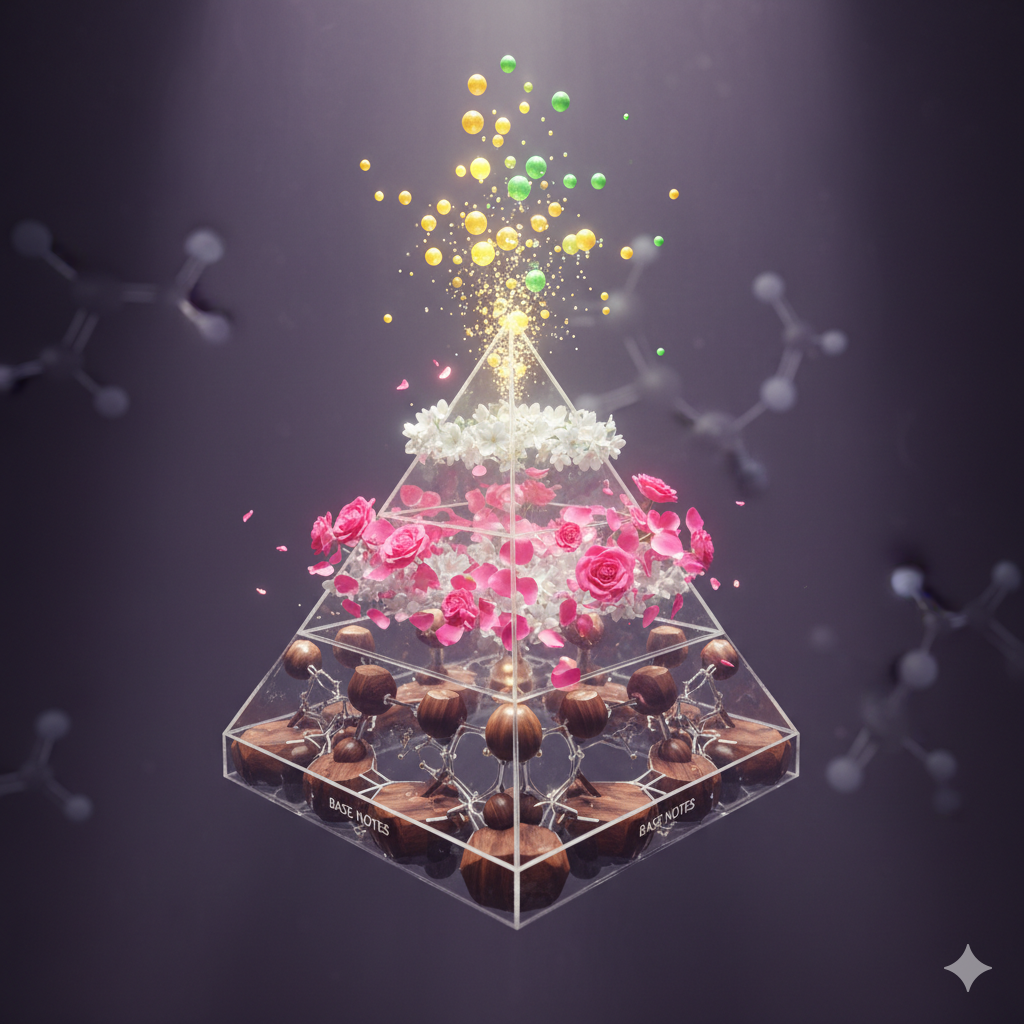
Fragrance is structured as a “pyramid,” where molecular weight determines evaporation speed:
- Top Notes: Light molecules (Citrus, Bergamot, Neroli). They provide the “hook” but evaporate within 15 minutes.
- Heart Notes: Medium molecules (Rose, Jasmine, Lavender). They form the character of the scent for several hours.
- Base Notes: Heavy, “sticky” molecules (Sandalwood, Vanilla, Patchouli). These act as fixatives, slowing down the evaporation of lighter notes.
- Synthetics vs. Naturals: Modern perfumery uses synthetic molecules like Iso E Super or Ambroxan to create “beast mode” projection and longevity that natural oils may not achieve.
IV. External & Biological Factors
Your body is a living canvas that interacts with the perfume’s chemistry.
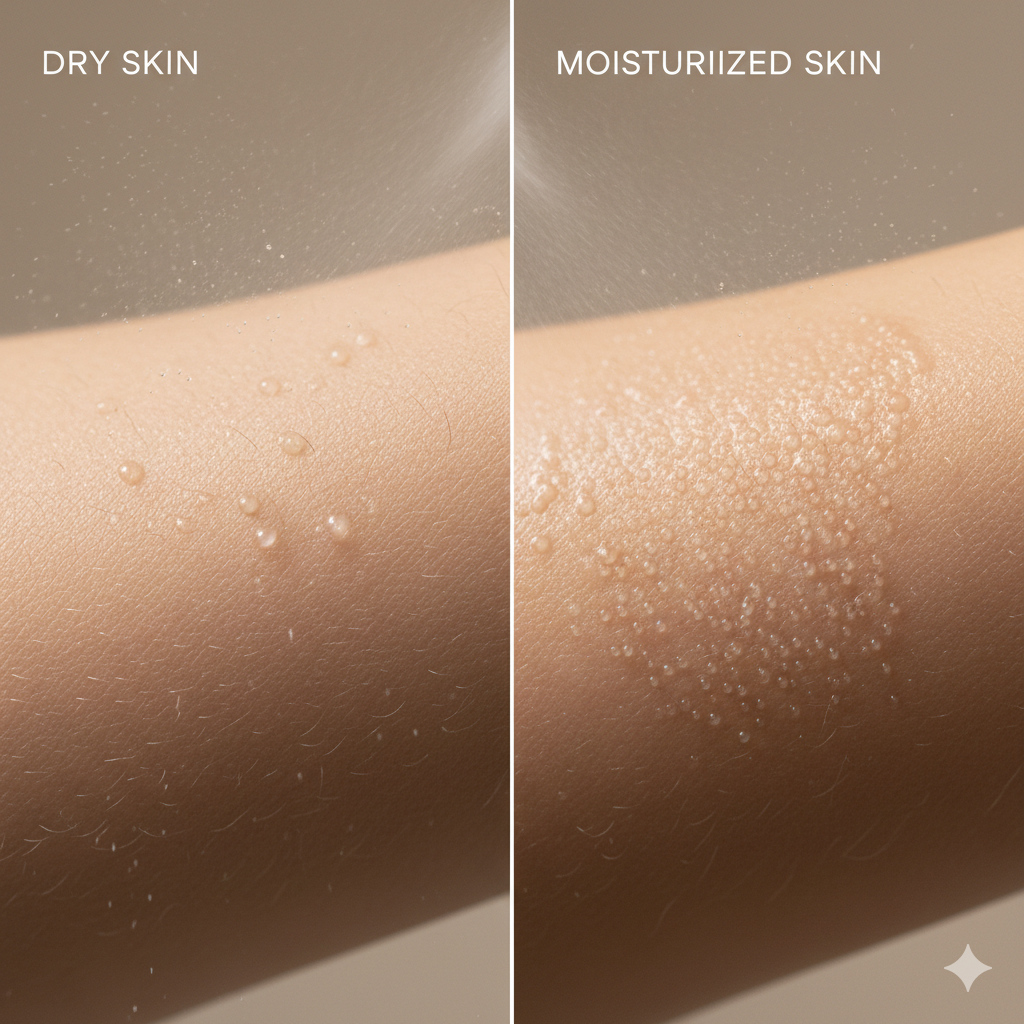
- The Skin Barrier: Oily skin acts as a natural primer, trapping scent molecules. Dry skin lacks the lipids necessary to hold the fragrance, causing it to “flash off” quickly.
- Environmental Impact: Heat increases the kinetic energy of molecules. In summer, your perfume will project further (sillage) but die sooner. In winter, molecules remain dormant, lasting longer but staying closer to the skin.
- Application Sites: Pulsating areas (wrists, neck) radiate heat to push the scent out. Spraying on clothing or hair (which are porous and cooler) can double the lifespan of a scent.
V. Pro-Tips for Maximum Longevity
- Hydration is Key: Apply an unscented moisturizer or a thin layer of Vaseline to pulse points before spraying. This creates a “moisture lock.”
- Scent Layering: Use the matching body wash or lotion from the same fragrance line to build a foundation.
- The “Golden Rule”: Never rub your wrists together. This creates friction-induced heat that “bruises” the delicate top notes, causing the scent to distort and fade prematurely.
- Storage: Store bottles in a cool, dark drawer. Sunlight and humidity (bathrooms) break down chemical bonds, turning a high-end perfume into “scented water” within months.
VI. Conclusion
Longevity is a tool, not just a trait. A 12-hour powerhouse is perfect for a gala, but a 3-hour EDT is often more polite for a crowded office. Master the art of the “Re-Up”—instead of overspraying in the morning (which can be cloying), refresh your scent strategically throughout the day.
🌟 Don’t Commit to a Full Bottle—Try Before You Buy!
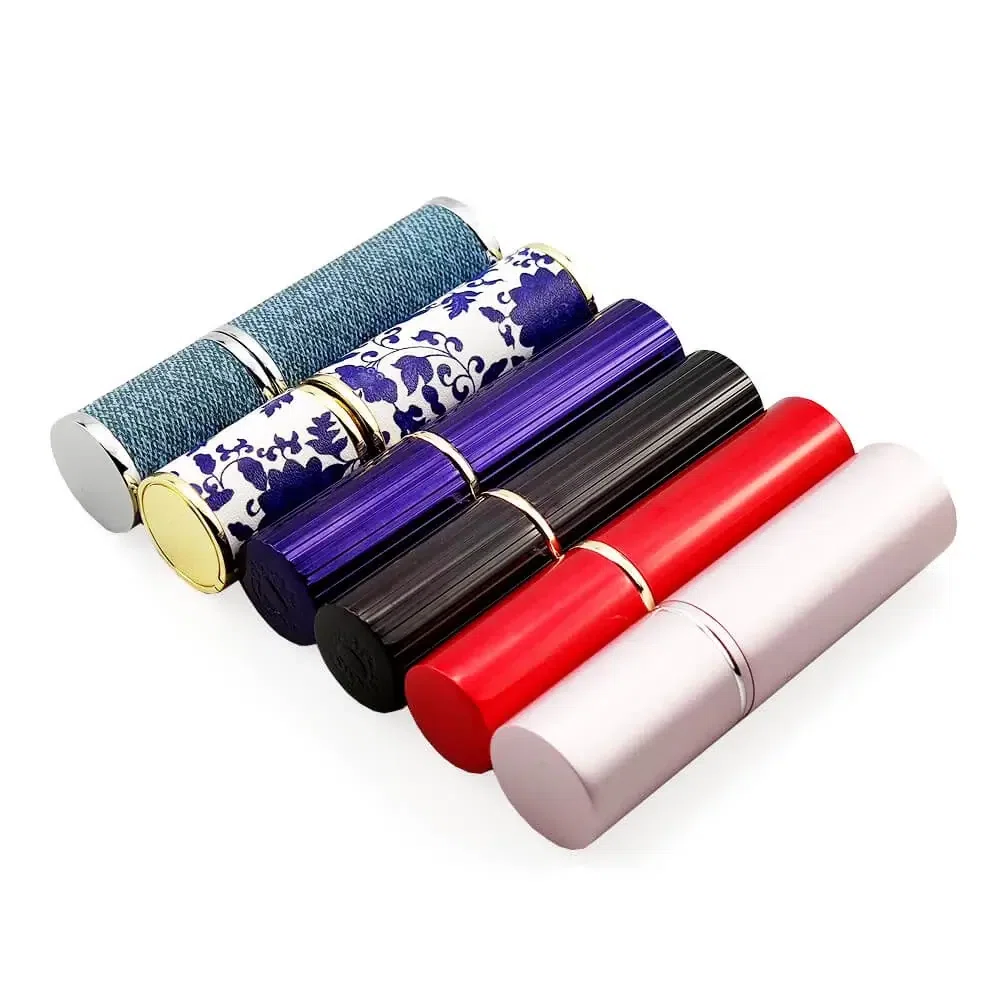
Are you tired of spending about $20 on a “Long Lasting” perfume only to find it disappears on your skin? Our Premium Travel Decants are the solution.
- Portable & Leak-proof: Fits in your pocket or clutch.
- Perfect for Re-applying: Keep your scent fresh from the office to the after-party.
- Authenticity Guaranteed: We hand-decant 5ml/10ml samples from original bottles.
👉 [Shop Our Best-Selling Decants Now – Discover Your Signature Scent Today!]
10 Frequently Asked Questions (FAQ)
- Q: Why can’t I smell my perfume after an hour, but others can?
- A: This is Olfactory Fatigue. Your brain “mutes” the scent to prevent sensory overload. It’s still there!
- Q: Does perfume expire?
- A: Yes. Most last 3–5 years. If it smells sour, metallic, or vinegar-like, the oils have oxidized.
- Q: Does spraying perfume on hair damage it?
- A: Most perfumes contain alcohol which can dry hair. Aim for the “hair mist” versions or spray your hairbrush instead.
- Q: Why does the same perfume smell different on my friend?
- A: Skin pH, diet, and hormone levels affect how fragrance molecules react and develop.
- Q: Should I spray my clothes?
- A: Yes, but be careful with light fabrics/silk as oils can stain. It significantly increases longevity.
- Q: What are “Fixatives”?
- A: Ingredients like resins or musks that lower the vapor pressure of other ingredients, making them last longer.
- Q: Does “Cheap” perfume always fade faster?
- A: Not necessarily, but cheaper scents often lack the complex base notes (like real agarwood or quality musks) that provide endurance.
- Q: Is it better to spray or dab?
- A: Spraying creates a fine mist that covers more surface area, generally leading to better projection.
- Q: How many sprays are “enough”?
- A: For an EDP, 2–4 sprays. For an EDT, 4–6. Always start light.
- Q: Can I store my perfume in the fridge?
- A: While it keeps it cool, the constant temperature fluctuations from opening the door can actually be harmful. A dark closet is best.
