
In the prestige fragrance market, a custom bottle is not just a container; it is the physical manifestation of a brand’s soul. However, for brand owners and procurement directors, the journey from a creative spark to a physical custom perfume bottle is a race against time, balanced with the pursuit of perfection.
Understanding the timeline of this “race” is critical for market timing and budget management. This guide breaks down every milestone of the development process, providing the technical transparency required for a high-scoring EEAT (Experience, Expertise, Authoritativeness, and Trustworthiness) strategy.
1. Introduction: Bridging the Gap Between Vision and Reality
In a saturated market, bespoke fragrance packaging is the ultimate expression of brand identity. It’s what triggers that “first-sight” emotional connection with the consumer. However, premium customization brings increased complexity, longer lead times, and the need for rigorous quality control.
This guide serves as your strategic roadmap, quantifying each phase of development based on 2026 industry benchmarks and providing the professional insights needed to mitigate risks before they occur.
2. Phase I: Conceptual Design & Engineering Feasibility
This stage defines the skeleton and the “can-it-be-done” of your project.
1.1 Design Brief & 3D Modeling
- Process: The brand provides creative sketches or mood boards. The supplier’s engineering team converts these into precise 2D technical drawings and 3D digital models.
- Lead Time: 5-7 Working Days (variable based on design complexity).
- The Challenge: Balancing the “Artistic Vision” with “Manufacturing Physics.” For instance, ultra-sharp internal angles may lead to glass fragility.
- Technical Data: Suppliers perform Wall Thickness Analysis and Tolerance Stack-ups at this stage to ensure the design is ready for mass production.
1.2 Engineering Feasibility Study (DFM – Design for Manufacturing)
- Process: Engineers analyze the 3D model for potential failure points, such as cooling crack risks in “heavy-bottom” bottles or mold-release issues for complex geometries.
- Lead Time: 3-5 Working Days.
- The Challenge: Detecting high-cost hurdles early to avoid retooling later.
- Expert Advice: Decision-makers should actively participate in the DFM meeting. Understanding technical constraints here can save thousands of dollars in mold modifications.

3. Phase II: Rapid Prototyping & Aesthetic Samples
Turning the virtual into the tactile.
2.1 3D Printed Prototypes (SLA/DLP)
- Process: Utilizing high-resolution Stereolithography (SLA) to print a physical model. This is used to verify ergonomics, hand-feel, and visual scale.
- Lead Time: 3-5 Working Days.
- Technical Standard: High-end printers achieve an accuracy of $\pm 0.1\text{mm}$.
- The Limitation: Resin is not glass. It lacks the cold touch and refractive index of silica. Use this for “size” verification only.
2.2 Aesthetic Samples (Decorated Mock-ups)
- Process: Taking the 3D prototype or a similar existing shape and applying manual spraying, silk-screening, or hot stamping to simulate the final look.
- Lead Time: 7-12 Working Days.
- The Challenge: Managing the difference between “Hand-crafted” perfection and “Industrial” consistency.
- KPI: Focus on Delta E ($\Delta E$) values for color matching and texture depth rather than functional seals.
4. Phase III: Mold Development & Functional Samples
The high-stakes investment phase.
3.1 Mold Design & Manufacturing
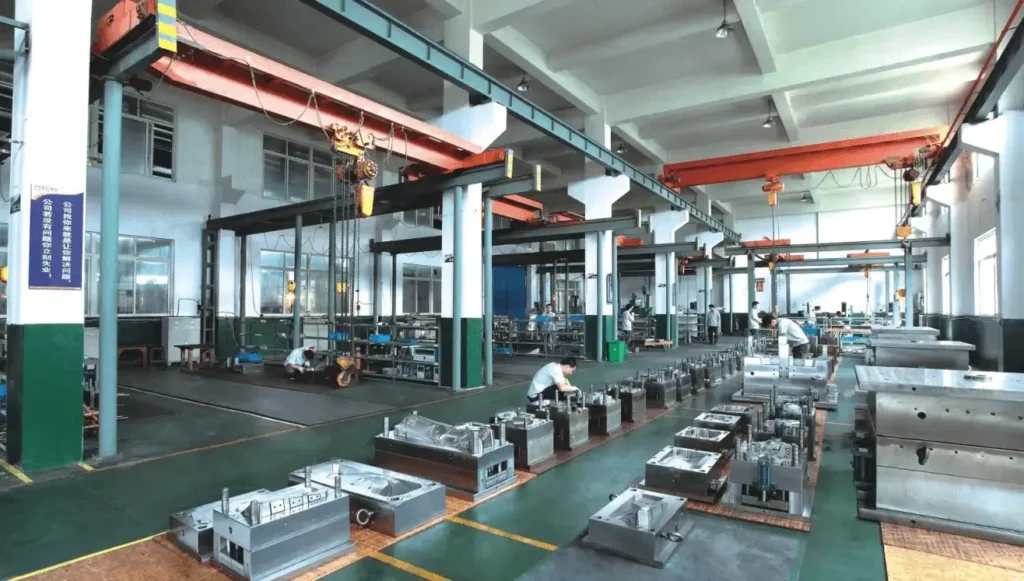
- Process: Engineering and machining the steel or alloy production molds.
- Lead Time: 25-40 Working Days for Glass; 20-35 Working Days for Injection Molds (Cap/Pump).
- Quality Standard: High-precision molds require Tungsten Carbide inserts at high-wear points (like the bottle neck) to ensure a micro-level finish.
3.2 First Article Sample (T1) & Functional Testing
- Process: The first “real” bottles off the new mold. These are tested for everything.
- Lead Time: 5-7 Working Days.
- Critical Tests:
- Dimensional Integrity: Full inspection per ISO 12818 to ensure neck-pump fitment.
- Vacuum Leakage: Tested at $-0.05\text{MPa}$ to ensure the seal is hermetic.
- Compatibility: Immersing the bottle in the actual fragrance oil at 45°C for 48 hours to check for lacquer peeling.
3.3 Sample Approval & Pilot Run Readiness
- Process: Final sign-off by the brand. Once T1 is approved, the “Golden Sample” is locked.
- Lead Time: 3-5 Working Days.

5. Professional FAQ: Strategic Insights for Perfume Brands Decision-Makers
- Q: Why do glass molds take longer than plastic molds? A: Glass molds operate under extreme thermal stress (molten glass is $>1000^{\circ}C$). They require specialized alloys and complex internal cooling channels that take longer to machine and test.
- Q: How much can DFM actually save in the long run? A: Proper DFM can reduce mold modification costs by 15-20% and shorten the total time-to-market by nearly 30% by preventing “back-to-the-drawing-board” failures.
- Q: Why can’t I just use the 3D print for color approval? A: Different materials absorb light differently. A color on resin will look different on glass. Always require an Aesthetic Sample on the actual target material for final color sign-off.
- Q: What is the biggest risk at the T1 Sample stage? A: “Neck Ovality.” If the neck is slightly oval, the pump will leak. This requires mold fine-tuning, which can add 1 week to the timeline.
- Q: How do I ensure color consistency in mass production? A: Demand a Delta E ($\Delta E$) < 1.0 standard and specify that the supplier must use a standard light box (D65) for every batch.
- Q: Total Lead Time: How long from Concept to Shelf? A: For a fully custom bottle, expect 4 to 6 months. This includes design, sampling, mold making, and the actual 35-day mass production/shipping cycle.
- Q: Why is the “Compatibility Test” the “Golden Standard”? A: Fragrance oils are solvents. They can dissolve cheap coatings or leach chemicals from low-grade plastics. Skipping this test is the #1 cause of product recalls.
- Q: Can I speed up the process without increasing the budget? A: Yes—by choosing an Integrated Supplier (One who does glass, plastic, and decoration under one roof) to eliminate the coordination lag between different factories.
- Q: What’s the difference between “Soft Molds” and “Hard Molds”? A: Soft molds are cheaper and faster for low-volume runs (T1/Pilot) but wear out quickly. Hard molds (Steel) are for high-volume prestige launches.
- Q: When do I get the final price? A: Usually after the DFM stage. Once the engineering complexity is known, the supplier can provide an accurate quote for both the mold and the unit price.
Efficiency Drives Market Success
Custom fragrance packaging is an intricate dance of art and science. By mastering these lead times and following a structured audit and inspection protocol, you ensure that your brand’s “body” is as perfect as the “soul” of the scent itself.
Would you like me to generate a “Lead Time Tracker” (Gantt Chart style) to help you manage your next project’s milestones?
- WhatsApp:+86 18107699312
- Email:[email protected]
