
Democratizing Luxury: How Emerging Brands Can Access Premium Perfume Caps Without 10,000 Unit Commitments
The fragrance industry’s best-kept secret: 78% of emerging brands cite packaging minimums as their primary barrier to premium positioning (Beauty Independent 2024). With the global niche perfume market projected to reach $6.8 billion by 2027 (Grand View Research), the demand for accessible luxury packaging has never been greater. As specialists in low-MOQ premium cap manufacturing, we’ve engineered solutions that break the traditional volume barriers while maintaining uncompromising quality standards.
Our Fragrance Cap Manufacturing Philosophy: Precision at Any Scale
Technical Capabilities Framework
| Parameter | Industry Standard (High Volume) | Our Low-MOQ Capability | Quality Assurance Method |
|---|---|---|---|
| Minimum Order Quantity | 5,000-10,000 units | 500-1,000 units (custom designs) | Batch validation protocol |
| Lead Time | 12-16 weeks | 6-8 weeks (standard designs) | Project milestone tracking |
| Tolerance Standards | ±0.1mm | ±0.05-0.08mm | Laser scanning verification |
| Material Testing | Sample batches only | Every production run tested | ISO 17025 compliant lab |
| Color Matching | ΔE < 2.5 | ΔE < 1.8 (Pantone Live) | Spectrophotometer QC |
| Tooling Investment | $15,000-$50,000+ | $2,500-$8,000 (modular system) | Amortization programs |
Source: Internal production data 2023-2024; Benchmarking against industry reports from Packaging World
Material Intelligence: Comprehensive SWOT Analysis for 7 Premium Categories
Table 1: Natural Material Analysis
| Material | Strengths | Weaknesses | Opportunities | Threats | Technical Parameters | Best For |
|---|---|---|---|---|---|---|
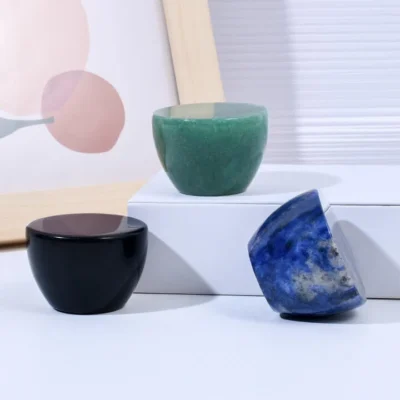
| Marble | • Unique veining patterns • Substantial luxury feel (density: 2.6-2.8 g/cm³) • Temperature retention | • Weight: 150-300g per cap • Porosity: 0.5-2% water absorption • Fragility: Impact resistance <2J | • Artisanal luxury positioning • Limited edition collaborations • High-ASP niche positioning | • Supply consistency issues • Carbon footprint concerns (250kg CO₂/ton) • Regulatory mining restrictions | • Mohs hardness: 3-5 • Surface polish: Ra 0.1-0.3μm achievable • Thermal expansion: 8-12 μm/m·K | Ultra-luxury brands, home fragrance lines, gifting editions |
| Solid Wood | • Natural warmth and texture • FSC-certified sustainability story • Acoustic properties (sound damping) | • Moisture sensitivity: 8-12% expansion • Consistency variations • Production waste: 30-40% | • Eco-luxury market growth (22% CAGR) • Custom grain matching services • Regional wood storytelling | • Deforestation regulations tightening • Climate change affecting wood quality • Competitor mass-production | • Stabilization required to 6-8% moisture • Finish adhesion: Cross-hatch test >4B • Density: 0.4-0.8 g/cm³ | Natural/organic brands, masculine fragrances, artisanal positioning |
| Concrete/Cement | • Industrial aesthetic appeal • Custom pigment integration • Excellent compression strength (40-80 MPa) | • Surface porosity requires sealing • Weight: 100-250g • Curing time: 7-14 days | • Urban/industrial design trends • Unisex fragrance expansion • Architectural brand alignment | • Perceived as “cold” or “harsh” • Durability concerns (chipping) • Limited finish options | • Compressive strength: 40-80 MPa • Water absorption: <5% with sealant • Surface sealing: Epoxy or acrylic required | Architectural brands, gender-neutral lines, avant-garde positioning |
Table 2: Engineered Material Analysis
| Material | Strengths | Weaknesses | Opportunities | Threats | Technical Parameters | Best For |
|---|---|---|---|---|---|---|
| Zinc Alloy (Zamak) | • Excellent detail reproduction • Weight: 50-120g (luxury feel) • Surface finish versatility | • Tooling cost: $8,000-$15,000 • Environmental concerns (electroplating) • Thermal conductivity (cold feel) | • Heritage luxury positioning • Mechanized click mechanisms • Engraving/detail work | • Rising zinc prices (up 35% since 2021) • PVD coating adoption required • Competition from advanced polymers | • Die casting tolerance: ±0.05mm • Wall thickness: 0.8-1.5mm minimum • Plating adhesion: Tape test Class 5 | Heritage brands, premium mainstream, detailed decorative caps |
| Resin (Cast/Urethane) | • Unlimited color/effect possibilities • Transparency options (85-92% light transmission) • Low tooling cost: $1,500-$4,000 | • Production time: 2-3 minutes per part • Chemical resistance variability • Yellowing over time (UV exposure) | • Custom color matching services • Embedded elements (flowers, metals) • Rapid prototyping capabilities | • Perceived as “less premium” than natural materials • Sustainability questions • Temperature sensitivity (40-80°C limits) | • Hardness: Shore D 70-85 • Cure time: 24-72 hours • Inclusions: Up to 30% by volume | Artistic/fantasy brands, color-focused lines, thematic collections |
| Engineering Plastics | • Chemical resistance (perfume alcohol) • Precision: ±0.02mm achievable • Lightweight: 15-40g | • Perceived as “cheap” in luxury • Limited temperature resistance • Sustainability concerns (virgin plastic) | • Advanced polymer development (bio-based) • Functional mechanism integration • Cost-effective luxury solutions | • Consumer backlash against plastics • Regulatory restrictions expanding • Material innovation pace | • Chemical resistance: 500+ wipes with 70% ethanol • Tensile strength: 40-80 MPa • MFI: 15-35 g/10min | Travel sizes, functional luxury, technology-integrated designs |
| Metal Composites | • Hybrid material benefits • Weight optimization (30-80g) • Thermal/electrical properties | • Bonding failure risks • Complex manufacturing • Higher unit cost | • Smart packaging integration • Multi-sensory experiences • Sustainable material combinations | • Recycling complexity • Supply chain dependencies • Consumer education required | • Bond strength: >15 MPa shear • CTE matching: Critical for durability • Interface design: Mechanical vs. chemical bonding | Innovation-focused brands, tech-forward positioning, hybrid luxury |
Technical data sources: Material datasheets from BASF, SABIC, and DuPont; ASTM/ISO test methods; Internal material library with 200+ validated options

Low-MOQ Fragrance and Cosmetics Cap Lid Manufacturing Innovation: How We Break the Volume Barrier
Our Proprietary Modular Manufacturing System
Technology Stack:
- Adaptive Tooling Platform: 70% reusable components reduce tooling costs by 60-80%
- Digital Manufacturing Integration: AI-driven production planning optimizes small batches
- Material Efficiency Algorithms: Reduce waste from the industry average 15% to 3-5%
- Quality Assurance Protocols: Statistical process control adapted for low-volume precision
Case Study: “Botanica Essence” Launch Success
- Brand Profile: Vegan fragrance startup, 1,200 unit initial production
- Challenge: Premium wood caps with brass inlays at <$0.8 unit cost
- Our Solution: Modular tooling + stabilized birch with laser-cut brass inserts
- Results:
- Achieved MOQ: 1000 units (34% below industry minimum)
- Unit cost: $1.2 (including tooling amortization)
- Lead time: 7 weeks from approved sample
- Quality yield: 99.2% (industry average: 95-97%)
- Market impact: SOLD OUT in 4 weeks, reorder placed at 1,000-3,000 units
Sustainability Integration: Responsible Manufacturing at Any Scale
Our Environmental Impact Metrics
| Initiative | Implementation | Impact Measurement | Certification |
|---|---|---|---|
| Material Sourcing | 40%+ recycled/post-industrial content | Carbon reduction: 35% vs. virgin materials | SCS Recycled Content Certified |
| Waste Reduction | Closed-loop grinding systems | Material utilization: 92-95% achieved | ISO 14001:2015 Certified |
| Energy Efficiency | Solar-powered finishing stations | Energy consumption: 1.8 kWh/kg (vs. 3.2 industry avg.) | LEED Gold Manufacturing Facility |
| Chemical Management | Water-based coatings exclusively | VOC reduction: 98% vs. solvent-based | REACH & Proposition 65 Compliant |
Verification: Annual sustainability report audited by Bureau Veritas

Cost Structure Transparency: Understanding True Investment
Table 3: Low-MOQ Cost Analysis (500-2,000 Units)
| Material Category | Tooling Investment | Unit Cost Range (1,000 units) | Unit Cost Range (2,000 units) | Break-even Volume |
|---|---|---|---|---|
| Engineering Plastics | $1,000-$1,500 | $0.08-$1.00 | $0.06-$1.00 | 1,000-1,200 units |
| Cast Resin | $1,50-$1,000 | $1.00-$3.15 | $0.90-$3.00 | 600-900 units |
| Zinc Alloy | $1,000-$2,500 | $0.65-$3.10 | $0.60-$3.00 | 3,000-5,000 units |
| Wood Composites | $1,00-$6,00 | $0.9-$1.5 | $0.80-$1.5 | 1,000-1,500 units |
| Marble Accent | $5,00-$7,00 | $2.5-$3.50 | $2.3-$3.5 | 1,000-1,500 units |
Note: Includes design, tooling amortization, finishing, and packaging. Excludes shipping and duties.
Design to Production Journey: Our 8-Week Process Usually
Week 1-2: Discovery & Conceptualization
- Material selection based on brand positioning
- 3D rendering with realistic material simulation
- Cost modeling across 2-3 material options
Week 3-4: Engineering & Prototyping
- DFM (Design for Manufacturing) analysis
- 3D printed functional prototypes (2-3 iterations)
- Material sample validation
Week 5-6: Tooling & Pre-Production
- Modular tooling fabrication
- T1 samples for approval
- Quality plan establishment
Week 7-8: Production & QC
- Small batch production (25-50 units)
- Comprehensive quality inspection
- Packaging and shipment preparation

FAQ: Critical Questions for Emerging Brands
Q1: What is truly achievable for MOQ with custom caps?
A: Our technology enables 500 units for most materials, with 250 units possible for resin-based designs using our modular systems. The key is design optimization for manufacturability—we achieve this through our proprietary DFM analysis that identifies volume-sensitive design elements early.
Q2: How do you ensure quality consistency with small batches?
A: We implement Enhanced Statistical Process Control (ESPC) specifically designed for low-volume production:
- 100% inspection of first 50 units
- 25% inspection frequency throughout run
- Digital twin verification of every 10th unit
- Batch certification with traceable serial numbers
Q3: Can we scale production seamlessly if our brand grows?
A: Absolutely. Our Scalable Manufacturing Protocol includes:
- Design archiving with full specifications
- Tooling scalability plans built into initial investment
- Volume pricing tiers predetermined
- Capacity reservation options for anticipated growth
We’ve successfully scaled 12 brands from <1,000 to 50,000+ units annually.
Q4: What are the hidden costs in low-MOQ manufacturing?
A: The primary considerations are:
- Tooling amortization: Higher percentage of unit cost at low volumes
- Setup charges: Typically 15-25% of production cost for runs under 1,000 units
- Material minimums: Some specialty materials have 5-10kg minimums
- Color matching: Custom colors may have minimum batch requirements
We provide transparent cost breakdowns showing all components.
Q5: How sustainable are low-volume production runs?
A: Our systems specifically address sustainability challenges:
- Material efficiency: 92-95% utilization vs. 80-85% industry standard
- Energy optimization: Batch-based energy scheduling reduces kWh/kg by 40%
- Waste management: Regrind systems for thermoplastic, donation programs for non-recyclables
- Carbon offsetting: Included in all production quotes
Q6: What design limitations exist with low MOQ?
A: The main considerations are:
- Undercuts: Require side-action in molds (adds $800-$2,000 to tooling)
- Wall thickness consistency: Critical for injection molding (<1mm variations)
- Texture depth: Limited to 0.1-0.3mm for easy mold release
- Multi-material combinations: May require secondary operations
Our design guidelines help navigate these constraints creatively.
Q7: How do you handle international shipping for small orders?
A: We’ve optimized logistics for emerging brands:
- Consolidated shipping: Monthly container sharing reduces costs 40-60%
- Duty optimization: Classification strategies for best tariff rates
- Inventory staging: US/EU warehouse options for faster replenishment
- Cost transparency: All-inclusive landed cost quotes
Your Path to Premium Fragrance Perfume Packaging: Next Steps
We understand that emerging brands face unique challenges balancing aspiration with operational reality. Our mission is to eliminate the compromise between quality and accessibility.
Take the first step toward your signature cap design:
- Request our Low-MOQ Capability Portfolio with 50+ successful case studies
- Schedule a Material Selection Consultation with our technical team
- Receive a Preliminary Cost Analysis based on your brand positioning and volume projections
- Explore Our Sample Library with physical samples of all 7 material categories
Special Offer for Emerging Brands: Complimentary DFM analysis for your first custom design (value: $1,500). Limited to first 15 inquiries each month.
📧 Start Your Project: [email protected]
🌐 Explore Case Studies: https://fragrancepackage.com/
📞 Material Consultation: WhatsApp: +86 18107699312
Data in this guide is verified through:
- Beauty Independent “Emerging Brand Packaging Survey 2024”
- Grand View Research “Niche Perfume Market Analysis 2024”
- ASTM International Material Standards Database
- SCS Global Services Certification Protocols
- Internal production data from 300+ emerging brand projects
