
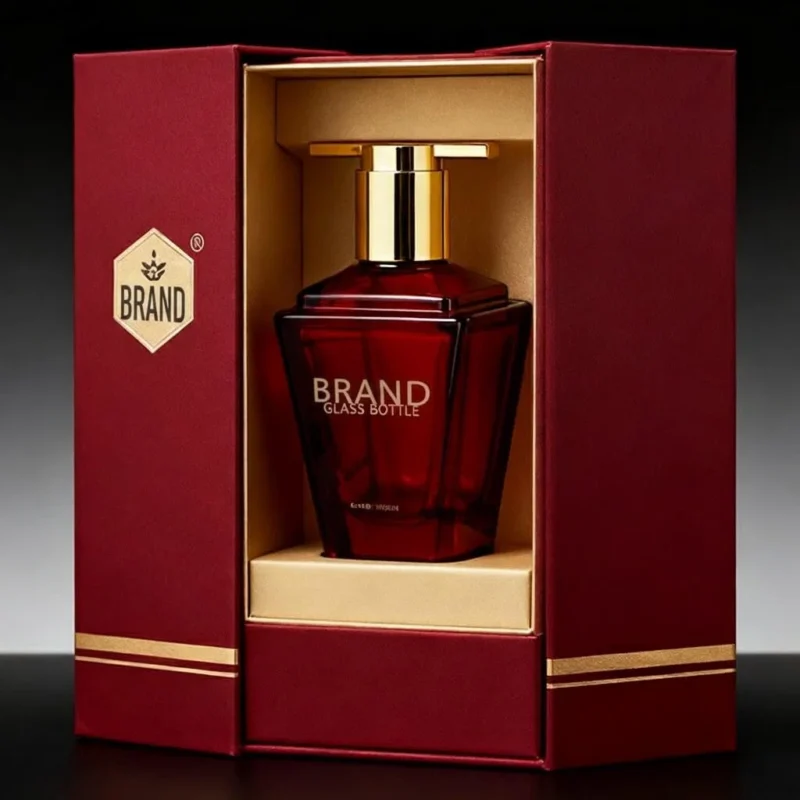
For a fragrance brand, the journey from a creative concept to a finished bottle on the shelf is a orchestrated process that blends art, science, and rigorous project management. Understanding each phase—its purpose, deliverables, and potential pitfalls—is crucial for startup and growing brands to navigate successfully, manage budgets, and achieve a flawless market launch.
This guide details the 7-phase roadmap from initial brief to final delivery, providing the transparency and technical insight you need to partner effectively with your packaging provider.
Market Context: Why the Process Matters
The global luxury perfume packaging market is projected to reach USD 3.2 billion by 2028, growing at a CAGR of 5.4%. For emerging brands, packaging design is a primary differentiator; a 2023 Luxe Pack Monaco survey revealed that 67% of consumers perceive a fragrance’s luxury level directly through its bottle and box design before even smelling the scent.
Common Pain Points in the Process:
- Unclear Briefs: Leading to costly redesigns and timeline delays.
- Technical Feasibility Gaps: Beautiful concepts that are impossible to manufacture at scale or within budget.
- Quality Inconsistency: Between approved prototypes and mass production.
- Supply Chain Surprises: Logistical delays, hidden costs, and compliance issues.
The 7-Phase Roadmap: From Concept to Finished Product
The following table breaks down each critical phase, its core objective, key activities, and how success is measured.
| Phase | Phase Name & Duration | Core Objective & “Why It Matters” | Key Activities & Deliverables | Technical Parameters & Success Metrics |
|---|---|---|---|---|
| 1 | Strategic Brief & Conceptualization (2-4 Weeks) | Align Vision & Constraints. To translate brand ethos into tangible design directions while establishing technical and budgetary guardrails. Prevents costly misalignment later. | – Workshops: Mood boards, brand storytelling. – Market & Competitor Analysis. – Technical Feasibility Screening. – Deliverable: Signed Creative-Technical Brief. | – Brief Score: Completeness against checklist (Brand, Market, Aesthetics, Technical, Commercial). – Budget Alignment: Concept estimated within ±15% of target. |
| 2 | Design & 3D Modeling (3-6 Weeks) | Define the Tangible Form. To create accurate, manufacturable 3D models that visualize aesthetics, ergonomics, and assembly logic. The blueprint for all future work. | – 2D Sketching & Iteration. – 3D CAD Modeling (using software like SolidWorks, Rhinoceros). – Virtual Ergonomics & Assembly Simulation. – Deliverable: Approved 3D CAD Files (STEP/IGES format). | – Wall Thickness: Minimum 1.8mm for glass to withstand internal pressure and handling. – Draft Angles: Minimum 1-3° on all vertical surfaces for mold release. – Fit & Clearance: Cap-to-bottle tolerance of 0.1-0.3mm for premium feel. |
| 3 | Prototyping & Validation (4-8 Weeks) | “Feel & Test” the Design. To produce physical models for aesthetic approval, user testing, and functional validation. De-risks the high-cost tooling investment. | – SLA/DLP 3D Printing for form feeling. – CNC Machining for precise metal/acrylic parts. – Functional Prototype Assembly with working sprayer. – Deliverable: Signed-Off Functional Prototype. | – Weight & Balance: Bottle (full) center of gravity test for stability. – Sprayer Performance: Actuation force (30-50N), spray pattern & volume (0.1-0.15ml/actuation). – Magnet Strength: Cap pull force 3-5N. |
| 4 | Tooling & Mold Engineering (8-12 Weeks) | Build the Production Foundation. To engineer and manufacture the precision molds (for glass, metal, plastic) that will define the quality of every single unit. The most capital-intensive phase. | – Mold Flow Analysis for plastic components. – Precision Machining of Mold Cavities (often from Stavax or NAK80 steel). – Surface Polishing to desired finish (e.g., SPI A-1 for mirror finish). – Deliverable: Completed Production Molds & First Article Samples. | – Mold Life Expectancy: 500,000+ shots for glass molds; 1,000,000+ for plastic. – Surface Finish: Measured in Ra (Roughness average), e.g., Ra < 0.025μm for high-gloss. – Sample Conformity: First articles must match CAD dimensions within ±0.15mm. |
| 5 | Pre-Production & Quality Gates (2-4 Weeks) | Lock Down Final Quality. To run a small pilot batch, finalize all decorations and colors, and establish the quality control benchmarks for full production. | – Pilot Run (300-500 units). – Color Matching & Approval under D65 standard light. – Decoration Samples (hot stamping, pad printing). – Deliverable: Approved Pre-Production Samples & Quality Control Plan. | – Color Accuracy: Delta E (ΔE) < 1.5 between sample and master standard. – Adhesion Tests: Cross-cut test (ISO 2409) achieving Class 0 for coatings. – AQL Definition: Establishment of Acceptable Quality Levels (e.g., Critical 0, Major 1.5, Minor 4.0). |
| 6 | Mass Production & QC (6-10 Weeks) | Execute at Scale with Consistency. To manufacture the entire order while maintaining the quality standards set in Phase 5 through rigorous in-process and final inspections. | – Scheduled Production Runs. – In-Process Quality Checks (every 2 hours on production line). – Final Random Inspection (FRI) per AQL. – Deliverable: Finished Goods, Packed & Ready for Shipment. | – Process Capability Index (Cpk): >1.33 for critical dimensions, indicating a stable process. – Leak Test: -0.8 bar pressure hold for 60 seconds with zero leakage. – FRI Report: Documented pass/fail against agreed AQL. |
| 7 | Logistics & Partnership Management (3-6 Weeks) | Deliver Safely & Prepare for the Future. To ensure secure, compliant, and timely delivery while reviewing the project for continuous improvement. | – Secure Packing & Palletization. – Export Documentation & Customs Clearance (REACH, FDA, MSDS). – Project Retrospective & Planning. – Deliverable: Goods Delivered (DDP), Project Review Report. | – On-Time-In-Full (OTIF) Delivery: Target >98%. – Damage Rate in Transit: <0.5%. – Client Satisfaction Score (CSAT): Post-project survey. |
Case Study: The “Nuit Blanche” Project
Brand: A Paris-inspired niche startup.
Challenge: Create a milky-white, opaque glass bottle with a magnetic cap that feels “cold like marble,” MOQ 2,000 units.
- Phase 2-3: The initial design had sharp angles. Mold flow analysis predicted stress points. The design was softened, increasing wall thickness to 2.2mm.
- Phase 4: Achieving the “marble” feel required a specialty ceramic frit fused to the glass at 680°C. A custom textured steel mold (Ra 6.3μm) was used.
- Phase 5: The first pilot batch had a ΔE of 2.8 (too blue). The frit formula was adjusted, achieving the final ΔE of 0.9.
- Result: Launch success. Post-production QC showed a 99.1% pass rate. The major defect (0.9%) was a minor bubble in the ceramic coating, well within the AQL.
FAQ: Your Critical Questions Answered
Q1: What is a realistic total timeline from start to finish?
A: For a custom design from a blank page, you must plan for 25 to 40 weeks (6-10 months). This includes all phases from concept to goods arriving at your warehouse. Semi-custom projects using modified stock components can be 12-20 weeks.
Q2: What are the highest hidden costs we should budget for?
A: Beyond unit price and mold cost, always budget for:
- Prototyping & Sampling (5-10% of project budget): Multiple rounds are often needed.
- International Logistics & Insurance (8-12% of goods value): Especially for DDP (Delivered Duty Paid) terms.
- Quality Inspection (1-2%): For mandatory third-party pre-shipment inspections.
- Contingency (10%): For unforeseen adjustments or premium materials.
Q3: How can we, as a small brand, ensure quality when manufacturing overseas?
A: Partner with a provider that offers:
- Data Transparency: Real-time access to QC reports and photos.
- Staged Inspections: You can hire a third-party inspector (e.g., SGS, Bureau Veritas) for key stages: During Production (DUPRO) and Pre-Shipment (PSI).
- Clear AQL Agreement: Contractually define the Acceptable Quality Level before production begins.
Q4: Can we start with a low MOQ and scale up later?
A: Yes, but with strategy. Discuss a “Modular Tooling” approach. For example, a base bottle mold can be designed to later accept different neck finishes or cap styles with smaller, cheaper additional molds. This protects your initial investment.
Q5: What documents should we receive from our packaging partner?
A: You should receive and archive:
- Technical Data Pack: Final 3D files, 2D drawings, and material specifications.
- Certificates of Conformity: For materials (REACH, FDA) and finished goods.
- Test Reports: For performance (leak, spray) and durability (scratch, coating adhesion).
- Full QC Inspection Report for your production batch.
Ready to Begin Your Perfume Packaging Journey?
Navigating the path from concept to finished product requires a partner who is equal parts creative collaborator, engineer, and project maestro. A clear, phased process is your best defense against delays, cost overruns, and quality issues.
If you are seeking a transparent, experienced partner to guide your fragrance packaging from vision to flawless reality, contact us today. Let’s discuss your project timeline, budget, and ambitions, and we will provide a detailed, phase-by-phase proposal tailored to your brand’s needs.
Your story deserves a perfect vessel. Let’s craft it together.
WhatsApp: +86 18107699312
E-mail : [email protected]
Our team deeply understands the dreams and challenges of a fragrance entrepreneur, not a simple perfume packaging wholesaler, but a strategic partner focused on providing complete fragrance packaging solutions—from concept to shelf for emerging and growing perfume brands.
