

In the niche fragrance and premium cosmetics sectors, custom zinc alloy solid perfume box is the ultimate weapon for brands looking to elevate their visual identity with a heavy, industrial elegance. The substantial metallic heft, cool touch, and satisfying mechanical magnetic snap instantly convince consumers to pay a premium.
However, when searching for a solid perfume container manufacturer for customization, the most common question brand owners ask is: “Can you make this shape or this size?”
Being able to make it does not mean being able to make it well; manufacturing a prototype does not guarantee your product won’t fail three months later.
You may have encountered these manufacturing nightmares: solid perfume containers developing “white fuzz” (zinc alloy oxidation spots) during ocean transit to Europe or the US; brand logos on the lid fading or turning black after a month of friction; or worse, lids that fail to close tightly, or clamp shut so jammed they cannot be opened.
Stop looking only at surface-level 3D renderings! What truly determines the final quality and shipment viability of custom zinc alloy solid perfume containers are the following 5 invisible, critical process parameters.
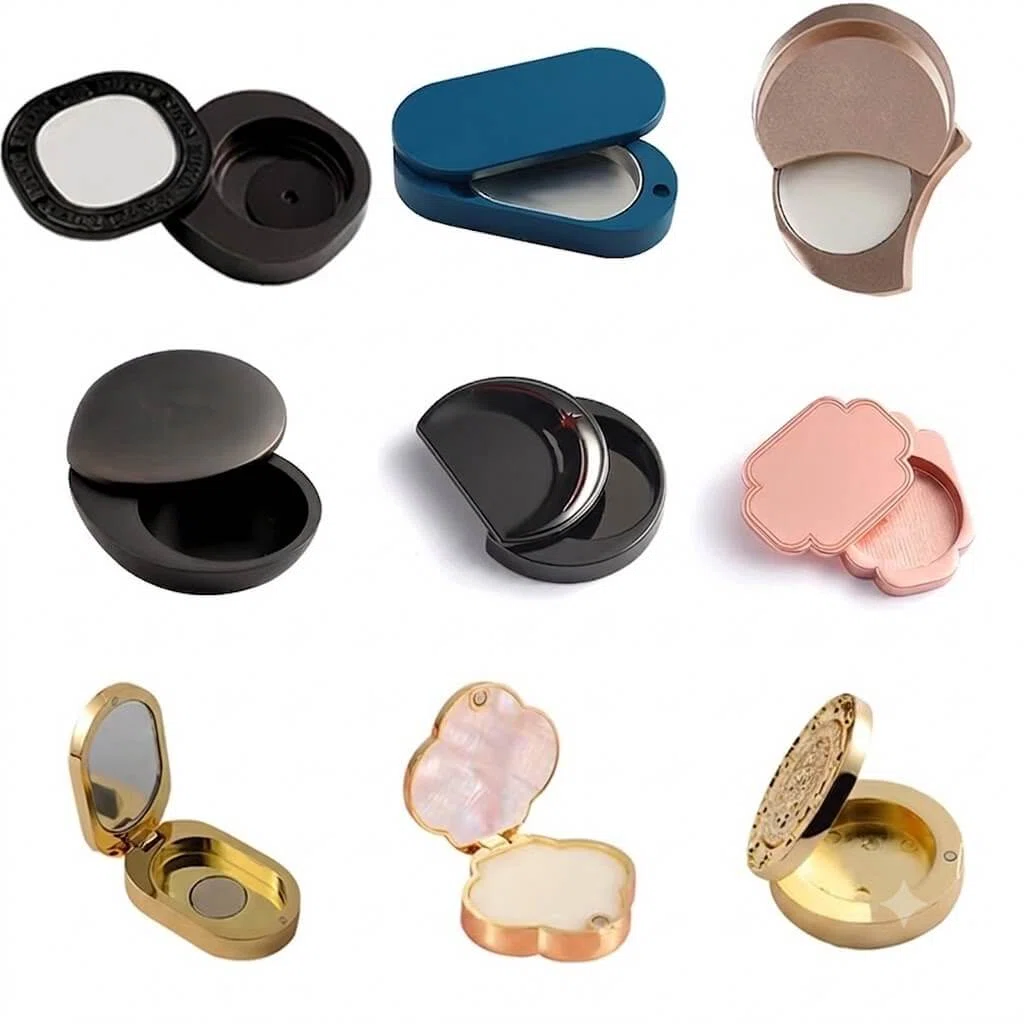
1. Material Ratio: #3 Zinc Alloy vs. #5 Zinc Alloy
Do not underestimate these numbers; the zinc alloy grade directly determines the density of the die-cast raw parts and indirectly dictates the yield rate of subsequent electroplating.
| Zinc Alloy Grade | Core Characteristics | Applicable Scenarios | Impact on Process & Quality |
| #3 Zinc Alloy | Excellent fluidity and mechanical properties; superior toughness | First choice for luxury custom zinc alloy solid perfume boxes | Extremely smooth die-cast surface with minimal sand holes; electroplating yield rate exceeds 95% |
| #5 Zinc Alloy | Higher hardness, slightly lower fluidity, slightly lower cost | Structural components with specific hardness requirements | Prone to micro-bubbles during die-casting, leading to blistering and pitting after electroplating |
Pitfall Warning: To cut costs, some low-end wholesale metal solid perfume container factories mix in recycled scrap zinc or use inferior alloys. Once impurity levels exceed standard thresholds, no amount of electroplating thickness can stop internal corrosion and oxidation!
2. Mold Lifespan: T-Grade Steel (e.g., S136) vs. Standard Steel (e.g., P20)
When brand owners submit drawings for quotes, they often find that zinc alloy die-casting tooling costs vary by two to three times across different suppliers, feeling they are being overcharged. In reality, the price difference lies entirely in the steel selection and machining precision of the mold.
- Standard Steel Molds (e.g., P20): Low initial cost. However, after sampling or producing 20,000 to 30,000 units, the mold cavity can deform due to high-temperature thermal shock, resulting in flash, burrs, and widening parting line gaps.
- High-End T-Grade Steel Molds (e.g., H13, S136 Quenched Steel): Tooling lifespan reaches 300,000 to 500,000 shots. The dimensional tolerance of die-cast solid perfume boxes can be consistently maintained at the ±0.05 mm level.
The Financial Reality: Saving a small amount on tooling fees initially can lead to severe parting line gaps and heavy flash later, doubling your polishing costs and skyrocketing electroplating rejection rates. This is the definition of “saving on mold fees only to lose on plating costs.”
3. Electroplating Thickness and Neutral Salt Spray (NSS) Testing
Can your zinc alloy solid perfume compact smoothly pass customs and sell in European and American markets? Can it withstand the humid ocean freight environment and the sweat from consumers’ hands? It all depends on electroplating thickness and salt spray testing duration.
- Standard Thin Plating (Decorative Plating): Rack or barrel plating with a total copper-nickel layer thickness below 5 μm. In salt spray tests, these typically only last 12–24 hours. If placed in a bathroom or humid environment, they will inevitably develop oxidation spots within three months.
- Thickened Multi-Layer Plating (Premium Standard): Utilizes a multi-layer composite plating process of “alkaline copper + acid copper + semi-bright nickel + bright nickel + protective topcoat,” with a total thickness exceeding 12–15 μm. It easily passes 48–96 hours of Neutral Salt Spray (NSS) testing and can even challenge 240 hours of artificial sweat resistance testing.
For brands focusing on global exports or niche fragrance packaging customization, a 48-hour salt spray test is the absolute baseline parameter for shipment!
4. Logo Craftsmanship: Etching, Embossing, and Laser Engraving
The logo is the soul of a solid perfume box. Choosing the wrong technique not only looks cheap but can turn the product into a dirt-trapping disaster.
Premium Tactile Quality  ───────────►  High Cost-Efficiency
[ 3D Die-Cast Embossing ]  ►  [ Precision Chemical Etching ]  ►  [ Laser Engraving ]
- 3D Die-Cast Embossing (Most Recommended): The logo is directly integrated into the mold surface during the tooling phase. The lines are rounded and full, offering an exceptional tactile feel when paired with electroplating (such as matte bronze or gunmetal). The only drawback is higher mold modification costs.
- Precision Chemical Etching: Ideal for intricate, thin lines. The recessed areas can be color-filled (enamel filling). Note: Groove depth should be controlled between 0.15–0.2 mm. Too deep makes it prone to trapping dirt and dust; too shallow causes the color filling to overflow.
- Laser Engraving: Performed using a laser to strip the surface layer after electroplating is completed. Great for small-batch personalization or serial numbers. However, once the underlying metal is exposed, there is a minor corrosion risk if a secondary protective clear coat (oil sealing) is not applied.
5. Ultimate Advice: “Heavy on Polishing, Light on Plating”
Many brands assume that if the surface of a solid perfume box lacks a mirror-like, flat finish, it is the plating factory’s fault. This is a complete reversal of cause and effect!
If the substrate isn’t prepped properly, thick electroplating won’t save it.
Raw zinc alloy die-cast parts inherently possess “cold flows” and micro-pores on their surface. Without rigorous multi-step manual and mechanical polishing (sisal wheel polishing + cotton wheel mirror polishing) to smooth the zinc alloy substrate like a mirror, the electroplating layer will act like a magnifying glass, exposing every underlying defect.
Craftsmanship Maxim: Electroplating is merely dressing the metal in clothes; polishing is shaping the body. Relying on plating to cover up insufficient polishing will only result in a “pitted mirror finish,” severely degrading the product’s quality.
Conclusion
In niche fragrance packaging customization, success isn’t won through price wars, but through meticulous attention to detail and tactile quality.
From steel selection in zinc alloy die-casting molds to the purity of #3 zinc alloy, down to every buffing pass in the polishing workshop—every micro-adjustment of these process parameters determines the perceived value and weight when the product finally reaches the consumer’s hands.
Leave professional tasks to experts. Rather than suffering from high rejection rates near delivery deadlines, partner from day one with a professional solid perfume container manufacturer who understands the craftsmanship and is transparent about technical parameters.
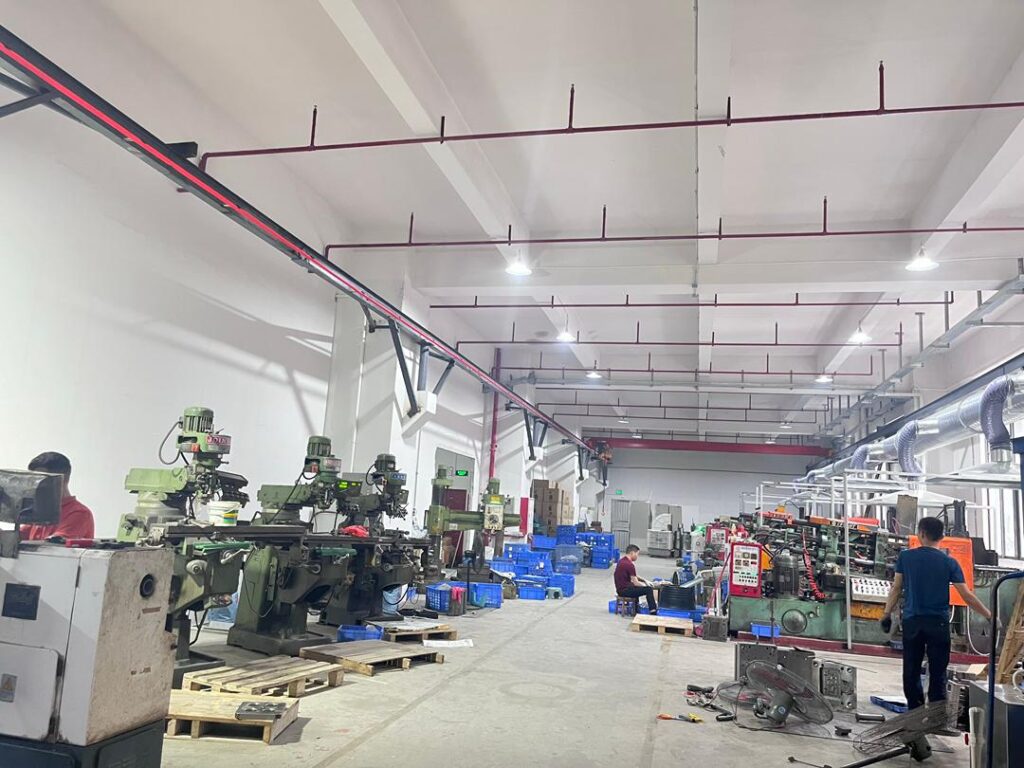
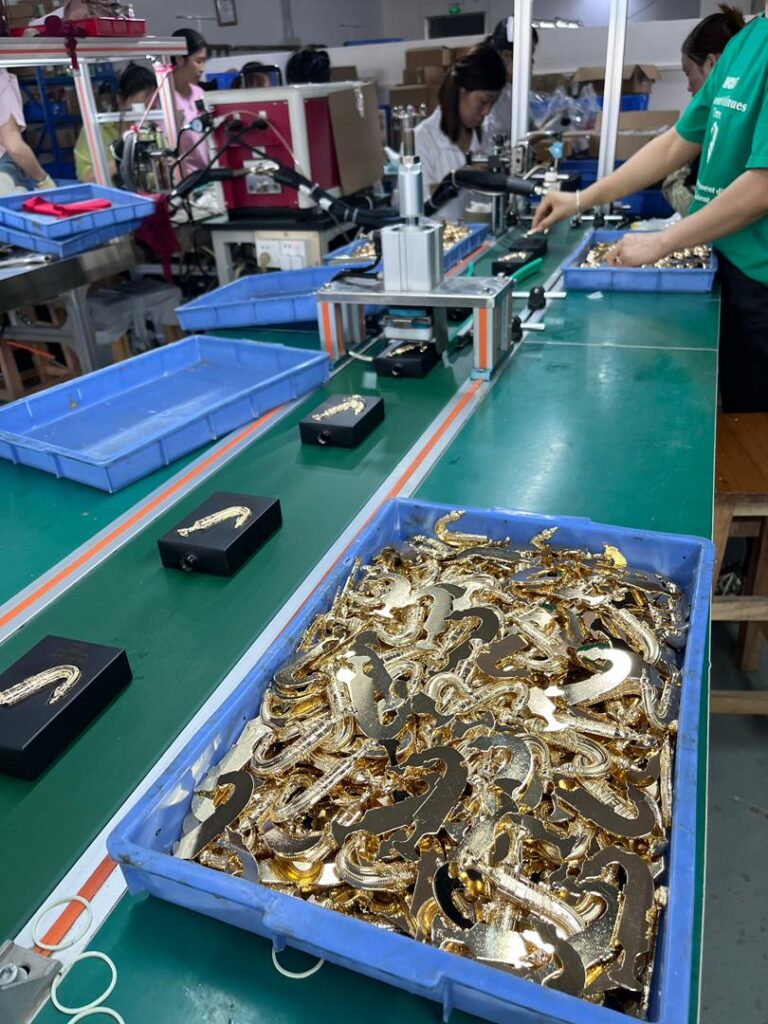
🏭 Factory Real-Time Record: Achieving Ultimate Quality Starts with Every Polishing Pass
(Unfiltered factory records showcasing our mirror polishing workshop and rigorous die-casting inspection procedures)
Frequently Asked Questions (FAQ) for Custom Solid Fragrance Packaging Procurement
A: This is primarily caused by galvanic corrosion and surface oxidation due to humid maritime environments combined with substandard electroplating. When factories use low-purity alloys (or scrap zinc) or apply an electroplating layer thinner than 5 μm, moisture penetrates the micro-pores of the coating. To prevent this, ensure your manufacturer uses pure #3 zinc alloy and applies a multi-layer composite plating (exceeding 12 μm) that passes at least a 48-hour Neutral Salt Spray (NSS) test.
A: #3 zinc alloy has superior fluidity and mechanical toughness, allowing for die-cast parts with extremely flat surfaces and minimal sand holes, which results in an electroplating yield rate above 95%. #5 zinc alloy has higher hardness but inferior fluidity, making it more prone to micro-bubbles during casting that can cause blistering or pitting after plating. For luxury fragrance packaging where surface aesthetics are paramount, #3 zinc alloy is the industry gold standard.
A: The price variance stems from tool longevity and precision stability. Standard steel molds (like P20) degrade after 20,000 to 30,000 shots under high-temperature thermal shock, leading to parting line wear, heavy burrs, and ill-fitting lids. High-end T-grade steel molds (like S136 quenched steel) can withstand 300,000 to 500,000 shots while maintaining dimensional tolerances within ±0.05 mm, drastically reducing downstream polishing costs and electroplating rejection rates.
A: You should mandate two critical laboratory tests in your Quality Assurance (QA) protocol:
Neutral Salt Spray (NSS) Testing: A minimum of 48 to 96 hours without signs of rust or oxidation to ensure resilience in humid environments and during shipping.
Artificial Sweat Resistance Testing: A 240-hour exposure test to confirm that the container’s finish will not discolor, fade, or corrode from prolonged contact with consumers’ hands and skincare oils.
A: 3D Die-Cast Embossing is most recommended for luxury branding; the logo is engraved directly into the tooling, creating permanent, seamless, and tactile raised or recessed lines. If your design features intricate, hair-thin lines and requires enamel color-filling, Precision Chemical Etching is ideal, provided the groove depth is strictly controlled between 0.15–0.2 mm to prevent dust accumulation. Laser Engraving is best reserved for small-batch customization, serialization, or engraving on pre-plated surfaces.
