

Decoding Cost: The 5 Critical Factors Defining Your Custom Perfume Bottle Price
For brand founders and product developers, receiving a quotation for a custom perfume bottle is a pivotal step in the project. This quote is far more than just a number—it is a blueprint reflecting your product’s complexity, quality standards, and feasibility. A true partnership begins with jointly deciphering this blueprint.
This guide delves into the five definitive factors that determine your product’s cost, providing the necessary transparency and depth to empower you to make strategic decisions, whether you are working with a crystal perfume bottle manufacturer for a luxury launch or an automotive fragrance bottle manufacturer for a durable, high-volume design.

The Cost Framework: Five Core Factors for Custom Perfume Bottles
This analytical framework is based on leading industry reports such as McKinsey’s Luxury Packaging Report (2023) and Bain & Company’s supply chain analysis for the beauty industry. It identifies five core variables that impact total cost.
1. Glass Composition & Material Quality
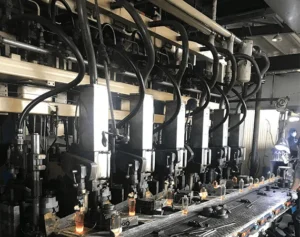
The material forms the physical foundation of cost, determining the product’s perceived value and compliance.
| Aspect | Deep Dive Analysis | Cost Impact & Strategic Insight |
|---|---|---|
| Types & Grades | Soda-Lime Glass: The industry standard, cost-effective with good clarity and stability. Borosilicate Glass: Higher thermal and chemical stability, often used for products requiring extreme durability. Crystal Glass: According to EU Directive 69/493/EEC, lead crystal requires ≥24% lead oxide (PbO); lead-free crystal uses substitutes like barium or zinc oxides. It offers superior brilliance, weight, and acoustic properties. | Cost increases significantly from soda-lime to crystal glass. Lead-free crystal typically costs 20-30% more than standard leaded crystal due to more complex raw material formulas. The choice depends on brand positioning and target market regulations. |
| Judging Quality | Clarity & Brilliance: High-quality glass has no greenish tint (low iron content) and high refractive index. Consistency: Uniform color and density across batches indicate superior raw material control and melting processes. Inclusions: High-quality glass is free from seeds (air bubbles) or stones (unmelted particles), which are structural weak points. | Using premium raw materials (e.g., low-iron sand) and controlled, slower melting/annealing processes increases cost but is non-negotiable for the luxury segment. |
| Reference Standard | ISO 12775:1997 classifies basic types of commercially available glass, providing a foundational framework for understanding material specifications. | Specifying materials compliant with international or regional standards is key to ensuring consistent quality and global market access. |
2. Mold Engineering & Complexity (The Largest Upfront Investment – NRE)
Molds represent a one-time engineering investment whose complexity and quality directly impact product precision and final visual appeal.
| Aspect | Deep Dive Analysis | Cost Impact & Strategic Insight |
|---|---|---|
| Complexity Drivers | Undercuts: Features that prevent the bottle from being ejected straight from the mold, requiring side-actions or collapsible cores. Deep/Intricate Engraving: Requires mold cavities with an extremely high surface finish. Sharp Angles vs. Radii: Sharp corners are stress points and harder to machine; slight radii increase strength and improve manufacturability. | A single side-action mechanism can increase mold cost by 40-60%. Mirror-polished mold surfaces are crucial for a high-gloss finish but significantly increase machining time. Early Design for Manufacturability (DFM) review is essential. |
| Mold Lifespan | Aluminum Molds: Softer, lower cost, suitable for pilot runs or small batches (10k-50k units). Stainless Steel Molds: Harder, more expensive, essential for long-term, high-volume production (100k+ units) to maintain precision. | Investing in steel molds for a long-term product is more cost-effective per unit. Using aluminum molds for a pilot run is a strategic way to de-risk market launch. |
| Design Optimization | Early collaboration with the manufacturer’s engineering team is critical. Minor design tweaks can dramatically reduce mold complexity without altering aesthetic intent. | Requesting a comprehensive DFM Report from your supplier helps identify cost drivers and propose optimizations; this investment often pays for itself in mold cost savings. |

3. Production Volume & Economies of Scale
The unit cost has a non-linear relationship with volume, representing the most leveraged part of the cost structure.
| Aspect | Deep Dive Analysis | Cost Impact & Strategic Insight |
|---|---|---|
| Cost Absorption | The high fixed cost of the mold (NRE) is amortized over the total order quantity. Production line setup costs are also fixed. | According to industry consensus and supply chain cost models, the unit cost drops most dramatically between the first 5,000 and 25,000 units as fixed costs are absorbed. Beyond 50k units, savings primarily come from bulk raw material purchasing and optimized production line efficiency. |
| Minimum Order Quantity (MOQ) | Factories set MOQs to make production runs economically viable, covering setup, energy, and labor costs. | Negotiating a staggered production schedule (e.g., 10k units now, 15k units in 6 months) can sometimes help meet a lower initial MOQ while locking in volume-based pricing. |
| Strategic Sourcing | For automotive fragrance bottle manufacturers, extremely high volumes (500k+ units) may justify investing in a dedicated production line, yielding the lowest possible unit cost. | Communicating long-term capacity planning with the manufacturer can help secure better commercial terms and production scheduling. |
4. Decoration & Surface Finishing Techniques
This is where brand identity is realized and a crucial area for cost layering and brand differentiation.
| Aspect | Deep Dive Analysis | Cost Impact & Strategic Insight |
|---|---|---|
| Technique Spectrum | Screen Printing: Cost-effective for multi-color logos; cost increases with the number of colors and print passes. Hot Stamping: Creates metallic or glossy effects; high initial die cost but lower per-unit application cost. Spray Coating: Achieves matte or velvet finishes; involves high material waste and labor for masking. Ceramic Decal (Firing): Allows for full-color, complex graphics, permanently fused through high-temperature firing. | Combining multiple techniques (e.g., hot stamping on a sprayed surface) multiplies the cost. Each additional color in screen printing requires a separate screen and a production pass. According to a LuxePack industry white paper, complex decoration techniques can account for 15%-25% of the total packaging cost in premium perfume bottles. |
| Quality Indicators | Adhesion: Decoration should resist rubbing and common solvents (like alcohol). Precision: Sharp edges and perfect color registration (alignment). Durability: Should pass standardized abrasion and climate tests. | Specifying concrete test standards (e.g., cross-cut tape test ASTM D3359) in technical documents ensures the longevity and quality of the decoration. |

5. Closure & Dispensing System
This is where engineering meets user experience, significantly influencing the functional perception and satisfaction with each use.
| Aspect | Deep Dive Analysis | Cost Impact & Strategic Insight |
|---|---|---|
| Mechanism Types | Standard Crimp Sprayer: The most common and cost-effective option. Custom Pump Actuator: Unique shapes or spray patterns require custom tooling. Magnetic Cap: As seen in high-end custom magnetic cap perfume bottles, requires a custom cap, ferrule, magnet, and dedicated assembly fixtures. Rollerball: Mechanism is relatively simple but demands precise ball-and-socket fit. | A fully custom magnetic closure system, due to its multi-component tooling and assembly complexity, can cost as much as the glass bottle itself. According to Bloomberg’s beauty business analysis, precision spray systems from top suppliers like Aptar and Silgan are standard for premium brands, with their cost reaching 20%-30% of the entire bottle’s cost. |
| Performance & Testing | Leak Test: Must withstand pressure/vacuum. Spray Pattern & Dose Consistency: Critical for user satisfaction. Pull-Force (Magnetic Cap): Must feel secure yet easy to open. Longevity: Cycle testing (e.g., 10,000 sprays). | Sourcing closures from reputable system suppliers adds cost but provides quality assurance through certified performance data. In-house designs require extensive R&D and testing investment. |

Conclusion: From Cost Analysis to Value Creation
A thorough understanding of these five factors transforms your dialogue with a manufacturer from a simple price negotiation into a collaborative effort focused on value engineering. The goal should not be the lowest initial price, but the optimal Total Cost of Ownership—which encompasses quality, reliability, scalability, and the peace of mind that comes from transparent partnership.
When you choose a manufacturer willing to dissect these complexities with you, you are not just buying bottles; you are investing in a tangible cornerstone of your brand’s identity.
Are you planning your custom perfume bottle project?
We understand the weight behind every decision. As a packaging solutions provider with over 25 years of experience, we offer not just manufacturing, but a strategic partnership from concept to completion. Contact our expert team for a DFM analysis and transparent quotation tailored to your specific needs.
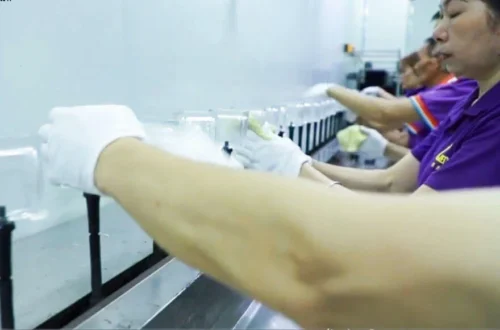
Elegant Packaging Factory
China’s Top 10 End-To-End Custom Perfume And Cosmetics Packaging Solutions Manufacturing Provider
Our team deeply understands the dreams and challenges of a fragrance entrepreneur, not a simple perfume packaging wholesaler, but a strategic partner focused on providing complete packaging solutions—from concept to shelf for emerging and growing perfume brands.
Since 1996
Low MOQ
Fast Response, Professional Advice
Supported 5000+ New Emerging Startups and Growing Fragrance Brands to Succeed
Custom Fragrance Packaging Products :
Luxury Premium Minimalist Perfume Bottles
Perfume Bottles Lids & Caps
Refilling pocket Travel Perfume Bottles
Solid Cream Perfume Balm Container
Perfume Bulb Atomizer
Incense Burner
High-End Fragrance & Cosmetics Package Boxes
WhatsApp: +86 18107699312
E-mail : info@fragrancepackage.com
